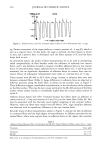
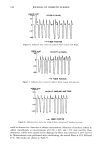
382 JOURNAL OF COSMETIC SCIENCE DETERMINATION OF AMINO ACID CONTENT The chemically modified and unmodified hairs (10 mg) were hydrolyzed with 6M HCI (2 ml) for 24 h at 110øC under a deaerated condition after repeating the three cycles of freezing, evacuating, and melting. The hydrolysates were diluted to 25 ml with 0.02 M HCI after removal of the acid by a rotary evaporator at room temperature. Usual amino acids including cystine (CyS) and cysteic acid (CySO3H) were analyzed by an automatic high-speed amino acid analyzer (Model L-8800, Hitachi). ESTIMATION OF THE tx-CRYSTALLITES IN HAIR High-pressure differential scanning calorimetry (PDSC) was applied to determine the amount of ot-crystallites in the hair (6,7). A Model 2920 differential scanning calorim- eter (TA Instruments) was used in this study. The instrument was calibrated using indium. The measurements were performed over a range of temperatures from around 20øC to 210øC at a heating rate of 20øC/min. An empty aluminum sample pan was used as reference. Exothermic or endothermic effects were represented by an increase or a decrease in the baseline position as well as a usual DSC practice in calorimetry. Endo- therms with a peak temperature of melting at a range of about 176 ø to 183øC were used to estimate the amount of ot-crystallites in hair. The enthalpy of melting was defined by the heat of absorption per gram of dry hair sample as J/g. PREPARATION OF PDSC SAMPLE The hair samples were cut to a fine powder to eliminate the effect of fiber orientation and also to maintain the sample in good contact with the sample pan. This procedure leads to a reduction of the temperature gradients within the sample at higher heating rates (8). The samples were dried under evacuated conditions at 100øC for 2 h over P205 and weighed. The dried samples were then stored and equilibrated in a desiccator adjusted to 65% RH at 20øC for 2 weeks and weighed. From the difference between the weights measured, the equilibrium water content of the hair, We, was determined. About 2 mg of the equilibrated sample was weighed in an aluminum pan. The dry weight of the DSC sample, wd, was calculated by equation 2: W d = Weq/(! + Wc) (2) where Weq is the weight of the DSC sample equilibrated and Wc is the equilibrium water content defined as grams water/grams dry sample. X-RAY DIFFRACTION X-ray diffraction traces were recorded with a Rigaku diffractometer (type D9-C), in- corporating a scintillation counter whose output is fed through a pulse-height analyzer to a chart recorder. Nickel-filtered copper radiation was used at 30 kV and 20 mA. The incident beam through a pinhole collimeter had an irradiated area of 2 mm 2 of the specimen, at approximately 18.5 cm from the x-ray source. The constancy of the radia- tion from this source was periodically checked throughout the work. The x-ray tests were carried out at 60% RH and at 20øC.

METHOD FOR PERMANENT HAIR STRAIGHTENING 383 RESULTS AND DISCUSSION REACTIONS OCCURRING IN CURING TREATMENT The effects of the curing treatment on the chemical composition of hairs were investi- gated. Table I shows the amino acid contents of the untreated and the typical cured hair samples obtained by applying various reducing systems. The cystine contents of the three different kinds of untreated samples used were considerably different among the samples. Samples A and B were used for elucidating the difference in chemical changes occurring in the curing treatment using TGA only, without DTDG, and sample C was used for a biocomponent system including DTDG. It can be known that for the cured samples the amino acid content, other than cystine and cysteic acid, was substantially unchanged. It is important to note that the half-cystine plus cysteic acid and lysine contents were approximately the same in the before and after treatments, Here, the cystine content was represented conveniently as half-cystine, which is defined by the molar fraction of cysteine residues. This suggests that the reactions occurring in the curing treatment are apparently simple, and many complex reactions related to cystine Table I Amino Acid Compositions of Untreated and Cured Hairs • Hair samples A B C Treatment Untreated Treated 2 Untreated Treated 2 Untreated Treated 3 Treated 3 Reduction, DTDG:TGA -- 0:7 -- 0:7 -- 2:5 3:8 He• treatment temp. (øC) -- 180 -- 220 -- 180 180 Asp 321 285 399 395 326 318 314 Thr 304 306 445 505 343 361 335 Ser 628 627 712 786 513 562 479 Glu 618 616 821 921 666 707 666 Gly 310 320 370 412 283 286 283 Ala 242 249 302 341 231 235 234 1/2CyS 540 489 929 916 662 602 570 CySO3H 19 82 24 74 38 114 109 VM 161 182 321 373 278 245 283 Met 87 109 49 55 50 40 43 lie 60 80 152 178 138 126 148 Leu 289 307 393 438 310 327 323 Tyr 156 168 143 142 113 117 112 Phe 90 99 105 119 87 92 94 Lys 99 99 160 174 118 109 115 His 93 104 67 85 50 51 51 Arg 251 246 381 431 301 304 306 Pro 241 252 321 385 283 299 276 1/2CyS+ CySO3H 559 571 953 990 700 716 679 Values given in 1• mol per gram. Reduction: TGA-only system, pH 9.20 45øC, 15 min. Oxidation: 7% NaBrO• 35øC, 15 min. Reduction: DTDG/TGA bicomponent system, pH 9.30 45øC, 15 min. Oxidation: 7% NaBrO3 35øC, 5 min.
Purchased for the exclusive use of nofirst nolast (unknown)
From: SCC Media Library & Resource Center (library.scconline.org)