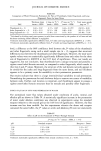
386 JOURNAL OF COSMETIC SCIENCE Table III CyS and CySO3H Contents of the Heat-Treated Samples at Different Temperatures Using TGA-Only System Heat treatment 1/2CyS + temperature CyS CySO3H CySO3H Samples (øC) (p mol/g) (p mol/g) (p mol/g) Untreated -- 464 24 952 Reduced and oxidized • -- 143 74 359 Reduced, heat-treated, and oxidized 2 180 359 87 805 Reduced, heat-treated, and oxidized 2 220 458 74 990 Reduction: 7% TGA, pH 9.20 45øC, 15 min. Oxidation: 7% NaBrO3 35øC, 15 min. Reduction and oxidation conditions are the same as described above. content such as the hair sample shown in Table II. These results suggest that the mobility of the keratin chain is an important factor for the reformation of cystine links at the final oxidation step. The chain mobility will be affected by either the water content or the cross-link density of hair. Under constant water content as in the present case, the chain mobility is associated with the latter. The higher the cross-link density, the shorter the chain length between the disulfide cross-links and the lower the number of chain segments. For hair with a higher cystine content such as the present sample, the chain mobility would be expected to be lower, and as a result, the reformation of cystine links would be suppressed during the oxidation treatment performed at 35øC for 15 min. The fact that almost perfect recovery of cystine linkages was observed at the heat treatment temperature of 220øC suggests the occurrence of the structure change affect- ing the chain mobility of hair. With respect to the network structure change during heat treatment, interchange reactions may occur more readily at higher heat temperatures, as represented by equation 11: KS•S2K + KS3H • KS•S3K + KS2H (11) It can be presumed that during heat treatment at the higher temperature of 220øC, the cross-link density in the hair decreases for the transformation of intermolecular cross- links into intramolecular linkages through interchange reactions, facilitated by heat treatment that gives rise to a high degree of lateral swelling for the keratin fiber (10). This makes possible the reformation of disulfide bonds at a higher yield, since there is an increase in the number of collisions between the cysteine groups on highly mobile keratin chains in the lower cross-linked network. The mobility of keratin chains may also be enhanced by the main chain scission resulting from hydrolytic reaction of peptide bonds at higher heat-treatment temperatures. Further study is needed to characterize such degradation of keratin molecules, which is closely related to hair damage. Analytical results of amino acids from the sample obtained by using the bicomponent system with various concentrations of TGA and DTDG show that no substantial change occurs in the content of the amino acids other than cystine and cysteic acid (Table I). These are similar to the previous results obtained from the TGA system without DTDG.

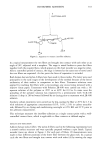
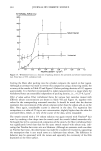
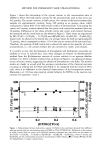
METHOD FOR PERMANENT HAIR STRAIGHTENING 387 Figure 1 shows the relationship of the cystine content to the concentration ratio of DTDG to TGA. The half-cystine content for the untreated hair used in this series was 662 pmol/g. The cystine contents, as half-cystine, for a variety of the heat-treatment hair samples are approximately constant, being 589 pmol/g as an average value, which corresponds to about 89% of the half-cystine content of untreated hair. Concerning the cysteic acid content, analysis showed that the cysteic acid content for untreated hair was 38 pmol/g. Differences in the values of both cystine and cysteic acid contents between the untreated and the cured hairs are also shown in Figure 1. These values are represented by A[1/2CyS] (=[1/2CyS] o - [1/2CyS]) and A[CySO3H] (=[CySO3H] - [CySO3H]o) , respectively. As shown by the dotted line, the average values for both are approximately 75 pmol/g, which corresponds to about 11% of the cystine content of the untreated hair. Therefore, the quantity of half-cystine lost is almost the same as the quantity of cysteic acid produced, i.e., the cystine residues lost are converted to cysteic acid residues. It is worthy to note that the formation of lysinoalanine and lanthionine cross-links are unlikely to occur in reduced hair, since these linkages are formed via dehydroalanine residues from the [3-elimination reaction of cystine residues in an aqueous alkaline medium (11). There is further evidence that, as shown in Figure 1, no substantial change occurs in lysine content, suggesting the absence of lysinoalanine cross-links. The present results are clearly in accord with the previous consideration of the chemical reactions occurring in reduced hair for TGA only (Table I). As compared with the result of TGA only, there is no difference in the chemical characteristics of the bicomponent system. Manuszak et al. (12) have also reported similar behavior for DTDG in the reaction rate constant for equations 3 and 4. 800 400 600 400 2oo o o 300 ! ! ! 0.2 0.4 0.6 lOO o [DTDG]/[TGA] Figure 1, Relationships between half-cystine content [1/2CyS] of the cured hairs obtained from different reducing systems and the concentration ratios of DTDG to TGA (DTDG:TGA). Differences in the content of either cystine (CyS) or cysteic acid (CySO3H) between untreated and cured hairs are also shown as A[1/2CyS] = ([1/2CyS] o - [I/2CyS]) or A[CySO3H] = ([CySO3H] - [CySO•H]o), where [1/2CyS] o and [CySO3H] o are the corresponding contents of untreated hair: (¸) [1/2CyS]o, (O) [1/2CyS], (ß) A[1/2CyS], ([•) A[CySO3H ]. (O) lysine content [Lys].
Purchased for the exclusive use of nofirst nolast (unknown)
From: SCC Media Library & Resource Center (library.scconline.org)