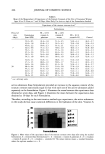
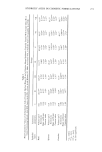
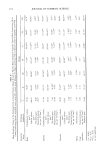
j. Cosmet. Sci,, 53, 243-248 (September/October 2002) A survey of consumer cosmetic products and salon preparations for alpha hydroxy acids JEAN C. HUBINGER, U.S. Food and Drug Administration, 5100 Point Branch Parkway, College Park, MD 20740. Accepted for publication March 21, 2002. Synopsis The Food and Drug Administration has completed a survey of consumer and salon/professional cosmetic products for glycolic and lactic acids, and product pH, to determine conformity with recommended levels established by the Cosmetic Ingredient Review (CIR). In twenty-five consumer products, concentrations of glycolic and lactic acid ranged from 1.1% to 8.7%. Two products had pus lower than the recommended minimum of 3.5. In seventeen salon/professional products, glycolic and lactic acids were fbund at levels ranging from 0.9% to 28.5%. Two salon products had pus significantly lower than the 3.0 recommended by the CIR. About half of the products contained either a sunscreen or a recommendation for the use of a sunscreen. INTRODUCTION A variety of techniques and products have been developed to improve the appearance of the skin and remove or lessen the effects of photoaging due to both episodic and long-term exposure to the sun's UV radiation. Acne scarring, hyper- and hypopigmen- tation disorders, and skin wrinkling can be remedied using both traditional mechanical treatments such as dermabrasion and dermaplaning (1), where the damaged skin area is physically removed by a dermatologist, and newer treatments, where the damaged area is chemically peeled away with chemicals such as phenol, trichloroacetic acid, or glycolic acid (70%) by a dermatologist (2-11). These treatments, along with the discovery that preparations containing chemicals known as alpha hydroxy acids (AHAs) at much lower concentrations can be used to treat skin disorders such as ichthyosis and regular dry skin (12,13), have fueled public demand for consumer cosmetic products that could be used to maintain the results of dermato- logic treatments and/or provide at-home alternatives. Therefore, products containing AHAs such as glycolic acid and lactic acid have been developed by cosmetic manufac- turers and promoted to moisturize the skin, improve the skin's general appearance, and reverse some of the signs of aging and overexposure to the sun (14,15). Clinically, it has been shown that AHAs moisturize the skin, reduce corneocyte cohe- sion, promote desquamation, and stimulate skin turnover via exfoliation of the outer 24 •

244 JOURNAL OF COSMETIC SCIENCE skin cells (16-25). There is also some evidence that products containing AHAs may deliver longer term benefits such as reduced lines and wrinkles and improved skin firmness, smoothness, and elasticity (26-29). The number of reported adverse reactions to skin care products containing AHAs prompted the Food and Drug Administration (FDA) to question the safety of these products. Typical complaints received by the FDA from consumers using AHA- containing products have included facial redness, swelling (especially in the eye area), burning, blistering, bleeding, scarring, rash formation, itching, contact dermatitis, and skin discoloration. The Cosmetic Ingredient Review (CIR) completed a review of the safety of two of the most commonly used AHAs in cosmetics, glycolic acid and lactic acid, as well as their salts and esters. The CIR concluded that AHAs are generally safe as used in most cosmetic preparations, but recommended that total AHAs not exceed 10% in commer- cial cosmetics with a final pH greater than or equal to 3.5, and not exceed 30% in salon products for use by trained professionals with a final pH greater or equal to 3.0. The CIR also recommended that cosmetic and salon products be formulated to avoid increased sun sensitivity or contain directions for use that include the use of daily sun protection (30-32). As originally noted by Yu and Van Scott (33), the bioavailability of AHAs in cosmetic products depends on the pH of the preparation as well as the concentration of AHAs. A preparation containing 10% glycolic acid at a pH of 3.0 will generally be over twice as active on the stratum comeurn as a preparation containing the same amount of glycolic acid at a pH of 4.0. Because of continued uncertainty about the long-term effect of AHA use on the skin and the skin's vulnerability to UV radiation, the FDA has begun a long-term study to identify the concentration of AHAs in cosmetic and salon formulations on the market and the pH of those formulations. The present study reports the FDA's latest survey of consumer and salon products containing AHAs and draws upon the analytical methods developed at the FDA (34) and at other research centers, using ion pair reverse-phase high-performance liquid chromatograpty to analytically and quantitatively separate gly- colic acid, lactic acid, and other AHAs from cosmetic products (35,36). To improve separation, this work also relied upon pre-column purification methods employing solid- phase extraction (34). This, data along with that collected previously, will be used by the FDA to monitor industry conformity with the limits recommended by the CIR. METHOD The extraction and analytical method previously developed by the FDA was used in this study (34). A portion of each cosmetic or salon product was mixed with Celite and packed on top of a C18 solid-phase extraction column. The column was eluted with 0.1 M ammonium phosphate, and analyzed by HPLC using a C8 column, a 0.1 M ammo- nium phosphate mobile phase, and a UV detector set at 210 nanometers. Glycolic and lactic acid peaks were identified by comparison of retention times with known reference standards and were quantified using a standard calibration curve. Finally, the pH of each sample was determined both undiluted and as a 1-to-9 dilution in distilled water.
Purchased for the exclusive use of nofirst nolast (unknown)
From: SCC Media Library & Resource Center (library.scconline.org)