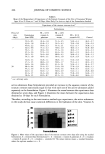
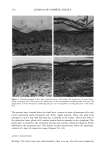
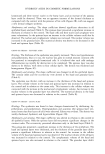
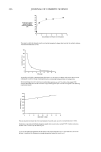
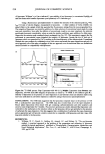
2002 ANNUAL SCIENTIFIC SEMINAR 307 STABILIZATION OF PROTEASE AND PROPERTIES OF CHITOSAN IMMOBILIZED ENZYMES Bum-chun Lee, Eun-jeong Yoon, Dong-hwan Lee, Jun-tae Bae, Hyeong-bae Pyo and Tae-boo Choe, Ph.D.* Hanbul Cosmetics Company, R&D Center 72-7, Yonsung-ri, Samsung-myun, Umsung-kun, Chungbuk, 369-830, Korea * Department of Microbial Engineering, Konkuk University I, Hwayang-dong, Kwangjin-gu, Seoul, 143-701, Korea Introduction Consumers expect and demand real performance and benefits from their products. In our skin, Keratins are the main constituents of homey cells and remain on the skin surface after the death of the cell. Sometimes the remaining substance cause skin trouble such as inflammation, acne and skin roughness. The protease having possible advantages: (1) normalizing human skin turnover (2) preventing skin spots, etc., through reducing variations in the areas among keratinous cells (3) activating the skin and reducing fine wrinkles• and (4) used as a percutaneous penetration enhancer. But enzymes are not easy to applying in skin care because those have some problem with stability and irritation. 2 In this study, a new protease(Kerasoft) were immobilized on various carriers by different methods of immobilization, including physical adsorption, ionic binding, covalent binding, and entrapment. A new procedure for entrapping enzyme was developed and investigated the properties of immobilized enzymes. The developed stabilization method can be used to stabilize enzymes as active ingredients in skin care products. Material and Methods Enzyme preparation was obtained from Bacillus sp. HB-5(KCTC 8959P) developed by Hanbul cosmetics R & D centers. The culture tiltrate was concentrated by ultrafiltration through a TFF System (Millipore Co., cut off mol wt., 10,000 USA). This partially purified enzyme was used for the preparation of the immobilized enzyme. First, Protease were mixed with calcium carbonate and then immobilized with chitosan. Morphological shape of chitosan immobilized protease was studied using a phase contrast microscope(Olympus BX-50, Japan) and Scanning electron Microscope(SEM). The stability of enzyme was evaluated by monitoring the residual activity storage at 40 in emulsion formulation. The proteolytic activity of protease was measured using casein as substrate. Protein concentration was determined by the method of Lowry. Skin coloration index was measured by spectrophotometer(Minolta CM-2002 Japan) after treated with cosmetics containing 5% dihydrxoyacetone(DHA). Results and Discussion Immobilization by physical adsorption, Ionic binding, Covalent Coupling and Entrapment Immobilized enzymes were prepared by physical adsorption on chitin, ionic binding onto DEAE-cellulose, covalent binding on cyanogen bromide-activated agarose(CNBr-Agarose), and entrapment in alginate had the highest activities. Also, The stability of immobilized enzyme were prepared by physical adsorption on chitin, ionic binding onto DEAE-cellulose, covalent binding on CNBr-Agarose, and entrapment in alginate had the highest activities. Morphological Observation of Chitosan immobilized Protease The chitosan immobilized protease was freeze dried and scanning electron micrographs are shown in Fig. 1. A higher magnification micrograph showed a spatial distribution of immobilized protease within the chitosan matrix. The surface of chitosan immobilized protease was not changed the overall shape and size.

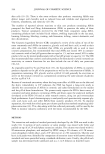
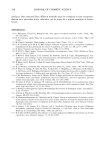
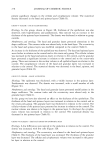
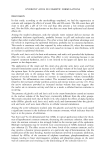
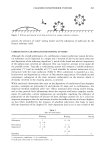
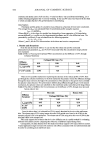
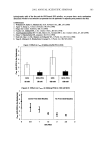
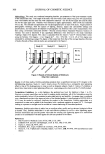
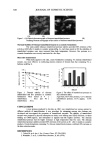
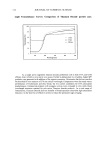
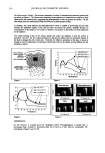
308 JOURNAL OF COSMETIC SCIENCE (A) (B) Figure 1. (A) Optical photoinicrograph ofchitosan immobilized protease (B) Scanning electron micrographs of the surface of chitosan immobilized protease. Thermal Stability of Chitosan Immobilized Enzyme in a cosmetic formulation The water-soluble chitosan immobilized protease stability provided 80% retention of the activity at 40D after 2 months in cosmetic products(Fig. 2). And when stored in 4D the stabilitics of immobilized enzymes were more increased than high temperature. However, free protease in a cosmetic formulation was severely inactivatcd in a few days. Skin color measurement When daily applied to the skin, cream formulation containing 1% chitosan immobilized enzyme, was more effective in exfoliating stratum comeurn of forearm than that containing 5% hydroxy acid(Fig. 3). 120% lOO% 80% 60% 40% 20% 0% -- -- 10 20 30 40 50 60 Days Figure 2. Thermal stability of chitosan immobilized and free proteases in cosmetic formulation when stored at 4 ( : immobilized, : free) and 40 ( : immobilized, : free). • 15 • lO t• 5 0 A B C O E sam p'• Figure 3. The effect of immobilized protease on skin coloration index. A:gel base, B:1% free protease, C:1% chitosan immobilized protease, D:1% papain, E:5% AHA CONCLUSIONS A new protease produced by Bacillus' sp. HB-5 was immobilized on various carriers by different methods of immobilization. A new procedure for entrapping enzyme into chitosan was developed and investigated the properties of immobilized enzymes. The stability of immobilized enzyme were prepared by physical adsorption on chitin, ionic binding onto DEAE-cellulose, covalent binding on CNBr-Agarose, and entrapment in alginate had the highest activities. The chitosan immobilized protease had the higher resistance to high temperature than free ones. The chitosan immobilized protease stability provided 80% retention of the activity at 40 after 2 months in cosmetic products. Cream formulation containing 1% chitosan immobilized protease, exhibited 20% increase on the skin coloration index. REFERENCES 1. Takuji M. et al. Jpn. J. Soc. Cosmet. Chem., 27, 276 (1993). 2. Watanebe, T. et al. J. Solid-Phase Blochem., 3, 161 (1978).
Purchased for the exclusive use of nofirst nolast (unknown)
From: SCC Media Library & Resource Center (library.scconline.org)