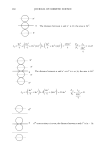
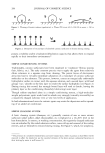
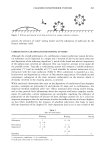
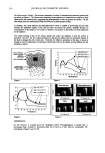
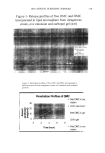
286 JOURNAL OF COSMETIC SCIENCE washing and rinsing steps prior to the spreading step, which probably occurs mainly during drying (see Figure 1 c). The droplet size of the silicone may be critical for efficient deposition. The latter processes (deposition and spreading) are actually the reverse of those involved in ordinary detergency. It is thus likely that many model procedures (6), including optical microscopy, developed to study detergency could be suitably modified to provide further insight into the mechanisms involved in these "reverse" processes. CONCLUSION One has to conclude that, while the events and molecular mechanisms involved in simple detergency and simple softening/conditioning are quite well understood, this is not the case in more complicated "one-shot" cleaner/conditioner systems, especially if the con- ditioner itself is multi-component. More fundamental work is required to develop complete mechanisms and, hence, more efficient systems. REFERENCES (1) A. E1 Shimi and E. D. Goddard, Wettability of some low energy surfaces, Pts 1 and 2,J. Colloidlnterf SE., 48, 242-255 (1974). (2) Y.K. Kamath, C.J. Dansizer, and H. D. Weigmann, Wettability of keratin fiber surfaces, J. Soc. Cosmet. Chem., 28, 273-284 (1977). (3) E. D. Goddard, "Measuring and Interpreting Polycation Adsorption," in Principles of Polymer Science and Technology in Cosmetics and Personnal Care, E. D. Goddard and J. V. Gruber, Eds. (Marcel Dekker, New York, 1999), p. 503. (4) J. V. Gruber, B. R. Lamoureux, N. Joshi, and L. Moral, The use of x-ray fluorescent spectroscopy to study the influences of cationic polymers on silicone oil deposition from shampoo, J. Cosmet. Sci., 52, 131-136 (2001). (5) E.D. Goddard and K. P. Ananthapadmanabhan, "Applications of Polymer-Surfactant Systems," in Polymer-Surfactant SyJtems, J. C. T. Kwak, Ed. (Marcel Dekker, New York, 1998), p. 38. (6) K. Durham, Ed., Surface Activity and Detergency (MacMillan, London, 1961).

j. Cosmet. sci., 53, 287-289 (September/October 2002) Abstracts Journal of the Society of Cosmetic Chemists Japan Vol. 35, No. 4, 2001' Application of W/O Emulsions to Cosmetic Foundations* Noboru Nagatani Skin Care Product Research Laboratories, Kao Corporation** W/O emulsions are suitable for cosmetic foundations, as they are excellent in water repellency. In particular when silicone oils are used for the oil a feeling of W/O emulsions is good. In order to obtain the structure condition as W/O type suffaetants to prepare stable W/O silicone emulsions, glycerylether derivatives with silicone chains were focused on. And stable low- viscosity W/O emulsions were prepared by using the most suitable glycerylether modified silicone. In this paper the stabilization mechanism and the application example for cosmetic foundations are described. Development of Semimicro LC/NMR and Its Applications inCosmefic Ingredients Analysis* Tada• Fukuhara, Kazuo Komatsu, Seiichi Yoshida, Okihiko Sakamoto, Michihiro Yamaguchi Basic Research Center, Shiseido Co., Ltd.** An on-line LC/NlVlR system combining semimicro LC and 400MHz-NMR with a 3ram i.d. probe was developed. A semimicro LC column (1.5mm i.d. x250mm) was used for various studies with a mobile phase of D20/CD3CN mixture at 100--125gL/min flow rates. This system required only 6--7.Sml_dh of mobile phase, significantly improving cost-performance and allowing the use of expensive deuterated solvents so that solvent signals could be easily minimized. In addition, improvement of the sensitivity due to the condensation effect ofsemimicro LC was achieved, and the results fully supported the advantage of the semimicro LC/NMR system. Identification limits of ethyl p-hydroxybenzoate for this semimicro LC/NMR system were a few [tg for ON-FLOW method and sub Ixg for STOP&FLOW method. This system also applied for the analysis of herb medicine powders of cosmetic ingredients. It was possible to monitor minor components without a preparative procedure, therefore it was useful for rapid screening of the effective components as cosmetic ingredients. Studies for Analyzing the Prohibited Ingredients Such as Vitamin LI and Pilocarpine Hydrochloride in Cosmetics* Tadashi Uchino, Hiroshi Tokunaga, Masanori Ando National Institute of Health Sciences** We have already reported the analytical method of procaine hydrochloride and dibucaine hydrochloride (prohibited in cosmetics on the public comment of Ministry of Health and Welfare of Japanese Government in 1986). In order to find out another prohibited ingredients in cosmetics, we estimated the analytical method of vitamin L1 and pilocarpine hydrochloride by HPLC. Vitamin L1 and pilocarpine hydrochloride in the lotions or milky lotions were extracted with methanol. The extract was analyzed by HPLC using the column (Shiseido CAPCELL PAK C18, 4.6x250mm) and a mixture ofacetonitrile and 50mM phosphate buffer (pH5) (37:3) or (19:1) for vitamin L I and pilocarpine hydrochloride were used. The detection wavelength of vitamin LI and pilocarpine hydrochloride were at 244 and 214nm, respectively. By the use of the above analytical method we made it sure that vitamin L1 and pilocarpine hydrochloride could be determined without the interference of the ingredients. * These abstracts appear exactly as they were originally published. They have not been edited by theJoz/rna/ of Cosmetic Science. 287
Purchased for the exclusive use of nofirst nolast (unknown)
From: SCC Media Library & Resource Center (library.scconline.org)