282 JOURNAL OF COSMETIC SCIENCE (13) K. A. Holbrook and K. Wolff, Dermatology in General Medicine (McGraw-Hill, New York, 1993), pp. 241-253. (14) W. P. Smith, Hidr6xi-&idos e o envelhecimento cutineo, Cosmet. Toiletr., 7, 72-78 (1995). (15) P.M. B. G. Maia Campos et al. Histopathological, morphometric, and stereologic studies of dertoo- cosmetic skin formulations containing vitamin A and/or glycolic acid, J. Cosmet. Sci., 50, 159-170 (1999). (16) S.J. Kim and Y. H. Won, The effect of glycolic acid on cultured human skin fibroblasts: Cell proloferative effect and increased collagen synthesis,J. Dermatol., 25, 85-89 (1998). (17) L. S. Moy, K. Howe, and R. L. Moy, Glycolic acid modulation of collagen production in human skin fibroblast cultures in vitro, Dermatol. Surg., 22, 439-441 (1996).

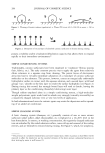
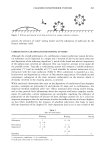
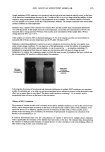
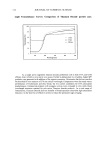
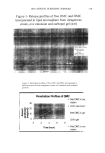
j. Cosmet. sd., 53, 283-286 (September/October 2002) Mechanisms in combination cleaner/conditioner systems E. D. GODDARD, 9 Hatsawap Road, Cambridge, MD 21613. Accepted for publication April 30, 2002. INTRODUCTION In any system, for a spontaneous process to occur, the change in free energy (AG) that is involved in the process has to be negative. For those systems involving extensive interfacial areas (solid/water, solid/oil, solid/air, air/water, oil/water), the physical pro- cesses that occur are generally driven by a reduction in the overall interfacial free energy of the systems. The purpose here is to consider the interfacial processes that can occur when a combination cleaning/conditioning system is applied to a keratin substrate such as hair or skin. It is appropriate first to consider the surface characteristics of these two substrates and to qualitatively describe the surface chemical events that can occur when hair and skin are subjected to separate cleaning (washing) and conditioning steps. SURFACE CHEMISTRY OF NATURAL KERATINS Because it is a natural protein, the constituent polypeptide chains of keratin have a variety of side chain acid and basic groups. Those in the surface region of a keratin fiber, particle, or sheet contacting an aqueous phase determine the isoelectric point of the interface. The isoelectric point of natural keratins is quite low ( hair -4, skin -5). This means that in normal treatments of conditioning or washing, in which the pH is generally neutral to alkaline, the keratin surface bears a net negative charge. Keeping in mind that electrostatic forces are among the strongest of physical forces, one can un- derstand why conditioning agents are generally cationic in nature. The second important surface property of natural keratins is their hydrophobicity. Contact angle work by E1 Shimi and Goddard (1) on smooth keratin specimens (polished bovine hoof and taut human skin) showed that their surfaces are relatively non-wetting to water and are comparable in hydrophobicity to polyethylene. Unlike the latter, however, keratin is hydratable and during submersion in water quickly becomes rela- tively non-wetting to oils (see Figure 1). After emersion from water a keratin surface rapidly regains its hydrophobic character. The dual characteristic of being hydrophobic in air but (hydratable and) hydrophilic in water is directly relevant to behavior during conditioning and cleaning procedures. It indicates that the surface molecules of keratin 283
Purchased for the exclusive use of nofirst nolast (unknown)
From: SCC Media Library & Resource Center (library.scconline.org)