264 JOURNAL OF COSMETIC SCIENCE of vitamin A and/or glycolic acid on guinea pig skin. They observed that vitamin A induced a thickening of the epithelium. This increased cellular volume was due to intra- and extracellular hydration (7). On the other hand, vitamin E acetate functions i, vivo as an antioxidant. It protects skin lipids and lipoproteins in cell membranes, and may exert a beneficial effect on the skin's water-binding ability. It has been suggested that vitamin E improves the moisturizing and elastic properties of the skin, thus inhibiting one of the processes that lead to skin aging (1). Ceramides have gained scientific importance among professionals in the field and consumers because they are natural constituents of skin lipids and the cutaneous permeability barrier. The cutaneous per- meability barrier protects the skin from drying out, and because of this, it is considered important for the protection and hydration of the skin (8-10). There are several methods for skin moisture assessments (11,12), based on different principles. The literature documents that the capacitance-measuring method (Corneom- eter © method) presents several advantages over other related methods (13). Serup eta/. (14) used different non-invasive methods (electrical conductance, electrical capacitance, and water evaporation) to evaluate the moisturizing effect of an O/W emulsion. Their study and others (15) showed that electrical capacitance is a reliable method to evaluate cutis moisture (14). The Corneometer © method gave a stable correlation with the real water content that exists in dry and dehydrated skin (15). Thus, the aim of this research was to evaluate the moisturizing effect of an O/W emulsion (non-ionic self-emulsifying base) with and without vitamin A palmitate, vi- tamin E acetate, or ceramide III on the human skin, by the capacitance method (a non-invasive method). EXPERIMENTAL PROCEDURE FORMULATIONS STUDIED We used an O/W emulsion consisting of 17% non-ionic self-emulsifying base, 3% squalane, 0.5 % imidazolidinyl urea, 0.2% methyl, 0.1% propylparaben, 10% glycerin, 0.3% glutathione, 0.04% DL alpha tocopherol, and distilled water, with or without the addition of vitamin A palmitate (5,000 UI/g), vitamin E acetate (20 mg/g) or ceramide III (1 mg/g). HYDRAT1ON TESTING ON THE SKIN This study was performed after it had been approved by the Committee of Research Ethics at the Clinical Hospital-Medical College of Ribeirio Preto, University of Sio Paulo. The investigations were carried out on a group of 40 healthy Caucasian female test subjects, ranging in age from 30 to 45 years. They showed no signs of skin disturbances and no hormonal alterations, and they were not using any medications. For a twenty- eight-day interval before the beginning of the test, the subjects refrained from using cosmetics. No other products were used on each forearm during the trial period. The test subjects were recruited and asked to sign an informed consent statement. A Corneometer CM 825 PC was used. The volunteers' skin was measured at 7 and 30 days after a twice-day use of the tested products. The region where the products were

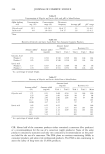
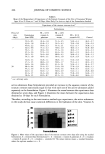
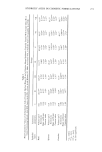
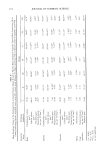
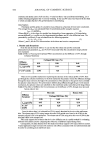
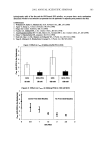
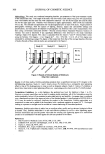
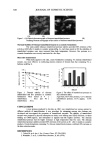
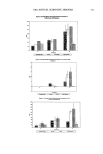
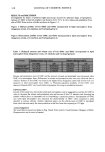
METHOD TO STUDY SKIN MOISTURIZERS 265 used was well cleaned with distilled water and cotton and dried with a paper towel 30 minutes before the readings. The room temperature (21 ø + IøC) and the relative humidity (50-60%) were held constant throughout the trial. The trial was performed over the winter months. At the start of the study, an initial value of capacitance was established after 30 minutes of acclimatization for the classification of the skin type regarding hydration characteristics (baseline values) (14). Five skin hydration readings at each test site were recorded and the mean values were used for the statistical analysis. The left forearm of each volunteer was treated with the formulations that were being studied. Five groups of eight women were used for the tests (a total of forty volunteers). Based upon the Tukey test, five volunteers for each group were sufficient to detect statistically significant differences. The first group used a formulation with no active substance (the base formulation for this study). The second group used the base formu- lation with 0.5 % retinol palmitate added (vitamin A test). The third group used the base formulation with 2% alpha tocopherol acetate added (vitamin E test). The fourth group used the base formulation with 0.1% ceramide III added (ceramide test). The last group used nothing on the skin (control). STATISTICAL ANALYSIS Data were analyzed statistically using an analysis of variance (ANOVA) parametric test, followed by the Tukey test, which was more appropriate for the mathematical model used in the experiment RESULTS AND DISCUSSION The volunteers had dry skin according to the values given by the manufacturer of the Corneometer ©. These subjects were chosen because some literature articles related that sufficiently moisturized skin did not undergo an enhancement in moisture when topical products were applied (16). Moreover, we followed the studies conducted by Hashimoto- Kumasaka eta/. (15), who showed that capacitance is a stable method to evaluate the hydration of dry skin. The results of cutis hydration for the formulations under study are shown in Table I. The results obtained from the study of the capacitance of the stratum corneum during the analysis of variance showed statistically significant differences among the studied periods of time and the studied formulations. The probability level for the tests to be statistically significant was at 5%. The water content in the stratum corneum after using the products of interest for seven days was higher than that found after 30 days of use. At the end of seven days, the capacitance value was higher in the stratum corneum, which indicated that the dry skin (dehydrated) retained hydration much better during the first week of the treatment. In order to observe which formulations presented statistically significant results, it was necessary to provide Tukey's test since more than two kinds of active substances were evaluated. Tukey's test showed that the control group (untreated) was the unique group that presented results statistically different from the others. The formulation with no
Purchased for the exclusive use of nofirst nolast (unknown)
From: SCC Media Library & Resource Center (library.scconline.org)