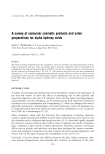
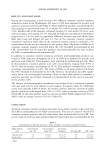
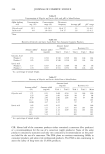
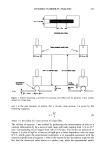
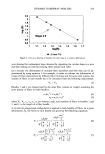
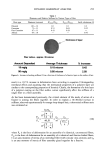
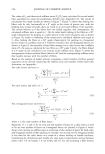
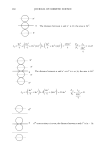
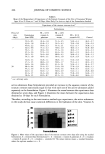
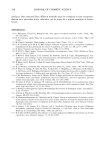
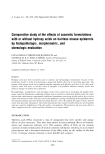
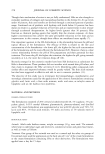
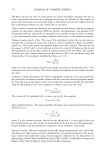
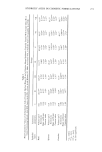
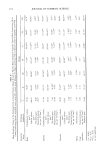
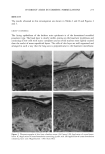
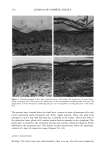
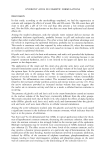
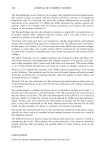
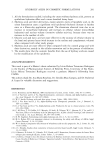
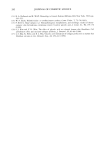
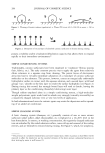
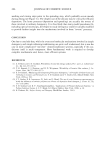
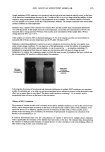
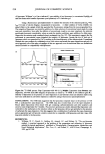
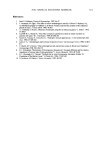
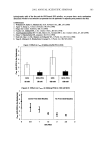
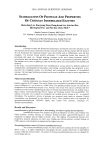
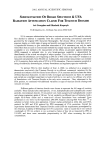
DYNAMIC HAIRSPRAY ANALYSIS 251 I-•dr • into 1.4to 1.6 crn fo•2.0 (:3 Figure 1. Scheme illustrating a procedure for measuring the stiffness and the geometry of hair samples shaped into omega loops. and I is the area moment of inertia. For a circular cross section, I is given by the following equation: 4 q-rr i- 4 (2) where r is the radius of a cross section of a hair fiber. The validity of equation 1 was verified by performing the measurements of force at a constant deformation 8y for a series of steel rings with radii ranging from 12.6 to 42.7 mm. Corresponding forces ranged from 100 to 6 Grams. The results are presented in Figure 4. A plot of 1ogP as a function of 1ogR gave a linear dependence with the slope of 2.5, which, given the experimental constraints, is in reasonable agreement with the theoretical predictions of equation 1. One of the reasons for the discrepancy might be the fact that the theoretical value relates to a perfect ring, while the experimental results

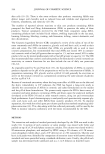
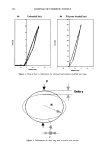
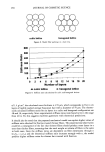
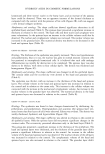
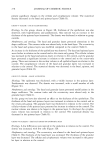
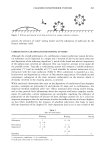
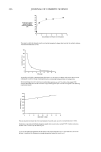
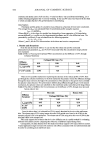
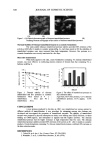
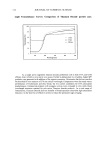
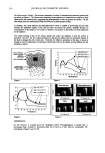
252 JOURNAL OF COSMETIC SCIENCE (a) Untreated hair (b) Polymer treated hair 160 140 10 120 40 •'0 -1 -0.5 0.5 I 1.5 2 -1 -0.5 0 0.5 I 1.5 Distance (rnrn) Distance (rnrn) Figure 2. Plots of force vs deformation for untreated and polymer-modified hair loops. P Figure 3. Deformation of a thin ring with a circular cross section. Delta y
Purchased for the exclusive use of nofirst nolast (unknown)
From: SCC Media Library & Resource Center (library.scconline.org)