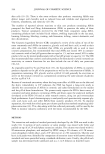
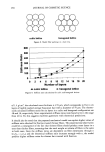
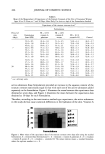
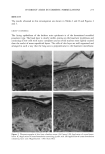
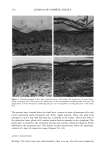
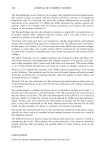
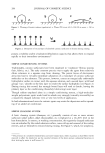
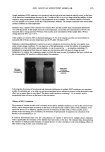
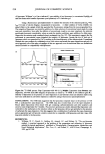
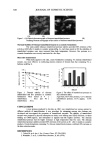
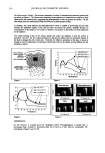
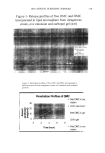
276 JOURNAL OF COSMETIC SCIENCE ½ D Figure 3. Photomicrographs of skin from a hairless mouse. (A) Control. (B) Application of cream formu- lation containing fruit acids mixture. (C) Application of cream formulation containing malic acid ester. (D) Application of cream formulation containing salicylic esters of lipophilic acid. Magnification: x960. Stain: H.E. The spinous layer, located above the basal layer, consists of more voluminous cells with nuclei containing sparse chromatin and clearly visible nucleoli. These cells tend to be arranged in such a way that the long axis is parallel to the surface. Above this layer is the granulous layer, whose cells contain keratin-hyaline granules in the cytoplasm. The horny layer is located in the outermost portion and consists of keratin filaments firmly adhering to the granulose layer. The dermis, located immediately below the epidermis, consists of a layer of connective tissue (Figures 2A, 3A). GROUP II (CREAM ONLY) Histology. The horny layer was ortho-keratotic, that is to say, the cells were completely

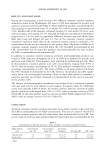
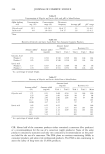
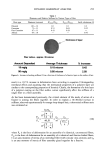
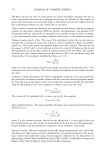
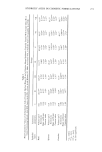
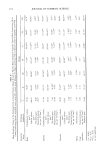
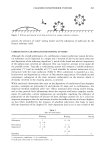
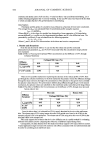
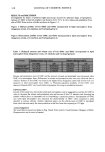
HYDROXY ACIDS IN COSMETIC FORMULATIONS 277 keratinized and there weren't nuclei in the horny layer, and an increase of the spinous layer could be observed. There was an apparent increase of the dermal thickness as compared with the control, with the presence of few cells (Figure 2B), with can suggest a new dermal collagen synthesis. Morphometry amt stereo/ogy. The shape coefficient showed significant alterations in all epithelial layers analyzed (Table I). The spinous layer presented a significant increase in thickness in relation to the control. The basal cells and their nuclei and cytoplasm were more voluminous. In the spinous layer an increase in the cellular volume could also be observed. The nuclear and cytoplasmatic volume was increased. The nuclear volume was increased in the granular layer. The numerical density was shown to be decreased in the basal and spinous layer (Table II). GROUP III (CREAM + GLYCOLIC ACID) Histology. The thickness of the epidermis was greatly increased. There was hyperkeratosis and parakeratosis, that is to say, the nucleus was gone in normal stratum corneum cells but persisted in incompletely keratinized cells. It is believed that such cells undergo differentiation too rapidly for destruction to be completed. The spinous layer was also shown to be thicker, with three to four cellular layers. The dermis was thickened and homogeneous (Figure 2C). Morphometry and stereo/ogy. The shape coefficient was changed in all the epithelial layers. The contour index and the eccentricity were altered in the basal and granular layers (Table I). The epidermis was thicker, with an increase in the thickness of the basal and spinous layers. The cellular volume in the basal and spinous layers was increased in relation to the control and in relation to the cream only. This increase in the cellular volume was connected with the increase in the nuclear and cytoplasmatic volume. An increase in the nuclear volume in the granular layer was observed. The numerical density in the basal and spinous layers was decreased in relation to the control (Table II). GROUP IV (CREAM + LACTIC ACID) Histology. The epidermis was found to have changes characterized by thickening, hy- perkeratosis, and parakeratosis. Hypergranulosis and acantosis (the spinous layer pre- sented more than four layers of cells) were observed. Edema was evident. The dermis was visibly thickened, hydrated, and hypercellular (Figure 2D). Morphometry and stereology. The shape coefficient was altered in relation to the control in all epithelial layers. Only the spinous layer did not present significant changes in the contour index. The eccentricity presented alterations only in the basal layer (Table I). This group also presented a significant increase in the thickness of the epithelium. The basal and spinous layers were thickened, and the thickness of the granular layer didn't present a significant difference in relation to the control. An increase in the cellular volume of the basal and spinous layers was observed. The nuclear volume of the all layers was increased in relation to the control. The cytoplasmatic volume of the basal and spinous layers was also increased in relation to the control. The granular layer didn't
Purchased for the exclusive use of nofirst nolast (unknown)
From: SCC Media Library & Resource Center (library.scconline.org)