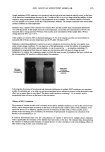
2002 ANNUAL SCIENTIFIC SEMINAR 317 IMPORTANCE OF PROTECTION FROM HARMFUL EFFECTS OF SOLAR RADIATION BY USING SOLID LIPID MiCROSPHERES OF UV FILTERS Giilgiin Yener, Ph.D. and Tuba lncegfil Cosmetics Section, Department of Pharmaceutical Technology, Faculty of Pharmacy, University of Istanbul 34452 Istanbul, Turkey INTRODUCTION Sun protecting substances are capable of protecting humans from harmful effects of solar radiation such as aging and skin cancers. Due to the depletion in ozone layer, research regarding to sun protection has become a major concern. Since these preparations are often applied on large skin areas even 1oxv penetration rates can cause significant amount of chemical UV absorber to enter the body. Sun protecting preparations need to achieve a controlled release. For this purpose, liposomes, niosomes, microsponges and microspheres have been used. Additionally, sunscreen preparations need a high degree of resistance to photodecomposition on exposure to sunlight. A sunscreen must be effective in absorbing erythemogenic radiation in the 280-315 nm range without breakdown. in recent years, it was reported that spectral stability of some UV absorbers were investigated. In this study, it was attempted to prepare solid lipid microspheres of octyl methoxy cinnamate-OMC (2-ethylhexyl-p- methoxy cinnamate).OMC is one of the most widely used lipophilic UVB absorber in sunscreen preparations. OMC as plain absorber and also in microsphere form was put into various vehicles and investigated and compared in respect of OMC release, penetration from skin and photostability. METHODS Solid lipid microsphere preparation Lipid microspheres were prepared from warm oil in water microemulsions. Beeswax (6g) was melted, T•veen 80 (0.20g) and OMC (3g) were dispersed in melted beeswax and added to warm mixture (60øC) of xvater. Microemulsion was mixed for 20 min. At 500 rpm at room temperature. The beeswax was solidified enveloping OMC. Lipospheres produced were recovered by decantation, washed by water (40 ml) three times, filtered by Sartocon filter and lyophilized until dryness. (Mean particle size was found as 9.35+0.08[tm). Topical formtdations Oleagenous cream, Carbopol gel and O/W emulsion were used as various topical vehicles containing 5 % OMC. In vitro release studies and penetration experiments from skin 50 [tm cellulose acetate membrane and abdominal skin of rats were used on Franz diffusion cells (2cm 2 surface area). 0.5g vehicles containing microsphere samples were applied as donor compartment. Ethanolated (25 %) phosphate buffer (pH:7.4) was used as receptor phase. Temp. was kept at 37øC and stirred at 600 rpm. 300 pl aliquots were collected and amount of OMC released and penetrated were determined by UV spectroscopy and HPLC at 308 mn respectively for release and penetration experiments. The study was repeated by vehicles containing free OMC at 5% conc. Exposure to light A modified method was used to investigate the photostability of OMC both in microspheres and as plain form. Vehicles containing OMC were placed in a metal irradiation chamber (size 72x18x10cm) emitting UV radiation )254 nm 10 cm from the source of light. Photodecomposition products were detenxfined by using thin layer chromatography (TLC). Effectiveness of OMC in microspheres Creams containig free OMC and in solid microspheres were applied on volunteers' inner arms and exposed to solar simulator for 15 min. in order to compare the effectiveness of OMC as free form and in solid microsphere. Erythema formed was measured by Mexameter (n:8) (Courage-Khazaka Inst., Germany)

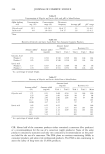
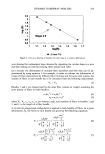
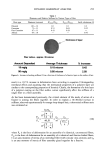
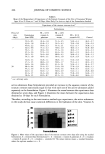
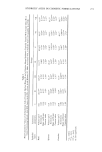
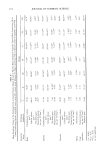
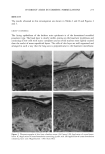
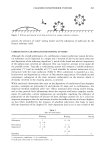
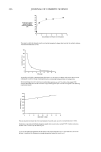
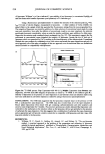
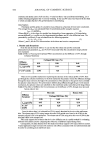
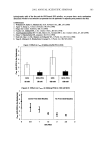
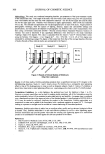
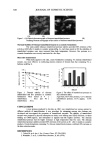
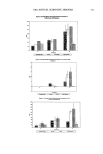
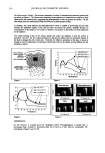
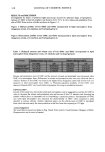
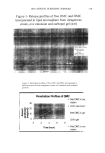
318 JOURNAL OF COSMETIC SCIENCE RESULTS and DISCUSSION Investigations by means of polarized light microscope showed the spherical shape of lipospheres. Amount of OMC in lipid microsphere was found to be 67.52 %. In vitro release and penetration from skin of OMC from various vehicles are shown in Figures 1-2. Figure 1- Release profiles of free OMC and OMC incorporated in !ipid microsphere from oleagenous cream, o/w emulsion and Carbopol gel (n:6) Figure 2-Penetration profiles of free OMC and OMC incorporated in !ipid microsphere from oleagenous cream, o/w emulsion and Carbopol gel (n:6) Table 1- Released amount and release rate of free OMC and OMC incorporated in !ipid microsphere from oleagenous cream, o/w emulsion and Carbopol gel (n:6) Release and penetration rates of OMC and the amount released and penetrated were decreased when OMC is in microsphere forin. Differences in release and penetration rates were also observed due to vehicles. Release of free OMC was found to be highest fi'om oleagenous cream and lowest from o/w emulsion in lipid microsphere form (Table 1). Photodecomposition products of free OMC were observed whereas OMC was found stable in liposphere form kept in irradiation chamber. CONCLUSION Results of this study have shown that solid lipid microspheres can be suggested as carders for OMC in order to decrease the release and penetration rate and amount of this UV absorber and choosing the suitable vehicle plays an important role in formulating a sunscreen product. Incorporation of OMC into solid lipid microsphere also enhanced the photostability of OMC xvhen compared to plain absorber in various vehicles. Another important aspect was the effectiveness of OMC in liposphere fonu which showed nearly the stone protection as the free form alter exposing to UV light. Acknowledgement We would like to extend our thanks to Eng. Nanilk Yener and Dr. Onsal Hekiman, Managers of Bilim Pharmaceutics and Aventis in Istanbul.
Purchased for the exclusive use of nofirst nolast (unknown)
From: SCC Media Library & Resource Center (library.scconline.org)