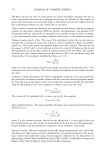
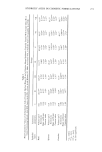
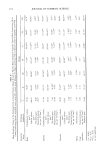
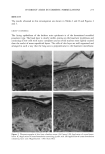
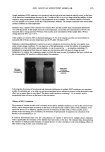
2002 ANNUAL SCIENTIFIC SEMINAR 299 CYPROTERONE ACETATE IN TOPICAL DELIVERY SYSTEM Zoia Lascu and Fotios M. Plakogiannis, Ph.D. Department of Cosmetic Science, College of Pharmacy, Long Island University, Brooklyn, NY 1.lntrod uction Cyproterone Acetate (CPA) is a potent steroidal antiandrogen with progestional activity. It is used alone or in combination with ethinyl estradiol or estradiol valerate in the treatment of women suffering from disorders associated with ache or hirsutism. It is known that CPA is effective when given orally. However, trials using topical CPA have not proved to be successful because of the lack of a suitable vehicle. Therefore, the objective of the present study is to develop a topical delivery system which is safe and easily administered onto the skin in a control way, thereby improving patient compliance and reducing systemic side effects, to examine the possibility of CPA preparation, which will provide a continuous dose over a 24-hour exposure. All of these will be accomplished by: 1) evaluating the diffusion profile (in vitro) of different CPA formulation through cellulose acetate membrane, freshly excised hairless mice skin and human cadaver skin 2) conducting a in vivo irritation test using rabbits 3) performing statistical analyses of the data using the t-test and one-way analysis of variances (ANOVA). 2. Methods A. CPA Gel Formulation CPA at 0. I% was incorporated into three different formulations, which were prepared by using Carbopol 940 (at 0. l, 0.2, 0.4%), propylene glycol, ethanol and water. (Table l) Table l- Composition of the CPA gels Ingredient formulation I formulation 2 formulation 3 Water 42.70 42.50 42. I 0 Carbopol 940 0. I 0 0.20 0.40 NaOH ( 10% sol) 0. I 0 0.20 0.40 Propylene glycol 47.00 47.00 47.00 Ethanol 10.00 10.00 10.00 CPA 0.10 0.10 0.10 CPA topical preparations need suitable vehicles to help improve diffusion rate through the skin. Propylene glycol and ethanol were used as co-solvents and enhancers in the system since they are safe and able to improve solubility of this hydrophobic compound at concentration of 0.10%. B. In Vitro Release Studies The in vitro release studies were carried out in Franz diffusion cells having a 15mm diameter and a 1.76 cm 2 diffusional area. Studies were performed using Spectra Por© 7 cellulose membranes, hairless mouse skin and human cadaver skin. The diffusion characteristics of CPA (0.10%) in different concentrations of Carbopo! at 0.10%, 0.2% and 0.40% were studied using the cellulose membrane as a screen. The data are shown in Table 2. On the basis of in vitro release studies conducted with Spectra Por© 7, the best formulation (0.40% Crabopol) of drug release from the cellulose membrane was selected for further diffusion studies using hairless mouse skin and human cadaver skin. The data are shown in Table 3. C. In Vivo Irritation In Vivo Irritation Test -Draize model - was conducted to assay the skin irritation when CPA formulation (0.40% Carbopol) has been applied on rabbits (24 h occlusion). A visual scoring system was applied to calculate the primary irritation index (PII). This is calculated by averaging the

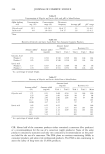
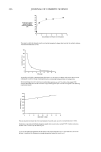
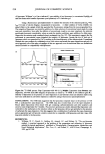
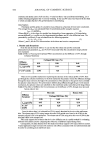
300 JOURNAL OF COSMETIC SCIENCE erythema and edema scores of all test sites. A value less then 2 was considered nonirritating, 2 to 5 mildly irritating and greater than 5 severely irritating. In our case PII value was found to be less than 2 which concludes that the CPA gel formulation is nonirritating. Data Analysis Penetration profiles (plots of cumulative mass released as a function of time) were constructed. The average flux•Ja,½) was calculated from the penetration profile using the equation J,,•= I/A dM/dt ] a,• (I) Where dM/dt [ •½ is the slope of a straight line obtained by a linear regression of M (cumulative amount diffused) rs. t profile over the experimental timeframe, and A is the diffusional area. The permeability coefficient P was calculated from the following equation P = J•,• / (Cd -- Cr)•,• (2) Where Ca and Cr are the CPA concentrations in the donor and receiver compartments. 3. Results and discussions From the data showed in Table 2 we can see that the release rate and the associated physicochemical parameters J•e, and P of CPA decreased when the concentration of gel polymer were increased. Table 2 Effect of Varying Gel (Carbopol 940) Concentrations on the Diffusion of CPA through Cellulose Membrane Carbopol 940 Conc. (%) Diffusion Parameter 0.10 0.20 0.40 J.ve (l•g/cm: h) 5.83 5.13 4.68 P x 10-: (cm/h) 13.90 7.45 6.90 There are two possible mechanisms explaining the decrease in the release profile of CPA from gel through the cellulose membrane. In the first mechanism the polymer resists the diffusion of drugs through the chain network the higher the concentration of the polymer in the gel the more crowded the polymer chains become. This phenomenon inhibits drug diffusion though the gel. In the second mechanism, the polymer chains are adsorbed on the membrane surface and obstruct the drug release. Table 3 The effect of Different Gel Concentrations on the diffusion of CPA through mice skin and human cadaver skin Mice skin I Human Skin Diffusion Parameter Carbopol 940 Conc. (%) 0.20 0.40 0.40 J.ve(pg/cm: h) 0.43 0.39 0.10 P x 10 '4 5.70 5.20 1.70 (cm/h) From the above data, it is indicated hat CPA is poorly absorbed in the mice skin and human skin. The release rates of CPA using human skin after 24 h period were found to be 0.20% in the receptor cell and 0.2% in the epidermis. The release rate of CPA using mice skin were 0.20% • the skin and 0.82% in the receptor cell. This study supports the evidence that the in vitro diffusion rate is a useful method for evaluating different formulations and for comparing the efficiency of different topical dosage form. Consequently, the data obtained from this study most likely support CPA topical delivery system. Topical application might overcome the systemic side effects associated with oral administration and be useful in combating male and female acne.
Purchased for the exclusive use of nofirst nolast (unknown)
From: SCC Media Library & Resource Center (library.scconline.org)