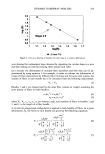
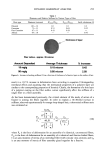
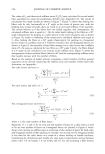
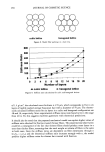
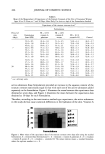
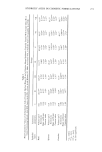
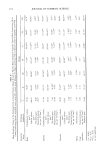
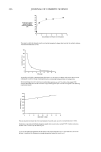
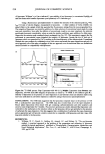
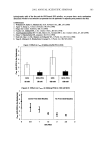
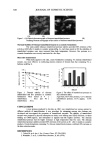
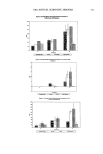
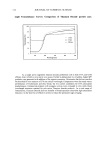
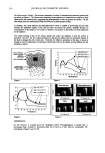
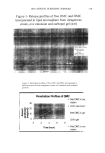
2002 ANNUAL SCIENTIFIC SEMINAR 309 Persea Gratissima (AVOCADO) STEROLS DECREASE UVB INOUCEO PROINFLAMMATORY MEDIATORS Laurie B. Joseph, Ph.D. and Kathy Koukouras Croda, Inc., North American Technical Center, Edison, NJ 08837 •lntroduction It is well known in the literature that the exposure of skin to low levels of UVB radiation can cause the production of proinflammatory chemical mediators, which can cause premature aging. Changes in the production of these mediators, cytokines and prostanoids, in the skin can decrease or increase the potentially damaging effects of UVB irradiation. The ability to modulate the production of these inflammatory mediators through consumer use of substances such as Avocado derived sterols can, in turn, decrease the potentially damaging effects of UVB irradiation. In this series of experiments we investigated the effects of phytosterols (up to 80% sterol) on the production of pro- inflammatory mediators IL-lct, PGE2, and IL-8 caused by low dose UVB exposure (1). IL-lct is a known mediator of fever, inflammation, and an activator of T lymphocytes. It is a nonspecific cytokine produced by epithelial cells, activated macrophages and dead cells. Prostaglandin E 2 is produced when cell membrane phospholipids are perturbed. PGE2 is a nonspecific mediator of inflammation. IL-8 is a member of the Chemokine Family of Interleukins (a chemical mediator which causes cell migration into the site of inflammation), and is produced by various cell types including epithelial cells. IL-8 can recruit acute as well as chronic inflammatory cells (neutrophils and lymphocytes, respectively), and has been implicated in psoriasis (2,3). Materials and Methods A thin film of lotion containing Persea Gratissima (Avocado) Sterols, or lotion base was applied to EpiDerm TM (4) 24H prior to UVB exposure (400joules/m2), and remained on the tissue for a maximum of 48H. At 12, 24, and 48H post UVB irradiation, cells were sacrificed to determine cell viability (4), cytokine (5,6) and prostaglandin production (7). Results Pre-treatment of EpiDerm with either lotion was not cytotoxic (Figure 1). By 12 and 24 H post-UVB exposure there was an across the board decrease in the cell viability of 5% to 95%, as compared to the matched controls. After 48 H UVB exposure, both lotions protected the cells as compared to the EpiDerm exposed to UVB alone. The production of PGE2 was suppressed for both lotions at 12H (Figure 2). At 48H, there was no significant difference in the production of PGE2. At 12H post UVB exposure there was a complete suppression of IL-lct (Figure 3). By 48H post UVB exposure, there was a difference (p=0.1) in the IL-1 ct levels in EpiDerm TM pre-treated with lotion containing phytosterols vs. those treated with either the lotion base or UVB alone. IL-8 production was not completely suppressed 12H after UVB exposure (Figure 4). Twenty-four and 48H after exposure, the Avocado containing lotion had a profound effect on IL-8 production. Interestingly, 48H after UVB exposure, IL-8 production by untreated unexposed control tissue and tissue treated with phytosterol containing lotion plus UVB was not significantly different. From these experiments, we can conclude: 1. 2. 3. 4. Conclusions Avocado sterols are neither cytotoxic nor phototoxic. Neither lotion had an effect on reducing the PGE2 production at 24 or 48 H post UVB exposure. There was no significant difference in PGE2 production among the 3 tested treatments. Application of Avocado lotion prior to UVB exposure decreased IL-1 ct production at 48 hours to 468 pg/ml as compared to either lotion or UVB alone (1242 pg/ml and 1464 pg/ml, respectively). Finally, 48 hours post UVB exposure, the tissue treated with Avocado lotion prior to UVB exposure decreased IL-8 production to the level of the 48 H untreated matched control.

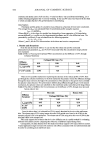
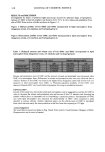
310 JOURNAL OF COSMETIC SCIENCE It is apparent from this data that avocado sterols can effect the production of a known potent proinflammatory mediator of cellular migration, IL-8 (1,2,3). This data suggests that avocado sterols, like other steroids, have a profound effect on chronic inflammatory mediators. The use of phytosterols, specifically avocado derived, in skincare products could combat the deleterious effects seen in chronic inflammatory dermatological conditions such as atopic dermatitis and psoriasis by down regulating IL-8 production from damaged keratinocytes. Acknowledgments The authors wish to thank Jerry Burke, Peter, Cade and Robert Comber, Ph.D. for their numerous helpful discussions throughout this project. All formulas used were made by Robert Lanese in Technical Services at Croda Inc. Kathy Koukouras was the recipient of a Croda Summer 2000 Internship. References 1) The Cytokine Handbook, Thomson, AW, 3 rd Edition, Academic Press, London, UK. 1017 pp. Illustrated, (1998). 2) Konstantinova, NV, Duong, D-MT, Remenyik, E, Hazarika, P, Chuang, A, and Duvic, M. Interleukin-8 is Induced in Skin Equivalents and is Highest in Those Derived from Psoriatic Fibroblasts. J Invest Dermatol, 107(4): 615-621, (1996). 3) Wen, YJ, Chattedee, AD, Raychaudhuri, SP, Raychaudhuri, SK and Farber, EM. Mast Cell Density and IL-8 Expression in Nonlesional and Lesional Psoriatic Skin. Int. d. Derm. 40, 699-703, (2001). 4) MatTek Corporation, EpiDerm (EPI-200) Product Guide MTT Assay, (2000). 5) Endogen Human ELISA IL-lct Kit, (2000). 6) Endogen Human ELISA IL-8 Kit, (2000). 7) Cayman Chemicals Bicyclo Prostaglandin E2 EIA Kit Protocol, (2000). Figure 1: Avocado SteroIs Protect Cells from UVR Damage • Lotion plus Avocado •-LotionsNone - a -UV•None ]
Purchased for the exclusive use of nofirst nolast (unknown)
From: SCC Media Library & Resource Center (library.scconline.org)