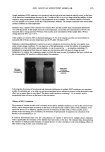
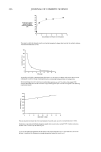
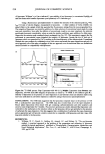
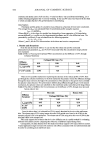
2002 ANNUAL SCIENTIFIC SEMINAR 305 Low MOLECULAR WEIGHT TANNINS As A NEW CLASS OF SKIN-LIGHTENING AGENT Ratan K. Chaudhuri, Ph.D Rona/EM Industries, Inc., Hawthorne, New York 10532 (An Affiliate of Merck KGaA, Darmstadt, Germany) Background: Skin-lightening agents have been widely used to either lighten or depigment the skin. Preparations in the European market tend to be used to treat age spots and freckles, whereas the Asian market uses them to change or modify skin color. A wide variety of skin-lighteners, namely hydroquinone, kojic acid and ascorbic acid derivatives such as magnesium ascorbyl phosphate, have been used for these purposes •'2. A review of the literature shows tha•t many plant extracts with limited standardization have also been shown to have the ability to lighten skin'. Many current skin lighteners have inadequate safety or stability profiles. The purpose of this work was to investigate the effectiveness of a standardized antioxidant fraction 4 ofPhyllanthus emblica fruits (trade named as Emblica •) as a skin lightener. Product Description & Standardization: P. emblica is one of the important Ayurvedic (Science of Life) herbs in India, and has been used for over thousands of years for a wide variety of human ailments. Its status ranges from insignificant in the western world to highly prized in tropical Asia. The fi'uits are selected, harvested and processed according to strict criteria to ensure a consistently high quality product. Emblica antioxidant is extracted from premium quality fruits using a water-based process (US Patent # 6,124,268 and pending patents). Emblica antioxidant is distinctly different from other commercially available extracts ofP. emblica fruits as it is defined to the extent of well over 50% (typically, 60 to 70%) in terms of its key chemical components. None of the extracts of P. emblica in the market compare to Emblica antioxidant in composition and consistency of composition, aqueous stability and color. The low molecular weight (1,000) hydrolyzable tannins, namely Emblicanin A and Emblicanin B, along with Pedunculagin and Punigluconin are the key ingredients in Emblica antioxidant. In nature, Emblicanin A and Emblicanin B have only been found in P. emblica plants 5. Emblica antioxidant has been standardized (Monograph on Emblica, Merck KGaA, 2001) by using high performance thin layer chromatography (HPTLC). Alternately, the product can be standardized by using high performance liquid chromatography (HPLC). Product Safety: A repeat insult patch test was conducted with 100 human subjects to determine the potential for Emblica to produce primary irritation and primary sensitization. Emblica has been found to be a non-primary irritant and a non-primary sensitizer to the human skin. A phototoxicity test was conducted with 20 human subjects to determine the potential for Emblica (2% in water) to produce phototoxicity from a single derreal application. Emblica is found to be non-phototoxic. In both studies, no adverse effects or unexpected reactions of any kind were observed on any of the subjects. Emblica is non-mutagenic, has an oral LDs0 of5,000 mg/kg (rats) and is minimally irritating to eyes. Product Stability: Long term aqueous stability (12 months at 45 øC) of Emblica antioxidant was determined by monitoring its antioxidant activity using diphenylpicrylhydrazide (DPPH) test. The DPPH method is a simple colorimetric assay for determining antioxidant activity based on the decrease in absorbance at 517 nm of the DPPH radical (deep purple) after the addition of an antioxidant compound in an aqueous ethanolic solution. Emblica antioxidant retains its antioxidant activity to the fullest extent after 12 months at 45 øC, while others failed. Additionally, a minimal batch to batch variation in antioxidant activity of Emblica antioxidant is seen in this test. Sk'in Lightening Clinical Studies: Three separate clinical studies were de, he to determine the potential of Emblica as a skin lightener. Study 1: 2% Emblica vs 2% Hydroquinone (13 Asians) Study 2: 2% Emblica vs 2% Hydroquinone (13 Hispanics) Study 3:1" J Emblica vs 3% Magnesium Ascorbyl Phosphate (MAP, 16 Asians). Human Volunteers with skin Types III and IV (as defined by the Fitzpatrick Phototype Scale) were selected for these studies. • Emblica is a trade name product of Merck KGaA, Darmstadt, Germany & EM Industries, Inc, USA

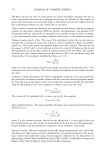
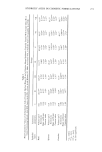
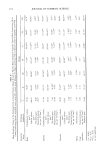
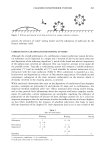
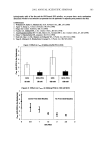
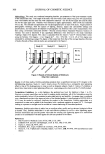
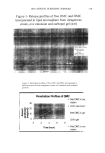
306 JOURNAL OF COSMETIC SCIENCE Methodology: This study was conducted comparing baseline, pre-treatment to final post-treatment results of the selected test sites. The length of the study was nine weeks. Each subject was given two (2) products (one with Emblica and the other one with competitive material) - one for the left upper arm and the other one for the right upper arm. Panelists were instructed to apply approximately .05ml of the test materials twice a day. The selected test application site was photographed prior to start of the study. Rigid control of photographic technique, from the aspects of lighting, distance, angles and camera/film settings and specifications, and subsequent development of photographs was followed. Skin color measurements were done using a tristimulus instrument (CR300 - Minolta Chroma Meter). Repeated Measures Analysis of variance was used to determine if any significant differences were observed in the mean Individual Typology Angle (ITA degree). This value is calculated from the mean L* and b* Chroma Meter values using the formula: ITA Degree = [ Arc Tangent ((L* - 50 ) / b*)] 180 / 3.1416. AE of ITA degree was calculated by subtracting average ITA degree of the treated site from that of the average baseline (first day of study). Results of these clinical studies are summarized in the Figure 1. Studv # 1 Studv# 2 Studv# 3 6-[ • ' ' ' • 4 Figure 1: Results of Clincal Studies of Emblica & Other Skin Lighteners la3 wks I I El6 wks El9 wks Results: In all three studies, Emblica-containing products show a significant increase in ITA degree vs the corresponding baselines. Study #s I and 2 clearly shows 2% Emblica has a comparable skin lightening effect to that of 2% Hydroquinone in Asian as well as Hispanic subjects. Study # 3 shows 1% Emblica is about three times better in skin lightening efficacy on a percentage-active basis over the 3% MAP product. Formulation Guidelines: As a skin lightener, the preferred use level for Emblica is from 1 to 2%. Nonionic or anionic emulsifiers can be used for making stable emulsions. pH of the formulations must be acidic (preferably, below 6.0) to maintain its antioxidant activity and stability. An opaque base is preferred over a translucent one due to the improved color of the finished product. A small amount of EDTA (0.05 to 0.1%) may be needed to uniformly distribute the product in the formulation. Emblica antioxidant as a suspension in water can be added to the formulation with a moderate agitation at around 40 øC. Prolonged heating or exposure to sunlight must be avoided as it causes darkening of formulated products. Summary: Emblica antioxidant is stable, has an excellent safety profile and no adverse biological effects to human. Thus, Emblica antioxidant is a safe and effective product for use as a skin lightening agent. Emblica antioxidant may provide greater value than the existing skin lightening agents as a stand-alone product or in combination with other agents for skin care products of the future. References: 1. Zhai H. and H.I. Maibach, Costa. & Toil., 116, 21-25, 2001. 2. Zuidhoff, H.W. and J.M. van Rijsbergen, Costa. & Toil., 116, 53-59, 2001. 3. Gupta, S., Happi, 3•8, 90-93, 2001. 4. Chaudhuri, R.K., SoaRs. Perfumery & Cosmetics, 174, 28-30, 2001. 5. Ghosal S., V.K. Triphati and S. Chauhan, Indian J. of Chcm., 35B, 941-948, 1996 and references cited therein.
Purchased for the exclusive use of nofirst nolast (unknown)
From: SCC Media Library & Resource Center (library.scconline.org)