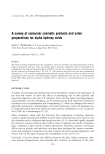
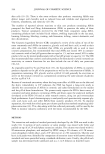
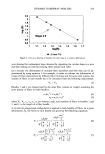
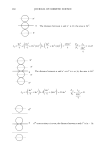
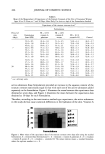
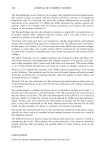
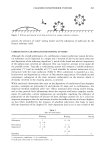
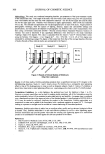
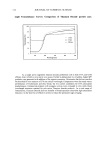
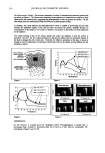
314 JOURNAL OF COSMETIC SCIENCE Light Transmittance Curves: Comparison of Titanium Dioxide particle sizes //"• -•- 15nm .... • m 35nm _ -• m 250 nm 300 400 $oo 600 700 Wavelength (rim) As a single active ingredient titanium dioxide performed well in both UVA and UVB efficacy trials in both in vitro and in vivo assays. Further to demonstrate its versatility, higher SPF products were generated with addition of the organic sunscreen, Octinoxate, that did not sacrifice the threshold in vitro measure of 370 nm critical wavelength. Comparisons were also made versus performance of Avobenzone and Zinc Oxide, the two current contenders for UVA attenuation predominance. Commercial products with inorganic actives were evaluated in vitro with critical wavelength minimum retained for sole active Titanium dioxide products. In a wide range of formulations, Titanium Dioxide delivers benefits of broad-spectrum ultraviolet light attenuation that puts it in the short list of effective actives to reduce the premature signs of aging.

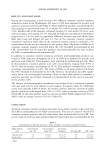
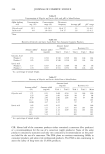
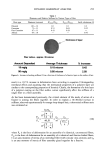
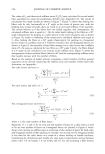
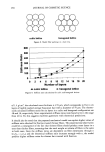
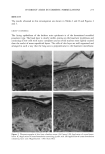
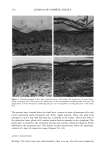
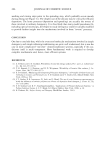
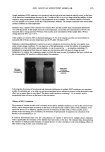
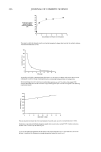
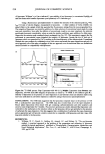
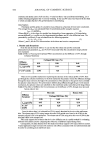
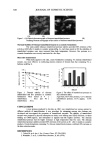
2002 ANNUAL SCIENTIFIC SEMINAR 315 SUBSURFACE UV DAMAGE IN SKIN Yash K. Kamath, Ph.D., Sigrid B. Ruetsch and B. Yang TRI Princeton, Princeton, NJ 08540 INTRODUCTION Sunscreens are extensively used in skin care preparations. The efficacy of these compounds as skin protectors is often determined by the effect on the surface of the skin. Many of the studies do not explicitly deal with the changes which occur in the subsurface regions of the epidermis of the skin. In the past, at TRI, we have studied the photodegradation of hair using sunscreens and have shown the effectiYeness of some of these compounds in protecting hair [ 1]. We have studied the photo-protection of synthetic fibers in parallel, using UV stabilizers. In these studies we have observed that photodamage does not always occur by direct impact of a photon with the segment of a molecule, but can also take place by secondary free radical reactions in locations far removed from the regions of photon impact. This happens by the diffusion of free radicals within the material. The environmental conditions, which affect the diffusion of free radicals will have an impact on the rate and extent of damage. We have used UV microspectrophotometry and microfiuorometry to characterize the damage. UV microspectrophotometry can locate damage within the sample ff measurements are done on appropriately prepared cross-sections. Microfiuorometry is ideally suited to evaluate surface damage. In this work we have investigated the protective effect of a water soluble sunscreen benzophenone4 and zinc oxide and titanium dioxide. All this work was done "in vitro" on Yucatan pig skin obtained from Charles River Labs, Windham, ME. Thin sections of the epidermis were excised from the sample and were exposed to Xenon radiation from an Atlas Weather-O-meter. Benzophenone was applied as a solution (10%). Zinc oxide and titanium dioxides were applied in the form of dispersions, leaving a film on the surface. The radiation simulated the sun spectrum and the exposure conditions were similar to 45 ø Miami summer sunlight. The energy density in the different wavelength ranges of the spectrum were: 250- 300 nm - 0.012mW/cm2 300400nm - 5.06mW/cm 2, and 400-800nm - 36.SmW/cm 2 . The peak intensity at 340nm was 0.3W/m 2. The temperature was 50øC at 50% RH. The skin samples were microtomed and the UV spectra of the sections in different regions of the epidermis were obtained. Some specimens were also prepared for microfluorometric study by staining the surface with Rhodamme B. The specimen was excited with green light and the intensity of fluorescence emission was recorded. E•mple fluoromicrographs were also made to demonstrate the effect of sunscreens on the protection of the surface. RESULTS AND DISCUSSION UV Microspectrophotometric Studies: The [IV spectra of these samples were obtained from the spinous cell region of the epidermis, which is shown in Figure 1. Typical UV spectra of the untreated skin before and after exposure indicate that the absorbance in the 280 and 320nm region increases with UV exposure. The subsurface protective effect of benzophenone4 can be seen clearly from Figure 2, in which the spectra of the benzophenone treated skin are shown before and after UV exposure. The increases in absorbance in the 280 and 320nm region are suppressed by the sunscreen. Figure 3 shows similar UV spectra for hair treated with TiO2. High absorbances are observed in the 280nm region indicating that surface deposition of titanium dioxide does not protect the subsurface regions of the skin.
Purchased for the exclusive use of nofirst nolast (unknown)
From: SCC Media Library & Resource Center (library.scconline.org)