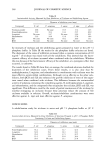
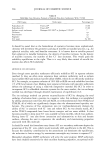
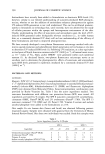
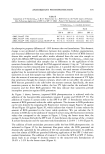
528 JOURNAL OF COSMETIC SCIENCE energy that must be transferred to a material to induce physical changes, it allows measuring the heat of vaporization, melting, and phase transition of different materials. In his studies, Cao (11) identified two characteristic temperature ranges: one, from 0øC to 200øC, for water present in hair, and the other, from 250øC to 280øC, for the crystalline phase transition of tx-keratin. Gas chromatography (GC) techniques using a mass spectrometry detector (GS/MS) have been applied for forensic purposes to detect traces of drugs in hair fibers (13,14). When heated, hair releases a vapor whose components can be identified and quantified by injecting the vapor into a gas chromatograph. The thermal conductivity detector asso- ciated with the GC technique is appropriate and sufficiently sensitive for the detection and quantification of water and carbon dioxide in gas mixtures (15). The objective of this study was threefold: to apply DSC techniques to evaluate the intensity of the bonding energy of water to hair to apply GC techniques to quantify the amount of water present in hair fibers as a result of a variety of cosmetic treatments and to determine whether the resulting values correspond to the moisturizing sensation perceived by consumers. MATERIALS AND METHODS Two treatments (1 and 2) were evaluated with leave-on products recommended for damaged hair, and two treatments (3 and 4) were evaluated with rinse-off products recommended for normal hair. Standard Caucasian medium-brown hair tresses (De Meo Brothers), measuring 30 cm in length and weighing approximately 2.0 g each, were prepared for this study. For the treatments recommended for damaged hair, the tresses were bleached for 30 minutes in a solution containing hydrogen peroxide (20 vol.), reagent grade ammonium hydroxide, and reagent grade ammonium persulfate in the ratio of 2:1:0.5, respectively. Each tress was previously washed with 10% lauryl ether sodium sulfate to remove impurities. All tresses were wetted under a constant flow of distilled water (10 ml/s) for 15 seconds and treated with 200 pl of each product the products were applied along the length of the tresses and massaged over the fibers for 15 seconds. Except for those treated with leave-on products, the tresses were rinsed under a constant flow of distilled water (10 ml/s) for 15 seconds and then dried with a professional hairdryer at room temperature (24øC + 1). This entire procedure represented one wash. Five washes were carried out for each treatment (Table I). The control tress was treated in the same way as all the others, except for the application of the moisturizing products. Table I Hair Tress Treatments Treatment Product Tress condition 1 A (Not rinsed) Damaged 2 B (Not rinsed) Damaged 3 C (Rinsed) Undamaged 4 D (Rinsed) Undamaged

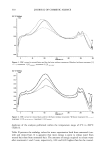
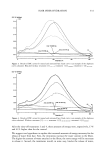
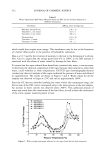
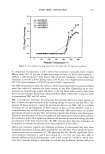
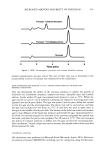
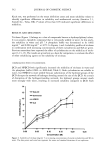
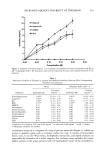
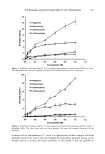
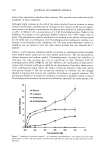
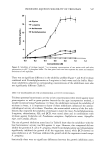
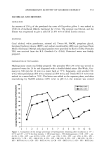
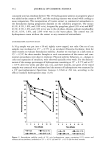
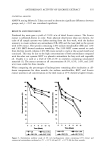
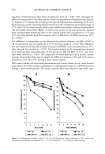
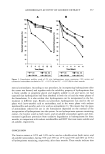
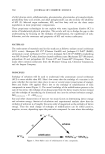
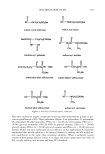
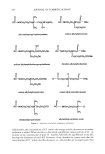
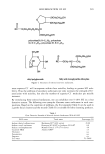
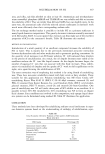
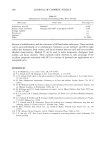
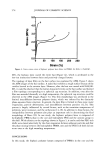
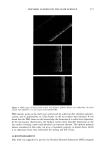
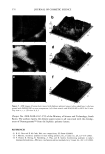
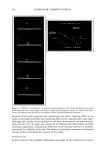
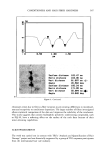
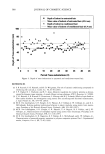
HAIR FIBER HYDRATION 529 The tresses were maintained for 36 hours in an environment adjusted to 20ø-22øC and a relative humidity of 50-60%. A DSC 204 Netzsch TASC 414/3A was used for the tests, which were performed in duplicate. The samples consisted of approximately 7.5 mg of entire tresses cut into pieces, homogenized, and divided for the DSC and GC tests. Compressed air was used with a flow rate of 10 ml/min and a heating rate of 20øC/min. The tests were conducted within the temperature range of -10øC to 300øC. The pan used in the DSC tests was made of aluminum and sealed under pressure. An empty pan of the same type was employed as a reference and tested under the same experimental conditions used for the samples. The hair mass used for the chromatographic analysis (GC) was approximately 0.1 g. The oven was maintained in an atmosphere of nitrogen (82) and heated at a rate of 2.0øC/ min (25 ø to 300øC). The oven outlet was connected to a semi-automatic injection valve for sampling the gas generated by evaporation and thermal breakdown the samples were subsequently analyzed to determine the composition of the gas. The GC used in this study was a Shimadzu GC-8A chromatograph equipped both with a Porapak-Q column for the separation of water and a PM-5A column (molecular sieves) for the separation of CO 2. The carrier gas was He (35 ml/min), with an injector/detector temperature of 140øC and a column temperature of 100ø-130øC the heating rate was 5øC/min. A thermal conductivity detector (TCD) was employed. Nitrogen served as the internal reference gas for the determination of the percentages of water and carbon dioxide. The correction factor for each sample was determined from the analytical curves provided by the detector response for the different volumes of injected substance (820 , CO2, or 82). The sensory evaluation panel was conducted with 41 consumers of hair treatment products. This was an ordination test in which the subjects were asked to assess the hydration levels of two groups of three hair tresses each, which had undergone the same moisturizing treatments as those described above. For the statistical analysis of the results, the score frequencies per product were compared with the Cochran-Mantel- Haenszel (CMH) statistics, using the orders as scores. The description of the general application of CMH statistics for the cases in which an ordinal response is associated with a classificatory variable was cited by Agresti (16). We assumed that the average scores for the reference population were the same across the entire assortment of products used in this study this hypothesis was tested and proved to be sound. The calculations and preparation of the database were performed with the aid of the SAS system. RESULTS AND DISCUSSION Figures 1 and 2 show the DSC curves both for untreated hair and for hair subjected to the four treatments described previously. The peaks correspond to hair degradation. Upward peaks represent endothermic reactions, with the first lowest peak corresponding to the release of water. The second and third peaks denote endothermic fusion reactions of keratin polypeptide chains (11). Figures 3 and 4 show details of the first lowest endothermic peak corresponding to AH values for water vaporization (AHvap). These enthalpy values were collected for each
Purchased for the exclusive use of nofirst nolast (unknown)
From: SCC Media Library & Resource Center (library.scconline.org)