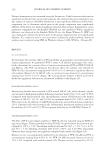
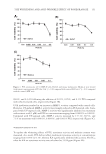
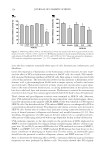
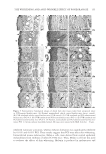
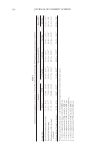
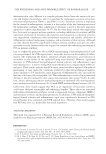
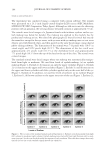
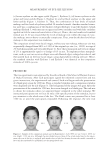
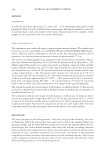
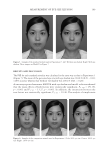
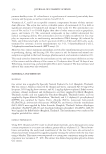
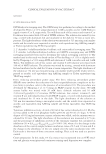
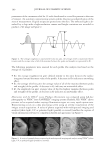
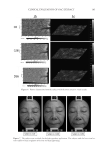
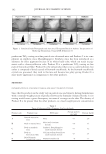
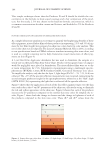
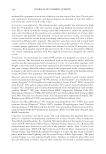
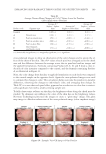
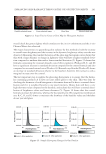
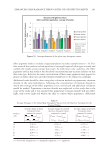
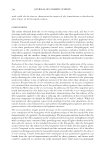
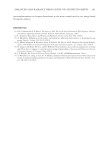
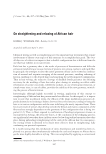
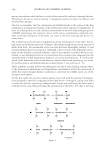
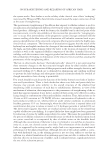
MEASUREMENT OF EYE SIZE ILLUSION 165 (c) brown eyeliner on the upper eyelid (Figure 1, Eyeliner 3) (d) brown eyeliner on the upper and lower eyelids (Figure 1, Eyeliner 4) and (e) black eyeliner on the upper and lower eyelids (Figure 1, Eyeliner 5). Thus, the combination of four levels of eyelash makeup and fi ve levels of eyeliner yielded 20 standard stimuli. Another standard stimu- lus used was a combination of the thickest eyeliner (Eyeliner 4) and the thickest eyelash makeup (Eyelash 5, with mascara on upper and lower eyelashes and with false eyelashes applied on both the inner and outer halves of the eye). Hence, the total number of standard stimuli was 21. It was ensured that the levels of makeup were within the range of every- day makeup, not too heavy or unusually conspicuous. Thus, even the thickest level of eye makeup in this experiment was moderate. The comparison stimuli were facial images, without any eye makeup, whose eye size was sequentially changed from 88% to 112% of the original eye size (i.e., 100%) in steps of 2% both horizontally and vertically (Figure 2). Note that a horizontal and vertical change of 2% is approximately equal to a change of 4% in area. To implement these manipula- tions, each eye was cut out as an elliptic area with blurred edges, enlarged or reduced, and then pasted back on the base facial image, using digital photo editing software. Hence, the standard stimulus with Eyeliner 1 and Eyelash 1 was identical to the comparison stimulus of 100% eye size. PROCEDURE The two experiments were approved by the ethical board of the School of Human Sciences of Osaka University. After each participant signed the informed consent form and was given instructions, the experimental task started. Each trial began with the presentation of a blank gray screen for 1000 ms. Then, a standard stimulus and a comparison stimulus were displayed side by side (Figure 3). The background of the images was gray. After the presentation of the stimuli for 1500 ms, the screen changed to a blank gray. The task was to choose the stimulus whose eyes appeared larger compared to the other stimulus. We instructed participants not to focus on only a few specifi c points of the stimulus, but to pay attention to the whole area of the face. The blank screen was presented for at least 1500 ms or until the participants responded. Following the response, the next trial Figure 2. Samples of the comparison stimuli used in Experiment 1. Left: 88% eye size. Center: 100% eye size. Right: 112% eye size. Although the eyes shown here are those of the actual model used in the experi- ment, the rest of the face is replaced with another face to hide her identity because the model consented to have only her unaltered face published, not the manipulated ones.

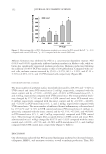
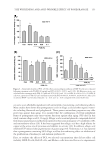
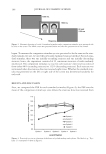
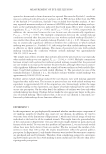
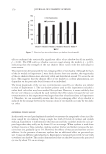
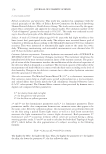
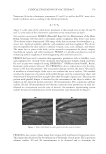
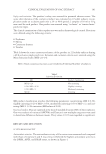
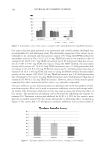
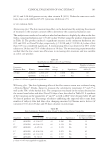
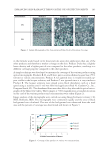
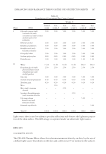
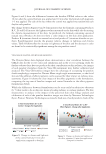
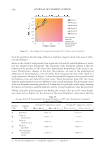
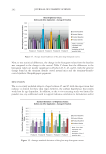
JOURNAL OF COSMETIC SCIENCE 166 began. To measure the comparison stimulus eye size perceived to be the same as the stan- dard stimulus eye size, we used the previously explained staircase method. For each stan- dard stimulus, there was one initially ascending staircase and one initially descending staircase hence, the experiment consisted of 42 concurrent staircases of trials randomly interleaved. The comparison stimulus eye size for each staircase’s fi rst trial was selected from either 88% (ascending staircase) or 112% (descending staircase). Each staircase was terminated when the staircase direction reversed eight times. Whether the standard stim- ulus was presented on the left or right side of the screen was determined randomly for each trial. RESULTS AND DISCUSSION First, we computed the PSE for each standard stimulus (Figure 4) the PSE was the mean of the comparison stimuli eye sizes where the staircase direction reversed from Figure 3. Schematic drawing of a trial. A standard stimulus and a comparison stimulus were presented side by side on the screen. The blank screen was presented before and after the presentation of the stimuli. Figure 4. Perceived eye size as a function of thickness of eyelash makeup and eyeliner. The labels (e.g., “Eye- liner 1”) correspond to those in Figure 1.
Purchased for the exclusive use of nofirst nolast (unknown)
From: SCC Media Library & Resource Center (library.scconline.org)