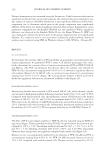
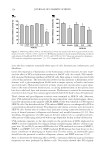
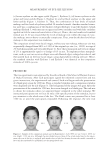
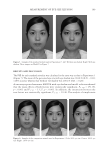
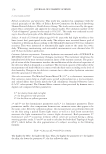
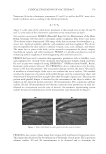
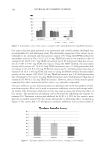
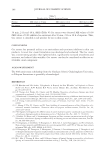
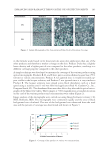
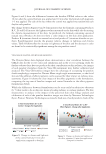
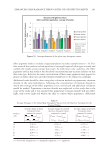
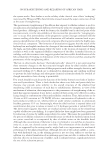
CLINICAL EVALUATION OF GAC EXTRACT 179 Variations (Δ) in the colorimetric parameters L* and b* as well as the ITA° were calcu- lated in arbitrary units according to the following formula: Δ = Ti−T0 where Ti is the value of the colorimetric parameter at the treated zone on days 28 and 56 and T0 is the value of the colorimetric parameter at the treated zone on day 0. Skin roughness measurement. PRIMOS (Phaseshift Rapid In Vivo Measurement of the Skin), Berlin, Germany (20) was used to determine surface roughness. This device uses micro 3D to obtain a three-dimensional (3D) image of the skin to measure facial wrinkles (e.g., crow’s feet, forehead wrinkles, glabella, and nasolabia) and skin roughness. The device also microprofi les the skin surface to identify wounds, scars, acne, allergies, and wheals. The entire face or parts of the body can be assessed in preparation for plastic surgery, maxillofacial surgery, and other treatments. PRIMOS is a reliable and objective tool for evaluating surface roughness of normal-appearing skin and burn scars (21). PRIMOS has been used to measure skin appearance parameters such as wrinkles, scars, and roughness (21). A study of the cutaneous relief parameters (length, depth, and wrin- kle area in μm) was completed using PRIMOSlite® (GFMesstechnik GmbH, Berlin, Germany) with an alysis software. The PRIMOSlite device represents recent develop- ments in 3D skin measurement. The associated technique involves the direct 3D analysis of wrinkles at a lateral angle of the eye in vivo without the use of replicas. This method involves the projection of a pattern with parallel fringes onto the measurement object and observation of the pattern from an angle other than the angle of projection. The projected pattern with parallel fringes is distorted by the unevenness of the object’s surface. An analysis of the distorted pattern generates 3D measurements. The acquisition software enables 2D and 3D measurements and obtains cutaneous relief parameters on radii dis- tributed in a star pattern over the zone of interest. An automatic repositioning system enables the precise reidentifi cation of the measurement zone illustrated by Figure 1. Figure 1. Radii distributed in a star pattern over the zone of interest. PRIMOSlite also creates a phase image from images with interference fringe projections. This image then facilitates the determination of the height of each point. The acquisition software enables 2D and 3D measurements to be obtained and to determine the

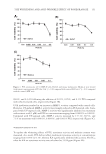
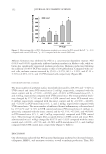
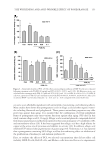
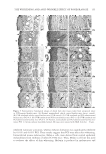
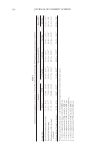
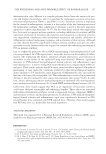
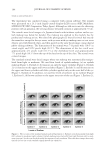
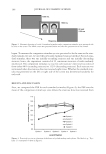
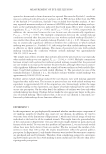
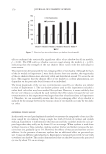
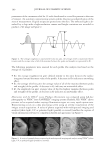
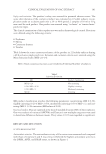
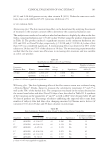
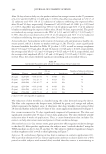
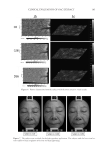
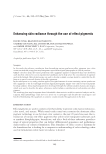
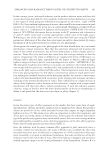
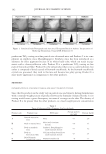
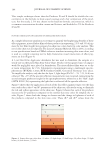
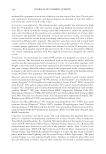
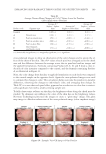
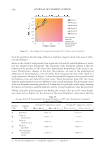
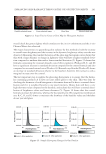
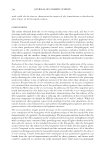
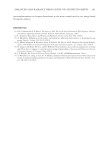
JOURNAL OF COSMETIC SCIENCE 180 The following parameters were assessed for each profi le (the analysis was based on the average of 32 profi les): • Ra, the average roughness (in μm): defi ned similar to the ratio between the surface integrated around the mean value of the profi le. A decrease in Ra indicates a smoothing effect. • Rz, the average relief (in μm): the average value of all of the maxima (between peaks and troughs) of the profi le. A decrease in Rz indicates an antiwrinkle effect. • Rt, the amplitude (in μm): average value of the fi ve highest maxima (between peaks and troughs) of the profi le. A decrease in Rt indicates an antiwrinkle effect. Illustrations with the VISIA® system. Product effectiveness was evaluated using full-face photography via VISIA® from CANFIELD® imaging systems (Fairfi eld, NJ). VISIA® allows pictures to be acquired under varying illumination types at a very rapid capture rate. Repositioning occurs on a data processing screen using an overlay visualization of the images at each acquisition. A series of photos acquired with multispectral imaging and analysis [white light, UV, or polarized light (parallel or crossed)] enables the capture of visual information relevant to complexion health and appearance in Figure 3. Figure 2. The average roughness is represented by Ra (in μm), the average relief is represented by Rz (in μm), and the average value of all of the maxima (between the peaks and troughs) is represented by Rt. Figure 3. A series of example photos acquired with multispectral imaging and analysis using VISIA® [white light, UV, or polarized light (parallel or crossed)]. parameters of the cutaneous relief for 32 radii distributed in a star-like pattern in the zone of interest. An automatic repositioning system enables the precise reidentifi cation of the zone of measurement. Digital stripes are spotted onto the skin. The refl ected light is ab- sorbed by a chip with a high-resolution camera and height variations are recorded to produce a 3D image in Figure 2.
Purchased for the exclusive use of nofirst nolast (unknown)
From: SCC Media Library & Resource Center (library.scconline.org)