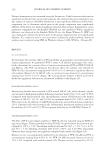
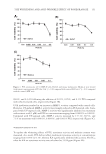
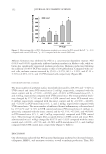
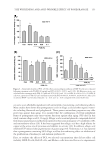
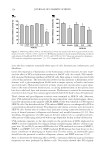
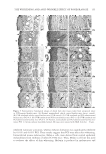
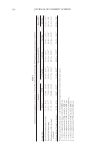
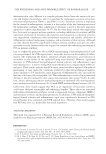
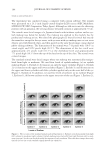
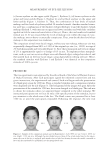
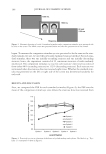
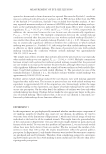
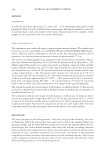
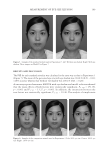
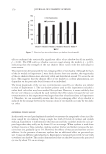
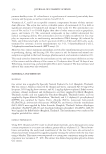
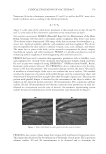
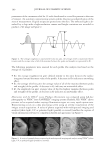
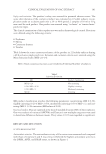
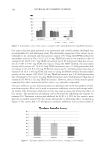
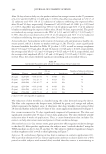
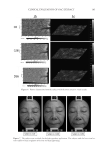
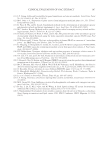
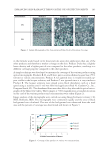
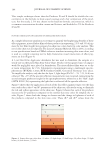
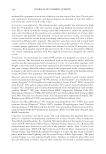
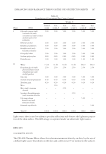
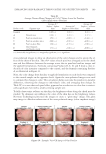
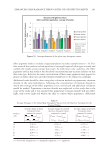
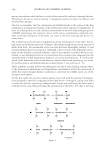
ENHANCING SKIN RADIANCE THROUGH THE USE OF EFFECT PIGMENTS 199 cross-polarized images to allow an observation of the color changes and to ignore the ef- fects of the shine of the skin. The a*b* values of each pixel was averaged across the cheek area and the difference between the average across the six panelists baseline images and the applied formulations. Formulas containing Products B, C, D, and E show a clear re- duction of color intensity compared to the control, and the formula containing Product A, as illustrated in Figure 11. Next, the color change from baseline to applied formulation on each cheek was compared to the control sample on the opposite cheek. Again the cross polarized images were used to compare this change in color. This calculation helps overcome the panelist-to-panelist differences, observing the changes to individual’s color, and averaging that change. In Table IV, it is seen that each pearl effect pigment has a reduction in color that is statisti- cally signifi cant even with a small screening sample size. To fully characterize radiance on the skin, the brightness values along the cheek must be studied. To eliminate any infl uence the color of the skin has on the brightness values, Newtone Technologies processed the images to create a “gloss map” image. The gloss map image is a Boolean subtraction of the cross polarized image (color emphasis image) Table III Average Chroma Meter Changes in L*a*b* Values Across Six Panelists (After Application—Baseline) Product code Pigment type Average dL* (higher = lighter skin) Average da* (higher = redder skin) Average db* (higher = yellower skin) Control – 0.05 (−) −0.06 (−) 0.31 (++) A Natural mica −0.06 (−) −0.20 (−) 0.47 (−) B Pearl on natural mica 1.53 (++) −1.60 (++) −3.44 (++) C Pearl on synthetic mica 2.22 (++) −0.80 (+) −4.06 (++) D Pearl on glass fl ake 1.26 (++) −0.70 (+) −1.90 (++) E Dried bismuth oxychloride crystal 1.74 (++) −1.06 (++) −0.88 (++) (−): Statistically insignifi cant, (+): marginally signifi cant, (++): signifi cant. Figure 10. Example Visia CR Images of One Panelist

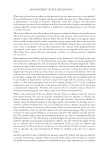
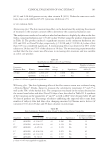
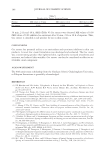
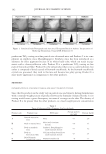
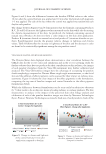
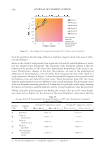
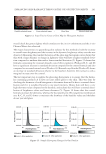
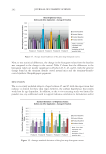
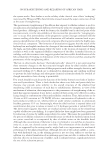
JOURNAL OF COSMETIC SCIENCE 200 from the parallel polarized image (refl ection emphasis image) to show only areas of refl ec- tion and radiance. Areas on the cheek of each panelist were again selected and the pixel brightness or inten- sity was tabulated into histograms. The advantage of the histogram analysis is that the behavior of the product on the entire three dimensional morphology of the cheek is cap- tured. Characteristic changes to the skin, like radiance, are seen in the mathematical defi nitions of the histogram curves (5) rather than averaging the area of the cheek to a single parameter. Images in Figure 13 show the example histograms of one panelist with the baseline curve seen behind the fi nal curve. These histograms show that the curves with the applied products are very different to the control histogram. The histogram curves of the test formulas containing products A–E show less of a peak and a wider range, meaning the skin is not having a uniform lightness and the average brightness value has increased. Taking each gloss map histogram and fi nding the average value gives the mean bright- ness value seen in Figure 14. An increase in the mean brightness value means that the Figure 11. Visia images color change from averaged a*b* values across six panelists. Table IV Average Visia CR Cross-Polarized Images Changes in a*b* from the Baseline Compared to the Control Values Product Code Pigment Type Average da* compared to control ¯ ¡ ° * * * * 10min baseline 10min baseline product control – – a a a a Average db* compared to control ¯ ¡ ° * * * * 10min baseline 10min baseline product control – – b b b b A Raw mica −0.01 (−) −0.12 (−) B Pearl on natural mica −1.53 (++) −1.5 (−) C Pearl on synthetic mica −0.46 (−) −1.71 (++) D Pearl on glass fl ake −0.94 (++) −0.85 (−) E Dried bismuth oxychloride crystal −1.40 (++) −0.64 (++) (−): Statistically insignifi cant, (+): marginally signifi cant, (++): signifi cant.
Purchased for the exclusive use of nofirst nolast (unknown)
From: SCC Media Library & Resource Center (library.scconline.org)