J. Cosmet. Sci., 66, 207–210 (May/June 2015) 207 On straightening and relaxing of African hair LESZEK J. WOLFRAM, PhD., Berkeley CA 94708. Accepted for publication April 5, 2015. Chemical waving as well as straightening are two important hair treatments that require involvement of almost every aspect of hair structure to accomplish their goals. The over- all objective of either is to impart to hair a durable confi guration that is different from the one that hair exhibits in its native form. Each hair has a geometry that is the result of processes of keratinization and follicular extrusion transforming a viscous mixture of proteins into strong, resilient, and rigid fi ber. In principle, the attempts to alter the native geometry of hair can be viewed as combina- tion of reversal and stepwise restaging of the natural processes, entailing softening of keratin, molding it to the desired shape and annealing the newly imparted confi guration. Thus in hair waving, the reductive cleavage of disulfi de bonds generates the softening necessary for the molding of hair that takes place during its winding on rollers while reformation of cystine cross-links, whether by oxidant, in case of mercaptan reduction, or simple water rinse, in case of sulfi te, provides the stability of the new geometry, mimick- ing the process of keratinization. Interestingly, although highly successful in waving, application of this concept to straightening of African hair has proven much less effective. In this regard, it is impor- tant to note that in physical terms, the effi cacy of the shape modifi cation processes de- pends ultimately on attaining a balance between forces of retraction, tending to bring the hair to its native confi guration and the ones stabilizing the newly imparted form. These forces are result of stresses that develop in both the helical and matrix components of the fi ber and are strongly dependent on the geometry of the confi guration that is being im- parted (1,2). Thus, in fi bers exposed to combination of bending/compression stresses, as encountered in waving, the retractive forces, at the conclusion of the reshaping process, are signifi cantly lower than those in fi bers treated at low longitudinal extension that takes place during unbending (straightening) of the curls of the African hair. In consequence, the waving of hair is destined to be much more effective than its straightening, fully confi rming our practical experience. It is worth noting that this mechanism of stress distribution and transfer has been ex- ploited in a process that simultaneously unbends the curls and imparts to African hair a gentle wave highly desirable in styling. This is accomplished by applying a conventional Address all correspondence to Leszek J. Wolfram at ljmaw@aol.com.

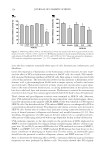
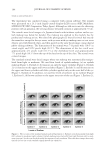
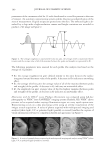
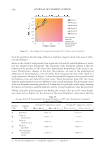
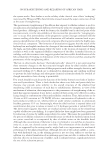
JOURNAL OF COSMETIC SCIENCE 208 waving formulation while the hair is on the rollers instead of combing it through the hair. This process, known as “reverse waving,” is frequently used on account of its effi cacy and minimal hair damage. One has to remember that the reformation of disulfi de bonds in the course of the hair reshaping is an important element of the stabilization of the imparted confi guration. If these are subsequently severed, whether intentionally or by slow and prolonged process of SS/SH interchange, the retractive forces of the native conformation, primarily resi- dent in the helical regions of the fi ber, can come to the fore restoring the hair to its native form. The underpinning of permanent straightening of hair (relaxing) lies in the effect that al- kali exerts on the keratin structure. Owing to the industrial importance of the reaction of alkali with wool, the mechanism of the reaction has been thoroughly studied (3) and several pathways have been proposed. Although a direct attack of the hydroxide nucleo- phile on the disulfi de cross-link (similar to that of mercaptides or sulfi tes) has been con- sidered, it was abandoned in favor of a mechanism that accounts more adequately for the experimentally verifi ed degradation products of cystine decomposition. It involves the attack of the hydroxide anion on the adjacent carbon–sulfur bond generating, as a result, the perthiocysteine and dehydroalanine residues (Figure 1, see reactions A - C). These pathways account well for the subsequent cascade of steps leading, among others, to the formation of lanthionine and lysinoalanine cross-links as well as the generation of sulfur that under strongly alkaline conditions is converted into sulfi de anion, one of the strongest nucleophiles. On the fi rst sight, this reaction scheme appears to fi t well with the pattern of manipula- tions designed to alter hair confi guration described above—cleavage of cystine cross-links to soften the hair for imparting confi gurational change and stabilizing the latter with a network of new cross-links providing the permanency of the effect. Yet, that is not how Figure 1.
Purchased for the exclusive use of nofirst nolast (unknown)
From: SCC Media Library & Resource Center (library.scconline.org)