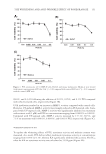
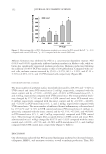
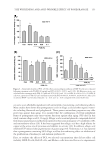
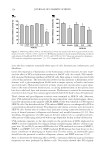
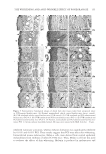
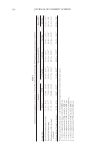
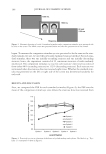
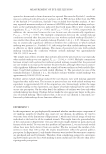
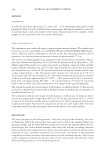
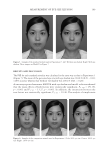
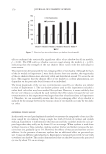
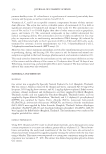
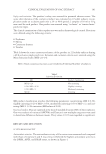
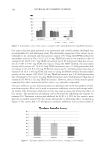
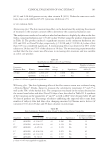
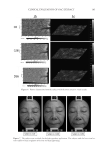
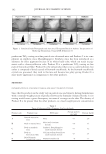
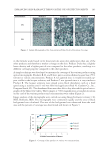
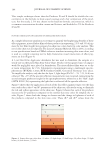
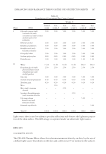
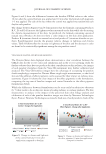
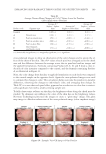
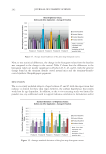
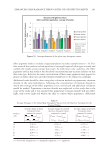
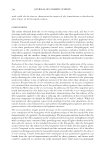
ENHANCING SKIN RADIANCE THROUGH THE USE OF EFFECT PIGMENTS 203 effect pigment needs to include a larger population to reduce sample error (n 6). Fur- ther research also needs to include panelists of varying Fitzpatrick skin types to study and confi rm the results across various skin tones. As with most color cosmetics, the effect pigments used in this study at the described concentrations may increase radiance on this skin tone type however, the same concentration of these same pigments may appear too glossy on darker skin tones and the formulas would have to be adjusted accordingly. Additional work should be done using this evaluation method on pigmentary titanium dioxide in the same formulation. Adjusting the concentration of titanium dioxide to match the coverage of the effect pigments is not a trivial task and additional validation would be needed. Pigmentary titanium dioxide was neglected in this study due to the scope of the study and it was assumed that pigmentary titanium dioxide will not refl ect light, only scatter light and whiten the skin to a matte white appearance. Additional Figure 16. Average skewness of the gloss map histogram curves. Table V Average Changes in the Gloss Map Histogram Values from the Baseline Compared to the Control Values Product code Average change in mean histogram values compared to control 10min baseline product 10min baseline control – – x x x x ¯ ¡ ° ¡ ° ¡ ° ¡ ° Average change in standard deviation histogram values compared to control 10min product 10min baseline control – – T Tbaseline T T ¯ ¡ ° ¡ ° ¡ ° ¡ ° Average change in skewness histogram values compared to control 10min baseline product 10min baseline control – – ¯ ¡ ° ¡ ° ¡ ° ¡ ° γ γ γ γ A 0.42 (−) −0.36 (−) −0.25 (−) B 6.00 (++) 2.76 (++) −1.33 (++) C 6.29 (++) 3.52 (++) −1.39 (++) D 2.96 (++) 2.52 (++) −0.70 (++) E 2.11 (++) 0.78 (−) −0.65 (++) (−): Statistically insignifi cant, (+): marginally signifi cant, (++): signifi cant.

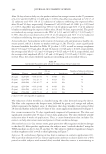
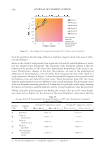
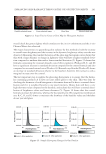
JOURNAL OF COSMETIC SCIENCE 204 work could also be done to characterize the impact of oily formulations to describe the gloss impact on the histogram analysis. CONCLUSIONS The results obtained from the in vitro testing on skin tone color cards, and the in vivo screening study and image analysis of the panelists before and after application of the test skin creams provides evidence of improved radiance (as defi ned by the increased normal distribution parameters of brightness values) due to the presence of effect pigments in the formula. Uncoated natural mica provided no measureable benefi t for brightness, leading to the conclusion that the interaction of light with the pearlescent titanium dioxide fi lm in the three pearlescent effect pigments (natural mica, synthetic fl uorphlogopite, and borosilicate) is the contributor of the measurable increases in radiance. Relative to the other effect pigments, bismuth oxychloride (Product E) provided the smallest increase in brightening and the smallest change in histogram standard deviation and skewness. However, in comparison to the control formulation, the bismuth oxychloride test product was shown to provide a radiance increase. Evaluation of the color changes to the panelists’ skin after the application of the various test creams was a necessary step in this method of evaluating radiance. The gloss map images were created from pixel brightness values, gray-scale values that are combinations of lightness and color parameters in the original photographs, so it becomes necessary to study the behavior of the skin color with the application of the effect pigments. Sepa- rately observing the color in the in vivo testing ensures the increases in the gloss map analysis for radiance is due to lightness increases of the skin rather than chroma or color increases. Results from the in vitro colorimetry data demonstrate an increase in lightness of a simulated skin tone from the use of the pearlescent effect pigments that correlates to the Chroma Meter data in the in vivo testing. In additiona, the four effect pigment types tested demonstrated a color balancing to the skin tone in both the in vivo image analysis and the in vitro simulated skin tone drawdown, demonstrating that the radiance of the effect pigments applied to the skin is reducing the contribution of the red and yellow skin tone component (as defi ned by CIELab reductions of a* and b* values). While all four pearlescent effect pigment types tested contributed to this color adjustment, the ti- tanium dioxide coated natural mica and synthetic fl uorphlogopite pigments provide the greatest relative color adjustment and lightness increases. The in vivo panelist’s images proved necessary in the overall assessment of skin radiance since comparison of the histograms of the brightness values of the skin needed the three dimensionality of a panelist’s facial morphology. The histogram analysis showed that the application of the effect pigments in the creams provided an increase in brightness overall while creating a more contrasted skin, providing more range of light to darker areas of the skin with the increase in the standard deviation of the histograms. Also the histogram analysis shows that the addition of effect pigments did not make the skin appear glossy or oily. Compared to the control formula and the uncoated natural mica, all of the effect pigment technologies provided a measurable radiance benefi t when applied to the skin or in vitro testing. Creams formulated with small-particle-size pearlescent pigments can benefi t from the optical improvements provided by these pigments, and future work could be conducted to correlate the easily measured luster values based on multiangle
Purchased for the exclusive use of nofirst nolast (unknown)
From: SCC Media Library & Resource Center (library.scconline.org)