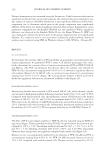
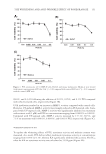
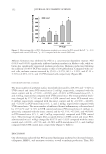
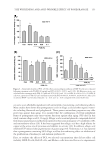
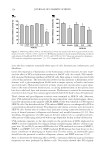
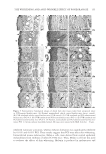
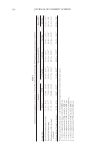
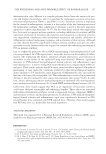
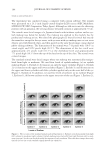
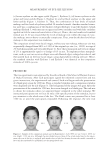
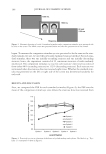
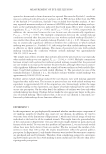
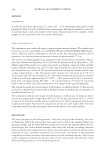
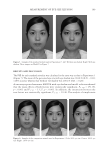
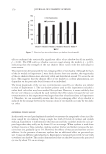
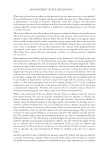
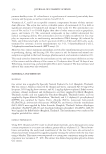
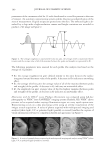
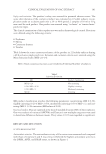
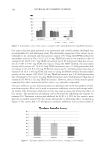
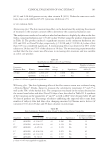
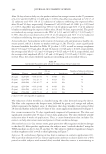
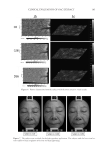
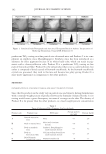
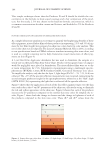
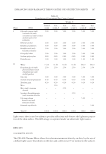
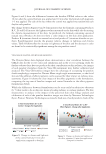
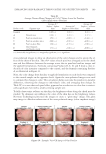
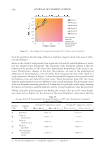
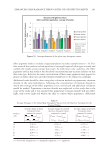
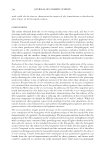
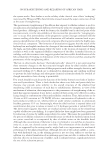
ENHANCING SKIN RADIANCE THROUGH THE USE OF EFFECT PIGMENTS 191 In the coatings, paint, and textile industry, similar product-relevant terms and their def- initions have been described (6). As an example, brightening has been defi ned as an increase in the “aspect of visual perception whereby an area appears to emit more…light” (ASTM E284-13b). For a uniform brightening of an area, there would be an even increase in pixel intensity of every pixel in the given area in a photograph. Brightness is linked with an object color as a “combination of lightness and saturation” (ASTM E284-13b) and in terms of 1976 CIELab, this means that an increase in the L* parameter and a decrease in a* and b*, where every pixel is evenly approaching a white color of the light source. Whitening is one of the only terms that can be described with just using the CIELab parameters, while most of the other skin color terms can only be characterized by using a histogram of all the pixel intensities in a fi xed area of a photograph. A histogram of a normal gray-scale photograph of the skin should show an even normal distribution of pixel intensities. Skin that has only been whitened will maintain the shape of the normal distribution, but will also demonstrate a shift to higher pixel in- tensities. Terms like glossy and matte also come from the coatings industry to describe aspects of appearance (6). Gloss is defi ned as an “angular selectivity of refl ectance, in- volving surface refl ected light, responsible for the degree to which a refl ected high- lights or images of objects may be seen superimposed on a surface” (ASTM E284-13b). The histogram for glossy skin will have two peaks, one similar to the normal distribu- tion except with less pixels (or a smaller peak), and another peak at the maximum pixel value as the light source is refl ected off the surface. The histogram for matte skin, being free of any gloss properties (3), will show a concentration around a single pixel inten- sity, making the standard deviation of the histogram smaller. In contrast to these terms, radiance for skin should show both an increase in the average pixel intensity and also a widening of the normal distribution of values. This combination of a slight increase in white values (lightness) with a decrease in skin coloration, coupled with a large normal distribution will show skin that is radiant and glowing. A term like radiance requires a holistic image of the face with the three dimensionality of the facial morphology to defi ne it and proof that the skin is not just shiny or glossy (Figure 1). PIGMENTS Given the many types of effect pigments in the market that have some form of angle- dependent hue, chroma, and luster, simple pearlescent pigments were chosen. The products chosen are pearlescent (or are called nacreous) because they impart an angle-dependent lightness or luster (2). The products are white in comparison to other effect pigments, and do not have any strong chroma or dominant hue. In this study, the substrate and technol- ogy of the pearlescent pigments were intentionally varied. Since an even coverage without perceivable sparkle is needed to create a luminous appearance on the skin, effect pigments with a relative small particle size were chosen (Table 1). Since the substrate used for many common effect pigments is platy muscovite mica, a secondary control was introduced to the study as Product A to establish the effect that uncoated muscovite mica would have in comparison to a TiO2-coated mica effect pig- ment. Generally, in a liquid or anhydrous formulation, the index of refraction of the for- mulation matrix will match that of mica, effectively making it disappear and not have a visually apparent impact on the visual performance of the formulation. Product B is a

JOURNAL OF COSMETIC SCIENCE 192 pearlescent TiO2 coating on a fi ne particle size of natural mica and Product C is its com- pliment on synthetic mica (fl uorphlogopite). Synthetic mica has been introduced as a substrate for effect pigments because of its whiter bulk color, which can result in pig- ments with a cleaner refl ection color. Product D is a pearlescent TiO2 coating on fi ne particle borosilicate fl ake. Product E is the only product that is not a coated substrate, but rather is composed of dried crystals of bismuth oxychloride. As the bismuth oxychloride crystals are processed, they tend to fracture and become less platy giving Product E a more matte appearance in comparison to the other products. METHODS DETERMINATION OF UNIFORM COVERAGE FOR EFFECT PIGMENTS STUDIED Since the fi ve products in the study vary in particle size and density, having formulations with a constant weight percent of product between the formulas evaluated for the in vivo testing would cause a great discrepancy in terms of coverage on the skin. The density of Product E is far greater than the other products, so a fi xed weight percent concentration Figure 1. Simulated Study Photographs and Associated Histograms Based on Authors’ Interpretation of Marketing Terminology Using ASTM Defi nitions (6) Table I Types of Substances/Effect Pigments Used in the Study Product code Pigment type INCI name Average particle size (μm) Density (kg/L) A Natural muscovite mica Mica ∼11 2.8 B Pearl on natural mica Mica (and) titanium dioxide ∼10 3.4 C Pearl on synthetic mica Synthetic fl uorphlogopite (and) titanium dioxide ∼11 3.2 D Pearl on borosilicate fl ake Calcium sodium borosilicate (and) titanium dioxide ∼21 2.5 E Dried bismuth oxychloride crystal Bismuth oxychloride ∼9 7.7
Purchased for the exclusive use of nofirst nolast (unknown)
From: SCC Media Library & Resource Center (library.scconline.org)