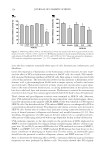
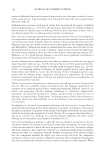
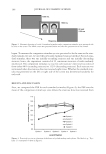
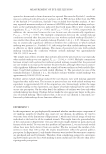
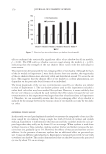
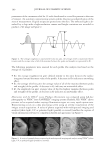
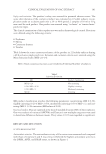
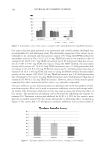
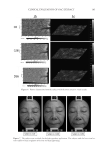
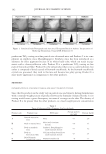
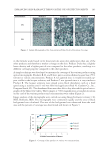
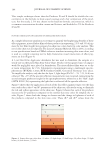
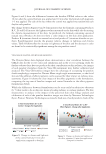
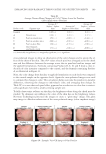
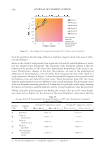
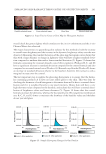
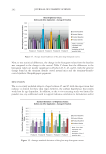
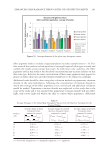
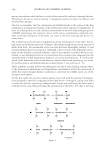
JOURNAL OF COSMETIC SCIENCE 166 began. To measure the comparison stimulus eye size perceived to be the same as the stan- dard stimulus eye size, we used the previously explained staircase method. For each stan- dard stimulus, there was one initially ascending staircase and one initially descending staircase hence, the experiment consisted of 42 concurrent staircases of trials randomly interleaved. The comparison stimulus eye size for each staircase’s fi rst trial was selected from either 88% (ascending staircase) or 112% (descending staircase). Each staircase was terminated when the staircase direction reversed eight times. Whether the standard stim- ulus was presented on the left or right side of the screen was determined randomly for each trial. RESULTS AND DISCUSSION First, we computed the PSE for each standard stimulus (Figure 4) the PSE was the mean of the comparison stimuli eye sizes where the staircase direction reversed from Figure 3. Schematic drawing of a trial. A standard stimulus and a comparison stimulus were presented side by side on the screen. The blank screen was presented before and after the presentation of the stimuli. Figure 4. Perceived eye size as a function of thickness of eyelash makeup and eyeliner. The labels (e.g., “Eye- liner 1”) correspond to those in Figure 1.

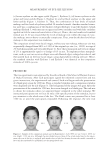
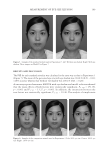
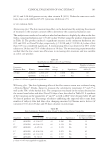
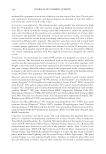
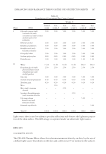
MEASUREMENT OF EYE SIZE ILLUSION 167 upward to downward or from downward to upward. Because the Eyelash 5 condition was not combined with all levels of eyeliner, and its PSE did not differ from the PSEs of the Eyelash 2–4 conditions, Eyelash 5 was excluded from further analysis. A two- way repeated-measures analysis of variance (ANOVA) with eyelash makeup and eye- liner as the independent factors indicated that both main effects were statistically signifi cant, F3, 63 = 91.33, p 0.001 and F4, 84 = 5.05, p = 0.001, respectively. In addition, the interaction between the two factors was also statistically signifi cant, F12, 252 = 9.79, p 0.001. The multiple comparisons between the eyelash makeup conditions revealed that the perceived eye size without eyelash makeup (Eyelash 1) was smaller than those with eyelash makeup (Eyelash 2–4), p 0.05. However, there was no statistically signifi cant difference between the conditions in which eyelash makeup was present (i.e., Eyelash 2–4), indicating that thin eyelash makeup was just as effective as thick eyelash makeup. The mean of perceived eye size with eyelash makeup (excluding the condition without eyelash makeup) was approximately 106.1% (113% in area). The simple main effects revealed that eyeliner affected the perceived eye size especially when eyelash makeup was not applied, F4, 336 = 25.04, p 0.001. Multiple comparisons between stimuli with eyeliner but without eyelash makeup revealed that the perceived eye size tended to increase as the eyeliner became thicker, although there was no statisti- cally signifi cant difference between the stimuli of brown eyeliner on both eyelids (Eye- liner 3) and black eyeliner on both eyelids (Eyeliner 4). The perceived eye size of the stimulus Eyeliner 5, Eyelash 1 (i.e., the thickest eyeliner without eyelash makeup) was approximately 104.8% (110% in area). Eyeliner and/or eyelash makeup induced the size illusion eyes with makeup appeared larger than they really were. The increase in perceived eye size with eyelash makeup was equivalent to approximately 6% of the original eye size. Interestingly, within the range of eyelash makeup in this experiment, any degree of eyelash makeup had the same effect on eye size perception. On the other hand, the infl uence of eyeliner was clear only when eyelash makeup was absent. Eyeliner did not make the eyes appear any larger in the pres- ence of eyelash makeup. These indicate that, as far as eye size illusion is concerned, eye- liner and eyelash makeup do not function additively. EXPERIMENT 2 In this experiment, we psychophysically examined whether another major component of eye makeup, namely eye shadow, also causes eye size illusion. In addition, we tried to overcome some of the limitations of Experiment 1, which used a facial image of only one individual as the basis for all the standard stimuli. This might limit the generalizability of the conclusions in Experiment 1 because the results might depend on particular facial features of the model. To overcome this problem in Experiment 2, we used several models whose faces were fairly distinct from one another. We also increased the number of ob- servers to more than 100 so that the results would better refl ect the general public’s perception. In Experiment 2, only female observers were involved because most cosmetics are purchased and used by females. Therefore, from a marketing perspective, investigat- ing how females perceive faces with makeup is more useful and cost-effective than inves- tigating male perceptions.
Purchased for the exclusive use of nofirst nolast (unknown)
From: SCC Media Library & Resource Center (library.scconline.org)