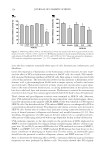
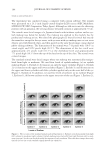
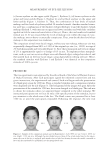
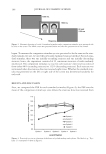
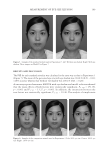
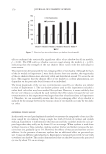
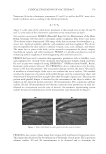
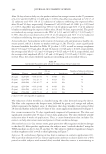
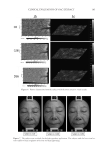
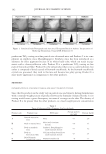
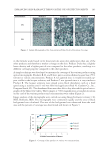
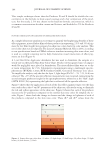
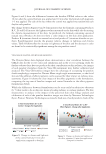
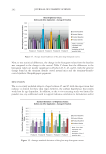
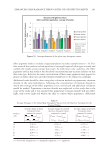
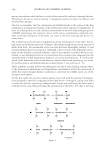
JOURNAL OF COSMETIC SCIENCE 170 effects confirmed the statistically significant effect of eye shadow for all six models, p 0.001. The PSE with eye shadow was not equal among the models, p p.001, indicating that the strength of the eye shadow effect varies with the individual to some extent. This experiment demonstrated the eye-enlarging effect of eye shadow. Although the faces of the six models in Experiment 2 were fairly distinct from one another, the magnitudes of the eye shadow illusion were relatively stable and distributed around 5% across the six faces. This suggests that the illusory effect of eye shadow is a robust phenomenon, not dependent on the particular facial features of an individual. The mean magnitude of the eye size overestimation caused by eye shadow was similar to that of Experiment 1. The eye shadow palette used in this experiment included a rather dark color that may have worked like eyeliner. However, it seems unlikely that the eye size illusion is induced by such eyeliner-like effect alone, because the eye size overestimation in this experiment was larger than that of eyeliner alone in Experiment 1. Therefore, we can reasonably assume that the eye-enlarging effect of eye shadow is induced by the synergy between the various colors of eye shadow, not only by the dark- est color. GENERAL DISCUSSION In this study, we used psychophysical methods to measure the magnitude of eye size illu- sions caused by eye makeup. Using a single face with 20 levels of eyeliner and eyelash makeup, Experiment 1 demonstrated that mascara and false eyelashes make the eyes ap- pear larger than they really are by about 6% on an average. When eyeliner is used alone without mascara or false eyelashes, making eyeliner thicker and darker increases the per- ceived eye size gradually up to 5%. However, the effects of mascara and eyeliner are not additive. In the presence of mascara, eyeliner has no additional effect on perceived eye size. Using six different individual faces, Experiment 2 measured perceived eye size with or without eye shadow. The results demonstrated that eye shadow increases the perceived eye size by about 5% on an average. Figure 7. Perceived eye size with/without eye shadow for each model.

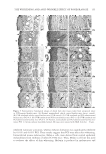
MEASUREMENT OF EYE SIZE ILLUSION 171 Why does eyeliner have no effect on the perceived eye size when mascara is also applied? One possible reason is that eyeliner and mascara share the same space. The eyeliner used in Experiment 1 was thin to moderate. Therefore, when the eyelashes were thickened with mascara, the roots of the eyelashes may have become dark enough to overshadow the eyeliner. Had the eyeliner been thicker, it might have strengthened the eye size illusion caused by mascara. The eye size illusion caused by eyeliner and mascara is likely an illusion of assimilation in which the eye becomes assimilated with eyeliner and mascara. This mechanism seems similar to that of the Delboeuf illusion where the size of the inner circle appears larger than it really is when placed within a somewhat larger outer circle, due to the assimila- tion of the inner circle with the outer circle. The Delboeuf illusion arises even when the outer circle is incomplete (33). In this experiment, the contour of the palpebral fi ssure corresponds to the inner circle, and eyeliner and mascara correspond to the outer circle. There have been reports that face perception is subject to various geometric illusions (31,32,34,35). Many makeup artists believe that one purpose of eye shadow is to add depth to the eyes. The experiment by Abe et al. (36) showed that eye shadow enhances perceived depth and size of the eyes, although they did not measure the illusion’s absolute magnitude. These researchers argued that an increase in subjective distance between the observer and the eyes leads to an overestimation of eye size because of constancy scaling. Constancy scaling implies that the perceived size of an object increases as its perceived distance from the observer increases, even when the actual distance and size of the retinal image generated by the object remain the same. However, the magnitudes of the eye size illusion induced by eye shadow in Experiment 2 are far too large to be explained by constancy scaling. To induce a 4.8% overestimation of eye size at a viewing distance of 75 cm by constancy scaling alone, the eyes would have to be perceived as being 3.6 cm deep in the head this is anatomically impossible. Therefore, we conclude that eye shadow induces effects be- yond merely enhancing the eyes’ depth, such as an illusion of assimilation. What is the mechanism of the eye shadow illusion? Does eye shadow make the eyes ap- pear larger because the eyes are directly assimilated into eye shadow, or because eye shadow enhances the assimilation of the eyes into the eyebrows? Typical eye shadow is darkest along the sharp boundary of the upper eyelid, and gradates to the skin tone to- ward the eyebrow. Possibly then, the eye is assimilated with eye shadow in much the same way as with eyeliner and mascara, which may induce an overestimation of eye size. An- other possibility is that eye shadow enhances the perceptual grouping of the eye and the eyebrow by reducing the difference in luminance between the eyebrow and the skin be- low. The eyebrow alone causes an overestimation of eye size due to a mechanism like the Delboeuf illusion (37,38). Eye shadow possibly bridges the space between the eye and the eyebrow, thereby increasing the assimilation of the eye into the eyebrow. It might be that the eye shadow effect involves both the assimilation of the eye into eye shadow and enhancement of the assimilation of the eye into the eyebrow. Further research is neces- sary to elucidate the exact mechanism by which eye shadow causes the eye to appear larger. Another unresolved issue is whether the illusion caused by eyeliner and mascara and that caused by eye shadow is additive. One limitation of this study is that we did not combine eye shadow with eyeliner or mascara. Eye shadow does not share the same space as eyeliner
Purchased for the exclusive use of nofirst nolast (unknown)
From: SCC Media Library & Resource Center (library.scconline.org)