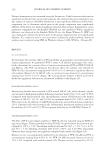
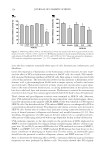
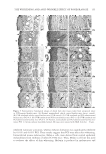
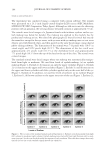
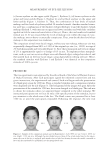
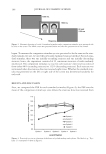
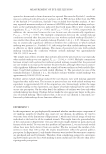
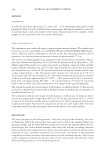
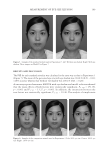
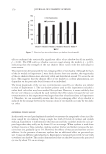
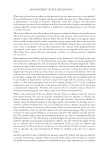
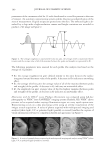
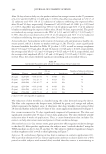
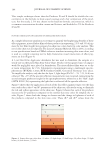
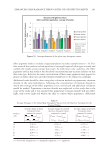
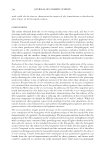
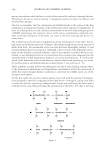
JOURNAL OF COSMETIC SCIENCE 208 waving formulation while the hair is on the rollers instead of combing it through the hair. This process, known as “reverse waving,” is frequently used on account of its effi cacy and minimal hair damage. One has to remember that the reformation of disulfi de bonds in the course of the hair reshaping is an important element of the stabilization of the imparted confi guration. If these are subsequently severed, whether intentionally or by slow and prolonged process of SS/SH interchange, the retractive forces of the native conformation, primarily resi- dent in the helical regions of the fi ber, can come to the fore restoring the hair to its native form. The underpinning of permanent straightening of hair (relaxing) lies in the effect that al- kali exerts on the keratin structure. Owing to the industrial importance of the reaction of alkali with wool, the mechanism of the reaction has been thoroughly studied (3) and several pathways have been proposed. Although a direct attack of the hydroxide nucleo- phile on the disulfi de cross-link (similar to that of mercaptides or sulfi tes) has been con- sidered, it was abandoned in favor of a mechanism that accounts more adequately for the experimentally verifi ed degradation products of cystine decomposition. It involves the attack of the hydroxide anion on the adjacent carbon–sulfur bond generating, as a result, the perthiocysteine and dehydroalanine residues (Figure 1, see reactions A - C). These pathways account well for the subsequent cascade of steps leading, among others, to the formation of lanthionine and lysinoalanine cross-links as well as the generation of sulfur that under strongly alkaline conditions is converted into sulfi de anion, one of the strongest nucleophiles. On the fi rst sight, this reaction scheme appears to fi t well with the pattern of manipula- tions designed to alter hair confi guration described above—cleavage of cystine cross-links to soften the hair for imparting confi gurational change and stabilizing the latter with a network of new cross-links providing the permanency of the effect. Yet, that is not how Figure 1.

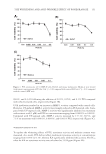
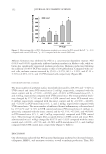
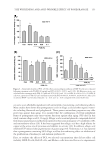
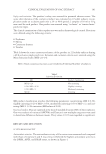
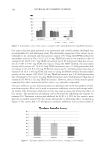
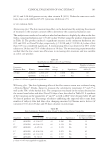
ON STRAIGHTENING AND RELAXING OF AFRICAN HAIR 209 the system works. First doubts as to the validity of the classical view of hair “reshaping” were raised by Wong and Wis-Surel (4) who stressed instead the super contraction of hair as the cause of straightening. The spontaneous straightening of the African hair exposed to alkaline relaxers is an obvi- ous indication of a fundamental difference between the reductive straighteners and alkali- based products. Although, as with the former, the disulfi de bond is the focal point of the reactants attack, it is the irreversibility of the reaction that prevents the “restaging pro- cess” to occur. This irreversibility of the progressive cystine cleavage combined with the intense swelling of the fi ber assisted by elimination of Coulombic restrains leads to pro- gressive destabilization of the structural composite affecting particularly the highly orga- nized, helical, component. The formation of lysinoalanine suggests that the attack of the hydroxyl ion nucleophile involves the cleavage of the interchain disulfi de bonds linking the high- and low-sulfur domains where the latter is the location of majority of lysine residues as well as the organized fi brillar component of the fi ber. A marked decrease in enthalpy with the treatment time suggests gradual and irreversible destabilization of the helical fi laments (5) leading to elimination of the retractive forces and thus assuring the permanence of the straightening effect. The hair, in other words, has been “thermodynamically” relaxed. It is not surprising that these extensive changes in the hair structure brought about by alkali relaxers demon- strates themselves in deterioration of fi ber properties such as fi ber strength, elasticity, and increased swelling (6,7). Much care is demanded in shampooing and combing such hair to prevent the hair breakage and subsequent chemical treatments should be avoided al- though nonoxidative hair coloring is permissible. Few words should be said about the function of the freshly formed cross-links of lanthio- nine and lysinoalanine. There is little doubt that these cross-links and particularly lan- thionine may provide some stability to the overall structure of the alkalized hair manifesting itself in resistance of such hair to solubilization. However, in view of the mechanism of relaxation, their importance to the permanence of straightening of the re- laxed hair appears minimal, if any. In fact, neither of them seems to be effective in stabi- lizing change in conformation of hair under alkaline condition. Thus, African hair set for 30 min at 40% extension in 1 N NaOH (effective concentration of hydroxide in the re- laxer products) yields no set, whereas fi ber set under similar conditions in ammonium bisulfi te generates 35% set. Interestingly, when the alkali-set hair is exposed (after acid neutralization but prior to release in water) to 1% hydrogen peroxide it yielded 20% set. The latter result suggests that there are residual cysteine side chains in the relaxed hair capable of effective cross-linking. It is quite likely that these might have been generated by reduction of cystine by sulfi de anion referred to earlier .This raises the possibility that the process of alkaline relaxation is of bimodal nature in which the hydroxyl anion attack on cystine cross-link is accompanied by that of sulfi de anion on the disulfi de bond. Although the concentration of the latter is low, it is formed in situ and thus in close prox- imity to, as yet, not cleaved cystine cross-links. The reformation of the disulfi de cross- links, as suggested by the setting results, might lead to an improvement in mechanical performance of the alkali-relaxed hair. Although the role of the sodium sulfi de, a coreac- tant with hydroxide ion, in the relaxing process is not yet clear, suffi ces to say that an addition to a relaxer formulation of an oxidizing agent (one not able to oxidize the disul- fi des but effective in destruction of sulfi de), such as sodium bromate, signifi cantly lowers the rate of the relaxation process.
Purchased for the exclusive use of nofirst nolast (unknown)
From: SCC Media Library & Resource Center (library.scconline.org)