JOURNAL OF COSMETIC SCIENCE 10 (17) J. Mehta, K. Patidar, and N. Vyas, Development and validation of a precise method for determination of benzalkonium chloride (BKC) preservative, in pharmaceutical formulation of latanoprost eye drops, J. Chem., 7, 11–20 (2010). (18) H. Sütterl in, R. Alexy, A. Coker, and K. Kümmerer, Mixtures of quaternary ammonium compounds and anionic organic compounds in the aquatic environment: Elimination and biodegradability in the closed bottle test monitored by LC–MS/MS, Chemosphere, 72, 479–484 (2008). (19) O. Núñez, E. Moyano, and M. T. Galceran, Determination of quaternary ammonium biocides by liquid chromatography–mass spectrometry, J. Chromatogr. A., 1058, 89–95 (2004). (20) G. Santoni, A. Tonsini, P. Gratteri, P. Mura, S. Furlanetto, and S. Pinzauti, Determination of atropine sulphate and benzalkonium chloride in eye drops by HPLC, Int. J. Pharm., 93, 239–243 (1993). (21) Z. Cybulski, D etermination of benzalkonium chloride by gas chromatography, J. Pharm. Sci., 73, 1700– 1702 (1984). (22) R. Taylor, S. Toasaksiri, and R. Reid, Determination of antibacterial quaternary ammonium compounds in lozenges by capillary electrophoresis, J. Chromatogr. A., 798, 335–343 (1998). (23) K. Heinig, C. Vogt, and G. Werner, Determination of cationic surfactants by capillary electrophoresis, Fresenius J. Anal. Chem., 358, 500–505 (1997). (24) Y. H. Hou, C. Y. Wu, and W. H. Ding, Development and validation of a capillary zone electrophoresis method for the determination of benzalkonium chlorides in ophthalmic solutions, J. Chromatogr. A., 976, 207–213 (2002). (25) M. Jimidar, I. Beyns, R. Rome, R. Peeters, and G. Musch, Determination of benzalkonium chloride in drug formulations by capillary electrophoresis (CE), Biomed. Chromat., 12, 128–130 (1998). (26) B. V. Para, O. Nunez, E. Moyano, and M. T. Galceran, Analysis of benzalkonium chloride by capillary electrophoresis-tandem mass spectrometry, Electrophoresis, 27, 2225–2232 (2006).

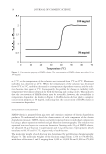
J. Cosmet. Sci., 68, 11–23 ( January/February 2017) 11 Investigation of water-soluble elastin as a multifunctional cosmetic material: Moisturizing and whitening effects ASAKO INOUE, TOMOHIRO HIKIMA, SUGURU TANIGUCHI, TAKERU NOSE, and IORI MAEDA, Department of Bioscience and Bioinformatics, Kyushu Institute of Technology, Iizuka, Fukuoka 820-8502 (A. I., T. H., S. T., I. M.) and Faculty of Arts and Science, Kyushu University, Fukuoka, 819-0395 (T. N.), Japan. Accepted for publication December 23, 2016. Synopsis Elastin and collagen are extracellular matrix proteins that are widely distributed in the body. Although elastin essentially functions as a skin moisturizer, there have been few reports on its other fundamental chemical and biological functions. In this study, we investigated the moisturizing and whitening (tyrosinase inhibition) effects of elastin to examine its usefulness as a cosmetic material. Water-soluble hot alkali pig aorta (HAPA)- elastin was prepared from pig aorta using the hot alkali method. HAPA-elastin showed a widely distributed molecular weight and had a coacervation property that mediated reversible self-assembly of its molecules with increasing temperature. Amino acid analysis of HAPA-elastin showed a high content (81.5%) of hydrophobic amino acids such as Gly, Ala, Val, and Pro. Des (desmosine) and Ide (isodesmosine), which are characteristic amino acids of elastin, accounted for more than 0.4% of the total amino acid content. HAPA-elastin showed a moisture-retaining property. The water content of skin samples treated with and without HAPA-elastin was 77.2% ± 7.8% and 49.4% ± 10.1%, respectively. HAPA-elastin also inhibited tyrosinase activity by 11.3% ± 3.9%. The results obtained indicate that elastin has a useful function as a cosmetic material. INTRODUCTION Elastin is an extracellular matrix protein, which imparts elasticity to connective tissues such as ligaments, arterial walls, lungs, and skin (1). The reversible self-assembly of elastin molecules, which is temperature dependent, is termed “coacervation.” This characteristic is important for the formation of mature elastin and the expression of elasticity in elastic tissues. Elastin plays principal roles in achieving elasticity in the body. It is important to maintain the elastin content in human tissues however, the elastin content decreases owing to various factors such as aging (2). Therefore, increasing and sustaining the content of elastin in tissues can contribute to the maintenance of health and beauty. It has been reported that ingesting water-soluble elastins prepared from several animal sources has a positive infl uence on the human health and beauty. For example, ingestion of water-soluble elastin improved the skin condition, such as improvement in texture and moisture of skin (3,4). Address all correspondence to Iori Maeda at iorinose@bio.kyutech.ac.jp.
Purchased for the exclusive use of nofirst nolast (unknown)
From: SCC Media Library & Resource Center (library.scconline.org)