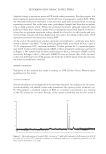
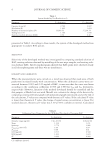
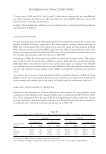
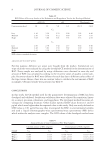
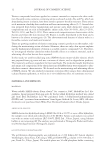
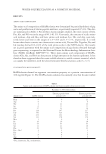
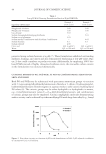
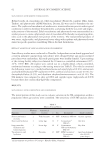
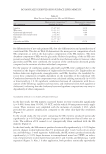
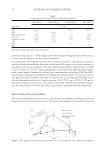
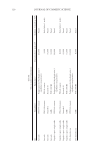
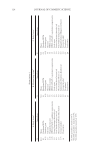
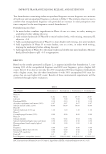
JOURNAL OF COSMETIC SCIENCE 8 ANALYSIS OF THE WET WIPES For this purpose, different wet wipes were bought from the market. Commercial wet wipe solutions were analyzed by using the developed CE method for the determination of BAC. Every sample was analyzed by using calibration curve obtained in same day and amount of BAC was calculated according to the recovery values of quality control sam- ples. Recovery values for BAC were different for each day due to different surface effect of the wipe tissues. Hence, there was no constant value to calculate the real amount of BAC in samples. Obtained results were presented in Table V. CONCLUSIONS In this study, the CE method used for the quantitative determination of BAC has been developed and validated. Satisfactory validation data were achieved for sensitivity, linear- ity, accuracy, precision, robustness, and ruggedness. The developed method has some ad- vantages by comparing literature. Other studies reported LOD values between 1 and 10 μg/ml which were higher than the reported value in this study. Only one study declared an LOD value as 0.01 μg/ml because they investigated the BAC in environmental samples and used a liquid chromatography–mass spectrometry/mass spectrometry (MS) device which makes the analysis more complex. The LOD values of the developed method were Table IV RSD Values of Recovery Studies of the Robustness and Ruggedness Test for the Developed Method ACN (%) pH Wavelength Concentration level 28 32 5.8 6.2 212.2 216.2 C10 Low 1.16 3.50 2.55 2.28 3.05 4.40 Medium 2.50 3.49 6.12 5.80 1.93 1.97 High 3.08 3.88 5.81 3.35 5.33 4.95 C12 Low 1.60 2.78 3.42 1.37 4.02 6.40 Medium 2.48 3.82 1.50 5.82 2.09 1.96 High 3.41 3.39 6.24 3.55 5.41 4.89 RSD: relative standard deviation. Table V Analysis Results of Some Commercial Wet Wipe Samples Sample Claimed amount of BAC (mg/ml) Found amount of BAC (mg/ml) C10 C12 C10 C12 Wipe 1 0.280 0.115 0.269 ± 0.04 0.111 ± 0.02 Wipe 2 0.280 0.115 0.267 ± 0.05 0.127 ± 0.02 Wipe 3 0.280 0.115 0.285 ± 0.06 0.114 ± 0.02

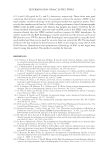
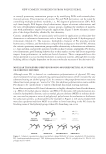
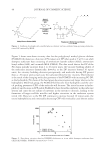
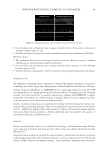
DETERMINATION OF BAC IN WET WIPES 9 0.313 and 0.309 μg/ml for C10 and C12 derivatives, respectively. These values were good comparing the literature values and it was enough to achieve the analysis of BAC in wet wipe samples. Another advantage of the developed method was separation power. Theo- retical plate number was declared as 10,688 in a high-performance liquid chromatography (HPLC) study for BAC analysis (18), whereas this number was almost 35,000 for the de- veloped method. Furthermore, there was only one BAC peak in this HPLC study and this situation showed that this HPLC method could not separate the BAC homologues. In another study (20), the BAC homologues could be separated, but the detector used was an MS detector, not a UV-Vis detector. BAC homologues were separated by using the devel- oped method and there was no need for an extra detection system like MS. The developed method is the fi rst method for determination of BAC in wet wipes by using the CE with DAD detector. Identifi cation and quantitation of homologs of BAC in wet wipes were done by using this method. The method is suitable for that aim. REFERENCES (1) L. Vanneste, L. Persson, E. Zimerson, M. Bruze, R. Luyckx, and A. Goossens, Allergic contact dermati- tis caused by methylisothiazolinone from different sources, including ‘mislabelled’household wet wipes, Contact Dermatitis, 69, 311–312 (2013). (2) J. T. Madsen and K. E. Andersen, Airborne allergic contact dermatitis caused by methylisothiazolinone in a child sensitized from wet wipes, Contact Dermatitis, 70, 183–192 (2014). (3) A. Tosti, S. Voudouris, and M. Pazzaglia, Contact sensitization to 5-chloro-2-methyl-4-isothiazolin- 3-one and 2-methyl-4-isothiazolin-3-one in children, Contact Dermatitis, 49, 215–216 (2003). (4) S. E. Ja cob, B. Brod, and G. H. Crawford, Clinically relevant patch test reactions in children—a United States based study, Pediatr. Dermatol., 25, 520–527 (2008). (5) T. Pauloi n, M. Dutot, J. M. Warnet, and P. Rat, In vitro modulation of preservative toxicity: High molecular weight hyaluronan decreases apoptosis and oxidative stress induced by benzalkonium chlo- ride, Eur. J. Pharmaceutical Sciences, 34, 263–273 (2008). (6) D. A. Bas ketter, M. Marriott, N. J. Gilmour, and I. R. White, Strong irritants masquerading as skin allergens: The case of benzalkonium chloride, Contact Dermatitis, 50, 213–217 (2004). (7) N. Oiso, K. Fukai, and M. Ishii, Irritant contact dermatitis from benzalkonium chloride in shampoo, Contact Dermatitis, 52(1), 54 (2005). (8) L. Kanerv a, R. Jolanki, and T. Estlander, Occupational allergic contact dermatitis from benzalkonium chloride, Contact Dermatitis, 42, 357–358 (2000). (9) W. J . Lunsmann and V. B. Villa, Antimicrobial cleansing composition and wipe. Pub. No. US2002/ 0031486 A1 US. (2002). (10) The United States Pharmacopeia, 29th Ed. (2006). The United States Pharmacopeial Convention, Inc., The United States Pharmacopeia, 27 th Ed., Ontario, Canada, pp 2622, (2003). (11) European Pharmacopeia, 7th Ed. (2009), pp. 1461–1463. Directorate for the Quality of Medicines & HealthCare of the Council of Europe (EDQM), European Pharmacopeia, 7.0, Vol. 2, pp 1463, Pub ID: EPID-ED4D5-623F7-07C4B, Druckerei C.H. Beck, Nördlingen, Germany (2011). (12) M. Gaber , H. M. A. Shawish, A. M. Khedr, and K. I. Abed-Almonem, Determination of benzalkonium chloride preservative in pharmaceutical formulation of eye and ear drops using new potentiometric sen- sors, Mater.Sci. Eng. C., 32, 2299–2305 (2012). (13) K. Kovac s-Hadady and I. Fabian, The determination of benzalkonium chloride in eye drops by differ- ence spectrophotometry, J. Pharmaceut. Biomed., 16, 733–740 (1998). (14) J. Berna l, M. J. del Nozal, M. T. Martı́n, J. Diez-Masa, and A. Cifuentes, Quantitation of active ingre- dients and excipients in nasal sprays by high-performance liquid chromatography, capillary electropho- resis and UV spectroscopy, J. Chromatogr. A., 823(1), 423–431 (1998). (15) T. Miyauch i, M. Mori, and K. Ito, Quantitative determination of benzalkonium chloride in treated wood by solid-phase extraction followed by liquid chromatography with ultraviolet detection, J. Chro- matogr. A., 1095, 74–80 (2005). (16) P. Zhang, C. Rui, X, Gao, J. Yin, M. Zhang, and H. Zhao Determination of benzalkonium chloride in cosmetics by high performance liquid chromatography, China Surfact. Deter. Cosmet., 3, 230–233 (2012).
Purchased for the exclusive use of nofirst nolast (unknown)
From: SCC Media Library & Resource Center (library.scconline.org)