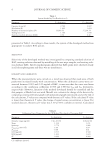
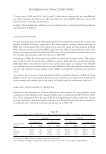
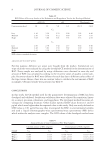
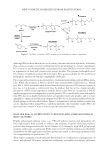
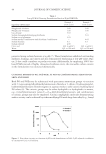
JOURNAL OF COSMETIC SCIENCE 12 Various compounds have been applied as cosmetic materials to improve the skin condi- tion. Recently, some cosmetics containing amino acids such as Gly, Ala, and Pro, which are abundantly present in elastin, have been noted to preserve the skin moisture. These amino acids maintain a healthy skin condition and have moisturizing effects (5–7). Several elas- tins prepared from bovine ligamentum and porcine aorta show distinctive amino acid compositions and are rich in hydrophobic amino acids, Gly (30–36%), Ala (23–25%), Val (10–13%), and Pro (9–12%). These amino acid compositions are characteristic of the elastins and retain the skin moisture (8). Elastin is widely distributed in the body and is known to be almost nonantigenic (9). The abovementioned features of elastin make it a favorable cosmetic and medicinal material. There are growing numbers of elastin-containing cosmetic products on the market, vali- dating the moisturizing action of elastin. However, there are only a few reports explain- ing the fundamental chemistry of elastin as a useful cosmetic compound (3,4). Therefore, we investigated whether elastin has other desirable effects as a cosmetic material, such as whitening effect that has not been reported. In this study, we used hot alkali pig aorta (HAPA)-elastin (water-soluble elastin), which was prepared from pig aorta and was a mixture of elastin, and its degradation products. This material is sold as an ingredient for functional foods. The molecular weight distribution and amino acid composition of the elastin fractions of HAPA-elastin were examined to iden- tify their cosmetic characteristics. We focused on the moisturizing and whitening effects of HAPA-elastin. We also studied its moisture-retention effect using a three-dimensional cultured human epidermis, as well as its in vitro inhibitory effect on tyrosinase activity. MATERIALS AND METHODS MATERIALS Water-soluble HAPA-elastin (Farm elastin® for cosmetics, E&C HealthCare Ltd. Ka- goshima, Japan) prepared from pig aorta by the hot alkali hydrolysis method was a kind gift from E&C HealthCare Ltd. We purchased both 3,4-dihydroxy-L-phenylalanine (DOPA) and “tyrosinase from mushroom” from Sigma-Aldrich (St. Louis, MO). All other chemicals were purchased from Wako Pure Chemical Industries Ltd. (Osaka, Japan). AMINO ACID ANALYSIS HAPA-elastin was hydrolyzed using 6 M HCl for 48 h at 110°C in vacuo. After hydrolysis, the samples were dried and redissolved in 0.02 M HCl. Amino acid analysis was carried out with an amino acid analyzer (JLC-500/V, JEOL Ltd., Tokyo, Japan), using lithium buffers at an increasing pH. The analysis was performed at Yamaguchi Prefectural Indus- trial Technology Institute (Yamaguchi, Japan). GEL FILTRATION CHROMATOGRAPHY The gel fi ltration chromatography was performed on a 1220 Infi nity LC System (Agilent Technologies, Santa Clara, CA) using a TSK gel G2000 SWXL column (7.8 × 300 mm, 5 μm Tosoh Co., Tokyo, Japan). The mobile phase was 50 mM phosphate buffer containing

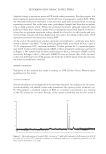
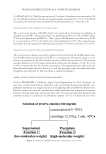
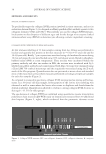
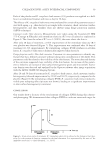
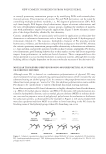
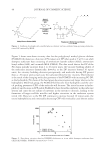
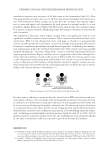
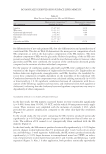
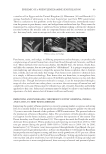
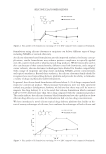
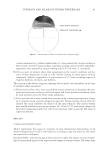
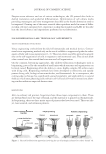
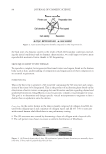
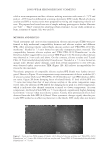
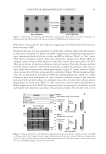
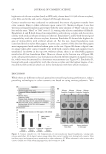
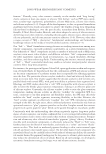
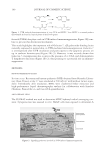
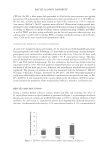
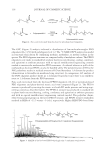
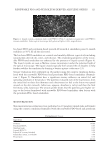
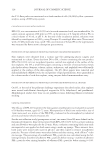
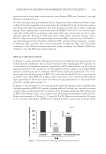
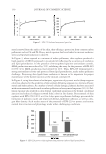
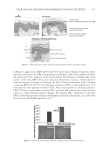
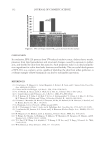
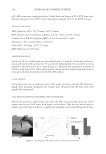
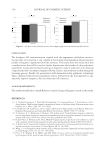
WATER-SOLUBLE ELASTIN AS A COSMETIC MATERIAL 13 0.3 M NaCl (pH 6.9). The fl ow rate was set at 0.2 ml/min. Absorbance was measured at 220 nm. A lyophilized mixture of molecular weight markers ranging from 1,350 to 670,000 Da was used as the molecular mass standard (Bio-Rad Laboratories, Inc., Hercules, CA). MEASUREMENT OF THE TURBIDITY OF HAPA-ELASTIN The coacervation potency of HAPA-elastin was evaluated by measuring its turbidity in distilled water (D.W.). The measurement was performed at 400 nm with a JASCO Ubest V-560 spectrophotometer (JASCO Co., Tokyo, Japan). HAPA-elastin was dissolved in D.W. at a concentration of 50 or 100 mg/ml at a low temperature ( 4°C). The measurements were taken during a progressive heating and cooling (0.5°C/min) cycle from 5°C to 65°C. SEPARATION OF ELASTIN BY THE COACERVATION TECHNIQUE The coacervation technique was used to obtain two fractions from the HAPA-elastin solu- tion. HAPA-elastin was dissolved in D.W. at a concentration 160 mg/ml, which is a suf- fi cient concentration for the self-assembly of water-soluble elastin molecules. The solution was then heated to 65–70°C using a thermostatic bath and centrifuged at 2,350 g for 2 min at 40°C to obtain the two fractions by coacervation. The supernatant was collected as the low-molecular-weight fraction (fraction 1) and the precipitate was the high-molecular- weight fraction (fraction 2). The procedure is outlined in Figure 1. WATER CONTENT OF RECONSTRUCTED HUMAN EPIDERMIS LabCyte EPI-MODEL 12 (LabCyte, Japan Tissue Engineering Co., Ltd. Gamagori, Ja- pan) was cultured from human epidermal cells and stratifi ed using polyethylene tere- phthalate membrane as a supporting layer. It morphologically resembles the human skin. LabCyte consists of a stratum corneum and a viable epidermis that is made up of a granu- lar layer, stratum spinosum, and a basal layer (10). It is used in many skin irritation and corrosion studies as a substitute for laboratory animals (11–13). In this study, the water Figure 1. Separation of HAPA-elastin into its fractions by coacervation.
Purchased for the exclusive use of nofirst nolast (unknown)
From: SCC Media Library & Resource Center (library.scconline.org)