RENEWABLE PDO AND PETROLEUM-DERIVED ALKYLENE OXIDES 125 and readily biodegradable. Oil in water cosmetic emulsions formulated with the PDO- based emulsifi ers had higher viscosities when compared to the same emulsions that sub- stituted PEG-based emulsifi ers. Cosmetic products formulated with renewable PDO-based emulsifi ers gave elegant sensory profi les and moisturization performance that were equivalent to those cosmetics formulated with petroleum-based EO emulsifi ers. Principles of Green Chemistry were applied in the development and manufacture of these sustainable PDO-based emulsifi ers used in cosmetics. REFERENCES (1) Ethylene Oxide, 3rd Ed. (American Chemistries Council’s Ethylene Oxide/Ethylene Glycols Panel, Copy- right May 2007). (2) Agency for Toxic Substances and Disease Registry, Toxicological Profi le for 1,4-Dioxane. (U.S. Department of Health and Human Services, Public Health Service, Atlanta, GA, 2012). ) www.atsdr.cdc (3) M. Kawaguchi, M. Yamamoto, T. Nakamura, M. Yamashita, T. Kato, and T. Kato, Surface Properties of mono, di- and triglycerol monstearate monolayers spread at the air-water interface. Langmuir, 17, 4677– 4680 (2001). (4) M. Biermann, F. Lange, R. Piorr, U. Ploog, H. Rutzen, J. Schindler, and R. Schmid, “Synthesis of Surfactants,” in Surfactants In Consumer Products: Theory, Technology and Application, Chapter 3 (Springer- Verlag, Berlin, Germany, 1987). (5) C. Le Hen-Ferrenbach, M. Beuche, and M. Roussel 054432, Cognis (2005). (6) P. T. Anastas and J. C. Warner, Green Chemistry Theory and Practice. (Oxford University Press, New York, 1998). (7) Life cycle analysis approach on Bio-PDO. Data based on DuPont Tate and Lyle Bioproducts Loudon, TN Plant. (8) R. A. Morris and A. V. Snider, Polymers of trimethylene glycol, US2520733 (1950). (9) M. A. Harmer, C. Hoffman, S. C. Jackson, E. R. Murphy, and R. Spence, Preparation of polytrimethylene ether glycol or copolymers thereof, US 8143371, B2 (March 27, 2012). (10) H. B. Sunkara and H. C-H. Ng, Polytrimethylene ether glycol and polytrimethylene ether ester with excellent quality, US 7323539 ( January 29, 2008). (11) H. B. Sunkara and H. P. R. Poladi, Deodorant compositions, US 8114423 B2 (2012). (12) E. J. Lind, P. A. Mayer, J. A. Chase, and C. S. Fouts, Derivatives of 1,3-propanediol, WO 2016040956 A1 (2016). (13) T. F. Tadros, “Colloid Aspects of Cosmetic Formulations with Particular Reference to Polymeric Surfac- tants.” Colloids and Interface science Series, in Colloid Stability, Vol. 4.

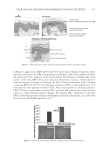
J. Cosmet. Sci., 68, 126–132 ( January/February 2017) 126 Unique natural exopolysaccharides for biomimetic protective effect against urban pollution MAGALI BOREL, ELISABETH LAMARQUE, and ESTELLE LOING, Lucas Meyer Cosmetics, IFF, ZA les Belles Fontaines, 91160 Champlan (M.B.), Lucas Meyer Cosmetics, IFF, Bioparc, 31036 Toulouse Cedex 1 (E.L.), France, and Lucas Meyer Cosmetics, IFF, Tour de la Cité, 2600, Québec, Canada (E.L.). Summary Through natural selection, living organisms have evolved well-adapted survival strategies over time. The shallow salt waters of Moorea lagoon are the site of accumulation of microbial mats called “Kopara,” in the native Polynesian language. This unique ecosystem is rich in fi lm-forming exopolysaccharides (EPSs) secreted by microorganisms within the biofi lm, as a mean to protect themselves from environmental stress (strong ultraviolet [UV], pH, salinity … ). Using blue biotechnology, a manufacturing process was developed to obtain an EPS with skin benefi ts. The active ingredient (EPS-229) protects against urban pollution, including free radicals, heavy metals, hydrocarbons, and PM2.5 (particulate matter with a size lower than 2.5 μm). Methods: The anti-lipid peroxidation action of EPS-229 was studied in an in vitro UVB-irradiated keratinocyte culture model, using lipophilic fl uorescent probe. The chelating properties of EPS-229 were evaluated in tubo in the presence of cadmium and lead. The protective effect of EPS-229 on pollution-exposed skin explants was investigated through quantifi cation of released malondialdehyde (MDA) and histological observation of skin morphology using optical microscopy. Clinical evaluation of the protective and cleansing effi cacy of a water solution containing EPS-229 (0.02% and 0.01% w/v, respectively) was performed, against placebo, on a panel of 18 volunteers. For these studies, the forearms of volunteers were treated with EPS-229 before (anti- adhesion affect) or after (cleansing effect) application of PM2.5 (iron particles of 1 μm). The presence of skin- adherent particles was observed and quantifi ed by image analysis, using specifi c digital masks. Results: In vitro, EPS-229 signifi cantly protected keratinocyte cell membranes from lipid peroxidation. A decrease of 28% was achieved when a concentration of 0.001% w/v EPS-229 was applied to the cell culture. In tubo, EPS-229 also presented strong chelating properties. Maximal adsorption was estimated at 154 mg/g (1.37 mmol/g) of EPS-299 for cadmium and at 250 mg/g (1.21 mmol/g) of EPS-229 for lead. In the skin explant model of pollution exposure, EPS-229 (0.03% w/v) reduced MDA production by 44%, preserved cell integrity, improved dermal–epidermal cohesion, and normalized the collagen network. In vivo, treatment of skin with EPS-229 before exposure to PM2.5 created a protective fi lm limiting particle adhesion. When used in a cleansing solution after exposure to PM2.5, EPS-229 formed a mesh that entrapped particles and removed them from the skin surface. Conclusion: Inspired by the French Polynesia Kopara unique ecosystem, a bioactive exopolysaccharide (EPS-229) has been developed that offers protection from environmental aggression. As a biomimetic shield at the surface of the skin, EPS-229 provides an immediate multiprotective action that effi ciently fi ghts the harmful effects of urban pollution and smog. Address all correspondence to Estelle Loing at estelle.loing@lucasmeyercosmetics.com.
Purchased for the exclusive use of nofirst nolast (unknown)
From: SCC Media Library & Resource Center (library.scconline.org)