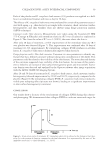
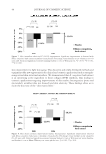
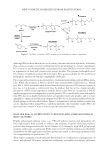
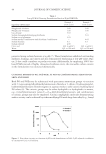
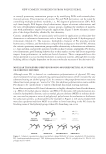
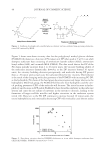
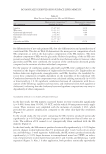
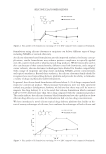
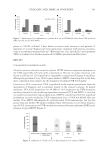
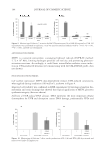
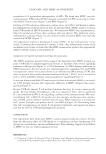
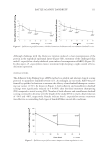
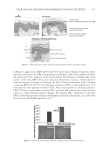
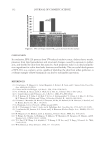
EXOPOLYSACCHARIDES FOR BIOMIMETIC PROTECTIVE EFFECT 127 INTRODUCTION In French Polynesia, the shallow salt waters of lagoons are the site of accumulation of organic matter of microbial origin that forms mats called “Kopara” in the native Polynesian language (1). Under stress conditions, such as fl uctuations in temperature, water supply, pH, and salinity, microorganisms within the Kopara release exopolysaccharides (EPSs) as means of protection (2). EPS consist of high-molecular-weight carbohydrates that vary greatly in their sugar composition which impacts their chemical and physical properties (3). EPSs improve bacterial survival in many ways. They serve as a transport barrier to reactive chemicals. They can trap trace metals, thus reducing their toxicity (4). They strongly hold and redistribute water to prevent extreme cell dryness. They buffer against sudden osmotic changes. They contribute to oxidative defense (4). They also protect bac- terial cells form ultraviolet (UV) induced damage by their capacity to absorb UV rays (5). Several EPS found in the Kopara have been studied for skin care applications. Inspired by their natural shield function, research was oriented, early on, toward applications related to the protection of skin from environmental stress. One of these EPS (EPS-229) proved to be most promising in vitro, and was further characterized ex vivo and in vivo. EPS-229 is a highly ramifi ed polysaccharide produced by Alteromonas macleodii living in the Kopara. However, the coral reef and lagoon ecosystems being extremely fragile, it was primordial to develop ways of exploiting the properties of this EPS without compromising its natu- ral habitat. For industrial scale production, fermentation protocols were developed in collaboration with a local Polynesian biotech. Fermentation conditions, such as pH, tem- perature, oxygen concentration, agitation as well as the composition of the culture media, had to be carefully optimized to reproduce natural bacterial growth conditions. The cur- rent paper presents a brief summary of the research supporting the use of EPS-229 as an antipollution skin care ingredient, including new clinical data providing evidence of protection against PM2.5 particles (particulate matter with a size lower than 2.5 μm). EXPERIMENTAL ALTEROMONAS FERMENT EXTRACT (EPS-229) This extract (EPS-229) is a highly ramifi ed EPS produced by A. macleodii, as part of a protective shield against environmental aggressions. It is composed of neutral sugars (57%), uronic acids (25%), and sulfates (8%), presents a slight white color, and has a molecular weight of 1000 kDa. The bioactive EPS is obtained through biotechnology, using a fer- mentation process reproducing natural synthesis conditions. PROTECTION OF KERATINOCYTES FROM FREE RADICAL-INDUCED DAMAGES Confl uent human keratinocytes (NHEK) were incubated for 24 h with the test product EPS-229 (0.001% w/v) or butylated hydroxy anisole (BHA) (50 μM), a synthetic antioxi- dant used as a positive control. A C11-fl uor probe was then introduced into the culture media and unbound probe was removed by washing, 45 min later. Following reintroduc- tion of EPS-229 or BHA into the media, cells were challenged by exposure to UVB (201 mJ/cm2). Cells were further cultured for 1 h, then rinsed and trypsinized. Fluorescence of

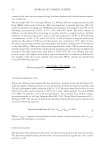
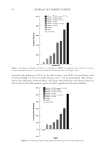
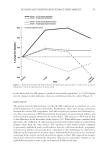
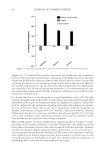
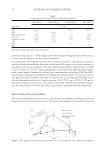
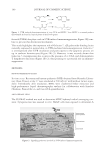
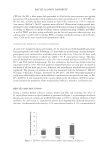
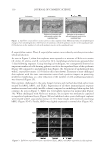
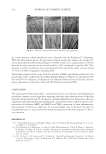
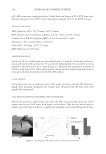
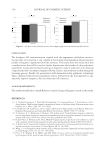
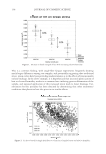
JOURNAL OF COSMETIC SCIENCE 128 the C11-fl uor probe was monitored on a fi xed number of cells (10,000) by fl ow cytometric analysis, using a FACS array system. CHELATION OF HEAVY METAL PARTICLES EPS-229, at a concentration of 0.05% w/v (to reach saturation level), was incubated for 3 h under constant agitation (200 rpm) at 25°C, in the presence of 0.3 μg/ml of Cd or Pb, in a fi nal volume of 30 ml, at pH 6. At the end of the incubation period, solutions were fi ltered by centrifugation at 3000 g, using Vivaspin 20 centrifugal fi lter units (Vivascience) with a 30 kDa molecular mass cutoff. The concentration of Cd and Pb in the supernatants was measured by fl ame atomic absorption spectrometry. PROTECTION OF SKIN EXPLANTS FROM POLLUTANT-INDUCED LIPID PEROXIDATION Skin explants were obtained from a woman (age 64) undergoing plastic surgery and maintained in culture. Every day from D0 to D4, a lotion containing the test product EPS-229 (0.03% w/v) or tocopherol (positive control) was applied at the surface of the skin explants. On D4, a small fi lter paper containing a mixture of various heavy metals plus hydrocarbons (benzene, toluene, xylene, anthracene, and naphthol) was additionally applied at the surface of the skin explants. On D5, fi lter papers were removed and malondialdehyde (MDA) levels, the end product of lipid peroxidation, were quantifi ed in the culture media of each skin explant, using enzyme-linked immunosorbent assay. PROTECTION OF SKIN EXPLANTS FROM POLLUTANT-INDUCED MORPHOLOGICAL CHANGES On D5, at the end of the pollutant challenge experiment described earlier, skin explants were treated with Bouin’s histological reagent for 48 h, dehydrated, and paraffi nized. Morphological studies were done on cut paraffi n sections, following Masson’s trichrome staining. CLINICAL EVALUATION The effi cacy of EPS-229 to protect the skin against air pollutants was evaluated on a panel of 18 healthy women, aged 42–72 years. Microparticles of black iron oxide with a size of 1 μm were used, as a mimic of the PM (PM2.5) released in the atmosphere by industrial activity and motor vehicle emissions (6). For the anti-adhesion study (preexposure action), two zones (A and B) were defi ned on the forearms of volunteers. Zone A was treated with EPS-229 (0.02% w/v) in a water solution and zone B with a water placebo for 20 min. Next, a solution containing black iron oxide microparticles was applied on both zones using a make-up sponge. Three minutes later, both zones were rinsed with water (4 μl/cm2) and then wiped to remove nonadherent particles. Pictures of both zones were taken before and after rinsing, with a Hirox® video microscope. The percentage of nonadherent PM2.5 particles was calculated using the fol- lowing formula: ((number of adherent PM2.5 particles before rinsing - number of adherent PM2.5 particles after rinsing)/number of adherent PM2.5 particles before rinsing) × 100.
Purchased for the exclusive use of nofirst nolast (unknown)
From: SCC Media Library & Resource Center (library.scconline.org)