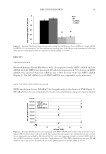
J. Cosmet. Sci., 68, 25–33 ( January/February 2017) 25 Effect of SIRT6 knockdown on NF- B induction and on residual DNA damage in cultured human skin fi broblasts E. C. GOYARTS, K. DONG, E. PELLE, and N. PERNODET, Estee Lauder Research Laboratories, Melville, NY (E.C.G., K. D., E. P., N. P.) and Environmental Medicine, New York University School of Medicine, New York, NY (E.P.). Accepted for publication October 24, 2016. Synopsis SIRT6 is a member of the sirtuin family, which is involved in multiple cellular pathways related to aging, infl ammation, epigenetics, and a variety of other cellular functions, including DNA repair (1). Multiple pathways involving different cellular functions are impacted by the deacetylase activity of SIRT6. Genomic integrity is maintained by the capacity of SIRT6 to modulate the accessibility of DNA repair proteins. Glucose metabolism is suppressed by SIRT6 via the deacetylation of histones located at the promoter regions of multiple glycolytic genes and the corepression of hypoxia-inducible factor-1α. SIRT6 is also a corepressor of nuclear factor (NF)-κB, silencing NF-κB target genes through the deacetylation of histones at their promoters’ regions. We used SIRT6 small-interfering RNA as a tool to modulate residual DNA damage and NF-κB expression in human dermal fi broblasts. We measured NF-κB levels in the presence or the absence of ultraviolet B (UVB). The impact of SIRT6 knockdown as shown by a decrease in SIRT6 messenger RNA levels resulted in residual DNA damage as evaluated by the comet assay. Our results show that NF-κB was increased signifi cantly (up to 400%) due to SIRT6 silencing in the absence of UVB, illustrating the master regulatory function of SIRT6 in infl ammation. We also found a signifi cant increase in DNA damage without UV exposure as a result of SIRT6 silencing, indicating the importance of SIRT6 in DNA repair pathways in cultured human dermal fi broblasts. INTRODUCTION Sirtuins are a family of NAD+-dependent histone deacetylases impacting a broad range of cellular functions (1,2). Mammals have seven sirtuins (SIRT1–7), which modulate diverse cellular functions including metabolism, cellular stress response, genomic stability, infl am- mation, and aging (3,4). SIRT6, which is localized in the nucleus, catalyzes the removal of an acetyl group at lysine 9 (H3K9) and/or lysine 56 (H3K56) of histone 3. Deacety- lation of histone 3 reduces the accessibility of DNA-binding proteins because the nucleosomal structure becomes compressed. Thus, SIRT6 modulates many genes through posttransla- tional modifi cation of histone 3 resulting in chromatin silencing (5). SIRT6 is considered Address all correspondence to Earl C. Goyarts at egoyarts@estee.com.
Purchased for the exclusive use of nofirst nolast (unknown)
From: SCC Media Library & Resource Center (library.scconline.org)