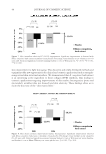
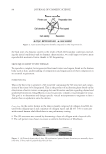
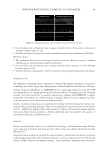
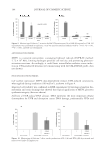
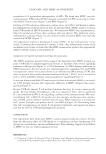
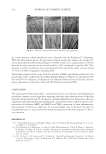
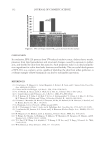
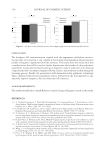
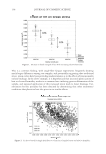
JOURNAL OF COSMETIC SCIENCE 32 pathways during transient knockdown. A compensatory metabolic response previously reported would include an increase in glycolysis and more glucose uptake (24). Likewise, an increase in DNA damage leads to an increase in NF-κB activation. The concomitant increase in NF-κB signaling can result in a feed-forward loop of more cellular stress and additional DNA damage. In this model, we were able to show that SIRT6 plays a critical role in reducing skin infl ammation and initiating DNA repair. In conclusion, our results demonstrate the importance of SIRT6 in maintaining genomic integrity and controlling infl ammation, both of which are essential for maintaining a young and healthy skin. Taken together, our data provide a link between sirtuin activity, which has received much attention due to its association with gene silencing and its potential for increasing cell longevity, and two parameters of cellular health: NF-κB and DNA damage. Since increased NF-κB translocation leads to higher levels of infl ammation and increased DNA damage contributes to apoptotic cell formation, both of which generate reactive oxygen species, attenuation of these effects by maintaining SIRT6 activity in the nucleus will protect skin cells against the kinds of damage that can over time develop into fi ne lines and wrinkles. Finding new biological materials that will achieve this goal is an important next step. REFERENCES (1) M. Serravallo, J. Jagdeo, S. A. Glick, D. M. Siegel, and N. I. Brody, Sirtuins in dermatology: Applica- tions for future research and therapeutics, Arch. Dermatol. Res., 305, 269–282 (2013). (2) E. Pelle and N. Pernodet, “Sirtuins: Biology and Anti-aging Benefi ts for Skin Care,” in Harry’s Cosmetol- ogy, 9th Ed, M. Rosen Ed. (Chemical Publishing, Los Angeles, CA, 2015), pp. 1177–1189. (3) S. Kugel and R. Mostoslavsky, Chromatin and beyond: The multitasking roles of SIRT6, Trends Biochem. Sci., 39, 72–81 (2014). (4) L. Bosch-Presegué and A. Vaquero, Sirtuins in stress response: Guardians of the genome, Oncogene, 33, 3764–3775 (2014). (5) T. L. A. Kawahara, N. A. Rapicavoli, A. R. Wu, K. Qu, S. R. Quake, and H. Y. Chang, Dynamic chro- matin localization of SIRT6 shapes stress- and aging-related transcriptional networks, PLoS Genet., 7, e1002153 (2011). (6) R. Mostoslavsky, K. F. Chua, D. B. Lombard, W. W. Pang, M. R. Fischer, L. Gellon, P. Liu, G. Mostoslavsky, S. Franco, M. M. Murphy, K. D. Mills, P. Patel, J. T. Hsu, A. L. Hong, E. Ford, H.-L. Cheng, C. Kennedy, N. Nunez, R. Bronson, D. Frendewey, W. Auerbach, D. Valenzuela, M. Karow, M. O. Hottiger, S. Hursting, H. C. Barrett, L. Guarente, R. Mulligan, B. Demple, G. D. Yancopoulos, and F. W. Alt, Genomic in- stability and aging-like phenotype in the absence of mammalian SIRT6, Cell, 124, 315–329 (2006). (7) R. I. Tennen and K. F. Chua, Chromatin regulation and genome maintenance by mammalian SIRT6, Trends Biochem. Sci., 36, 39–46 (2011). (8) D. B. Lombard, Sirtuins at the breaking point: SIRT6 in DNA repair, Aging, 1, 12–16 (2009). (9) Z. Mao, C. Hine, X. Tian, M. van Meter, M. Au, A. Vaidya, A. Seluanov, and V. Gorbunova, SIRT6 promotes DNA repair under stress by activating PARP1, Science, 332, 1442–1446 (2011). (10) A. Kaidi, B. T. Weinert, C. Choudhary, and S. P. Jackson, Human SIRT6 promotes DNA-end resection through CtIP deacetylation, Science, 329, 1348–1353 (2010). (11) T. L. A. Kawahara, E. Michishita, A. S. Adler, M. Damian, E. Berber, M. Lin, R. A. McCord, K. C. L. Ongaigui, L. D. Boxer, H. Y. Chang, and K. F. Chua, SIRT6 recruits SNF2H to DNA break sites, pre- venting genomic instability through chromatin remodeling, Mol. Cell, 51, 454–468 (2013). (12) Z. Mao, X. Tian, M. Van Meter, Z. Ke, V. Gorbunova, and A. Seluanov, Sirtuin 6 (SIRT6) rescues the decline of homologuous recombination repair during replicative senescence, Proc. Natl. Acad Sci USA, 109,11800–11805 (2012). (13) G. Jia, L. Su, S. Singhal, and X. Liu, Emerging roles of SIRT6 on telomere maintenance, DNA repair, metabolism and mammalian aging, Mol. Cell Biochem., 364, 345–350 (2012). (14) E. Michishita, R. A. McCord, E. Berber, M. Kioi, H. Padilla-Nash, M. Damian, P. Cheung, R. Kusumoto, T. L. A. Kawahara, J. C. Barrett, H. Y. Chang, V. A. Bohr, T. Ried, O. Gozani, and K. F. Chua, SIRT6 is a histone H3 lysine 9 deacetylase that modulates telomeric chromatin, Nature, 452, 492–496 (2008).

SIRT6 KNOCKDOWN 33 (15) R. D. Ley, Photorepair of pyrimidine dimers in the epidermis of the marsupial Monodelphis domestica, Photochem. Photobiol., 40, 141–143 (1984). (16) J.-P. Etchegaray, L. Zhong, and R. Mostoslavsky, The histone deacetylase SIRT6: At the crossroads between epigenetics, metabolism and disease, Curr. Top. Med. Chem., 13, 2991–3000 (2013). (17) T. L. A. Kawahara, E. Michishita, A. S. Adler, M. Damian, E. Berber, M. Lin, R. A. McCord, K. C. L. Ongaigul, L. D. Boxer, H. Y. Chang, and K. F. Chua, SIRT6 links histone H3 lysine 9 deacetylation to NF-κB-dependent gene expression and organismal life span, Cell, 136, 62–74 (2009). (18) G. Natoli, When sirtuins and NF-κB collide, Cell, 136, 19–21 (2009). (19) Y. Kanfi , S. Naiman, G. Amir, Y. Peshi, G. Zinman, L. Nahum, Z. Bar-Joseph, and H. Y. Cohen, The sirtuin SIRT6 regulates lifespan in male mice, Nature, 483, 218–221 (2012). (20) R. Mostoslavsky, DNA repair, insulin signaling and sirtuins: At the crossroads between cancer and aging, Front. Biosci., 13, 6966–6990 (2008). (21) H. Pan, D. Guan, X. Liu, J. Li, L. Wang, J. Wu, J. Zhou, W. Zhang, R. Ren, W. Zhang, Y. Li, J. Yang, Y. Hao, T. Yuan, G. Yuan, H. Wang, Z. Ju, Z. Mao, J. Li, J. Qu, F. Tang, and G.-H. Liu, SIRT6 safe- guards human mesenchymal stem cells from oxidative stress by coactivating NRF2, Cell Res., 26, 190– 205 (2016). (22) Y. Baohua and L. Li, Effects of SIRT6 silencing on collagen metabolism in human dermal fi broblasts, Cell Biol. Int., 36, 105–108 (2012). (23) K. Wischermann, S. Popp, S. Moshir, K. Scharffetter-Kochanek, M. Wlaschek, F. de Gruijl, W. Hartschuh, R. Greinert, B. Volkmer, A. Faust, A. Rapp, P. Schmezer, and P. Boukamp, UVA radiation causes DNA strand breaks, chromosomal aberrrations and tumorigenic transformation in HaCaT skin keratinocytes, Oncogene, 27, 4269–4280 (2008). (24) L. Zhong, A. D’Urso, D. Toiber, C. Sebastian, R. E. Henry, D. D. Vadysirisack, A. Guimaraes, B. Marinelli, J. D. Wikstrom, T. Nir, C. B. Clish, B. Vaitheesvaran, O. Iliopoulos, I. Kurland, Y. Dor, R. Weissleder, O. S. Shirihai, L. W. Ellisen, J. M. Espinosa, and R. Mostoslavsky, The histone deacetylase Sirt6 regu- lates glucose homeostasis via HIF-1α, Cell, 140, 280–293 (2012).
Purchased for the exclusive use of nofirst nolast (unknown)
From: SCC Media Library & Resource Center (library.scconline.org)