COLLAGEN XVIII: A KEY INTERFACIAL COMPONENT 41 REFERENCES (1) L. Seppinen and T. Pihlajaniemi, The multiple functions of collagen XVIII in development and disease, Matrix Bio., 30, 83–92 (2011). (2) A. Utriainen, R. Sormunen, M. Kettunen, L. Carvalhaes, E. Sajanti, L. Eklund, R. Kauppinen, G. Kitten, and T. Pihlajaniemi, Structurally altered basement membranes and hydrocephalus in a type XVIII collagen defi cient mouse line, Hum Mol Genet., 13(18), 2089–2099 (2004). (3) R. Bazin and E. Doublet, Skin Aging Atlas: Volume 1 Caucasian Type. (2007).

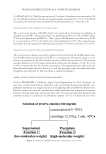
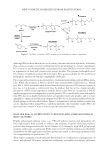
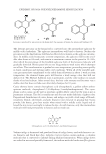
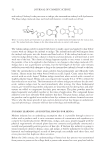
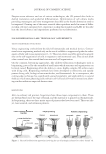
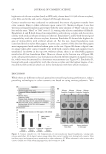
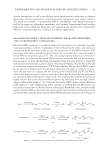
J. Cosmet. Sci., 68, 42–47 ( January/February 2017) 42 Designing new functional cosmetic ingredients from polyglycerol, a versatile bio-based platform for improved sustainability MICHAEL J. FEVOLA, FRANK C. SUN, and STACEY E. YORK, Johnson & Johnson Consumer Inc., Skillman, NJ 08558 (M.J.F., F.C.S.) and University of Oregon, Eugene, OR 97403 (S.E.Y.). Synopsis Polyglycerol (PG) is a well-known cosmetic ingredient and important precursor for the synthesis of a variety of cosmetic ingredients, such as surfactants, emulsifi ers, and conditioning agents for hair and skin. When derived from renewable resources, PG can provide a more sustainable platform for the development of new ingredients with improved performance in cosmetic applications. This paper will discuss recent advances in the utilization of bio-based PG ingredients as alternatives to traditional ethoxylate chemistries for mild nonionic surfactants, substantive humectants, and micellar thickeners. INTRODUCTION: POLYGLYCEROL AS A BIO-BASED CHEMICAL PLATFORM In addition to being one of the most widely used cosmetic ingredients, glycerin also serves as a feedstock for the synthesis of a variety of surfactants, emulsifi ers, conditioning agents, and other cosmetic ingredients (1). Plant-derived glycerin is an abundant bio-based coprod- uct resulting from the oleochemical production of fatty acids and soap it is the preferred source of glycerin for cosmetics, and it is an attractive platform for the development of new cosmetic ingredients with improved functionalities. Polyglycerol (PG) is a complex, polydisperse, low molecular weight polyether composed of repeat units that are based on dehydrated three-carbon glycerol groups, which can be linear, branched, or cyclic in nature (2). PG is extremely hydrophilic due to the presence of many pendant hydroxyl groups in primary and secondary positions however, the hy- droxyl values and hydrophilicity of PG decreases with increasing cyclic repeat unit con- tent, as each cyclic repeat unit formed effectively consumes one pendant hydroxyl group. Bio-based PG may be produced via the direct condensation polymerization of glycerol (purifi ed glycerin) with water as the by-product, or via ring-opening polymerization of glyceryl carbonate (GC), a cyclic carbonate monomer synthesized from glycerol (Figure 1). Other routes to PG exist, e.g., via polymerization of glycidol or epichlorohydrin however, these routes are less preferred, since most glycidol and epichlorohydrin are derived from nonre- newable feedstocks, and these monomers present signifi cant health and safety hazards. Address all correspondence to Michael Fevola at mfevola@its.jnj.com.
Purchased for the exclusive use of nofirst nolast (unknown)
From: SCC Media Library & Resource Center (library.scconline.org)