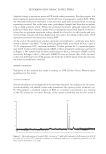
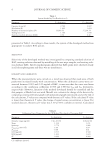
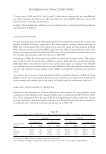
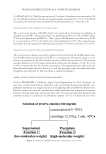
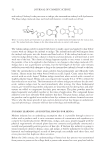
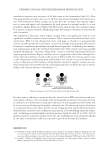
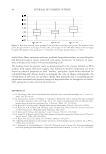
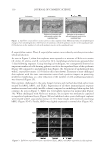
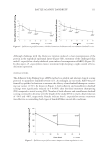
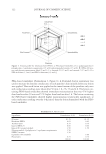
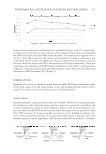
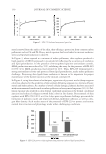
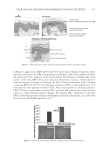
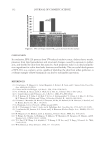
NEW COSMETIC INGREDIENTS FROM POLYGLYCEROL 47 of curvature to begin increasing, resulting in shorter rod-like micelles and eventually a transition from rod-like to spherical micellar geometry, all of which coincide with the observed decreasing viscosities. Based on these fi ndings, the polyglyceryl polyol ester thickeners are considered to function more effectively as hydrophobic core thickeners and not like highly ethoxylated hydro- philic corona-type thickeners, e.g., PEG-120 methyl glucose dioleate.10 These PG-based thickeners are best suited for surfactant systems that build viscosity via rod-like micelle formation, e.g., blends containing high concentrations of anionic surfactants. The GC polymerization approach enables effective control of the PG DP, in turn offering the potential to synthesize thickeners with CPPs tailored to provide the most effi cient radius of curvature for maximizing rod-like micelle formation in a given surfactant system. CONCLUSION PG is a versatile bio-based platform that can be exploited for the development of a broad range of functional cosmetic ingredients, including surfactants, conditioning agents, and thickeners. When utilized with green chemistry and sustainable design principles in mind, PG offers ingredient manufacturers and formulators yet another alternative to increase biorenewable content in their products without sacrifi cing on functional or aesthetic benefi ts. The synthetic fl exibility of PG ingredient platforms enables ingredients to be tailored to specifi c applications and for maximum performance. REFERENCES (1) M. J. Fevola, Cosmetics & Toiletries, 126(8), 548 (2011). (2) G. Rokicki, P. Rakoczy, P. Parzuchowski, and M. Sobiecki, Hyperbranched aliphatic polyethers obtained from environmentally benign monomer: Glycerol carbonate, Green Chem., 7, 529–539 (2005). (3) J. N. Masci and N. A. Poirier, Detergent compositions, US Patent 3,055, 836 (1962). (4) R. J. Verdicchio and J. M. Walts, High-lathering non-irritating detergent compositions, US Patent 3,950,417 (1976). (5) M. J. Fevola, Compositions comprising a polyglyceryl nonionic surfactant and a zwitterionic surfactant, US Patent 8,227,393 B2, (2012). (6) M. J. Fevola, F. C. Sun, and S. E. York, Cationic polyglyceryl compounds and compositions, US Patent 8,961,945 B2 (2015). (7) S. B. Polovsky, H. L. Moshel, J. P. Pavlichko, and A. Friedman, Alkoxylated alkyl glucoside ether qua- ternaries useful in personal care, US Patent 5,138,043 (1992). (8) H. S. Bevinakatti, A. G. Waite, and J. Frank, Polyglycerol ethers of sorbitan carboxylic acid esters, Patent WO2009016375A2 (2009). (9) S. Andjelic, M. Erneta, M. J. Fevola, and F. C. Sun, Polyglyceryl compounds comprising a methyl glu- coside or sorbitan remnant and compositions comprising the same, US Patent 8,455,418 B2 (2013). (10) U. Kortemeier, J. Venzmer, A. Howe, B. Grüning, and S. Herrwerth, SOFW J., 136(3), 30–38 (2010).

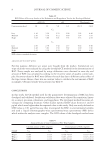
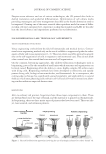
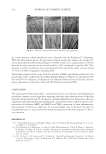
J. Cosmet. Sci., 68, 48–54 (January/February 2017) 48 Addressing epidemic of para-phenylenediamine sensitization by going forward into the past CATHERINE CARTWRIGHT-JONES, TapDancing Lizard LLC. The epidemic of sensitization to para-phenylenediamine (PPD) will cause loss of client base for oxidative hair dye. Generalizing from the results of a broad UK sensitization as- say of adolescents in 2014, 16% of adults in western industrialized nations are now sen- sitized to PPD by the time they begin to gray in 2030, all of these people will be unable to use oxidative hair dye and other products containing coal tar derivatives and 7% may have reactions severe enough to require hospitalization (1). Many with extreme PPD reac- tions were sensitized by “black henna” temporary tattoos (2). In East Africa, the practice of decorating skin with PPD to create “black henna” temporary tattoos has been popular since the 1970s (3) levels of sensitization are very high Khartoum, Sudan, now has over 300 hospital admissions each year from high systemic exposure to PPD (4). North Africa, the Arabian Peninsula, and South Asia, where people have used “black henna” since the 1980s also have a high rate of hospital admissions related to the health consequences of PPD exposure. The popularity of “black henna” temporary tattooing is not the sole driver of this epi- demic. Childhood use of hair dye, particularly inept applications of home hair dye kits by teenagers during the Punk, Emo, and Goth eras, has elevated the number of sensitiza- tions. The black henna temporary tattoos appear to be responsible for the severe reactions and cross-sensitization to related chemicals (5). Black hair dye products imported from India, Pakistan, Japan, and China containing 20–40% PPD have contributed to the se- verity of sensitizations (6). The current severe (+++) sensitization reactions and deaths being reported now have not been seen since the early 1900s when PPD dyes for hair were not regulated at 6% PPD or lower (7). Because of the high dye percentage and large body area applications of PPD in “black henna,” many people are sensitized to other diamine-related chemicals and must avoid the entire portfolio of cosmetic chemicals, which have proceeded from the initial synthesis of aniline dyes in the mid-1800s. Development and promotion of “safer oxida- tive” hair formulas may result in more injuries as many people sensitized through “black henna” temporary tattoos are cross-sensitized to chemically similar compounds (8). According to a 2016 survey by the British Skin Foundation, two-thirds of British derma- tologists have seen an increase in patients with reactions to hair dyes, many of whom have Address all correspondence to Catherine Cartwright-Jones at reverndbunny@earthlink.net.
Purchased for the exclusive use of nofirst nolast (unknown)
From: SCC Media Library & Resource Center (library.scconline.org)