EPIDEMIC OF PARA-PHENYLENEDIAMINE SENSITIZATION 49 previously had a “black henna” temporary tattoo (9). If a signifi cant number of the client base becomes unable to use chemical hair dye, and the chemical cosmetic industry does not want to lose that revenue, an alternative to coal tar–derivative dyes must be developed. WHY HENNA DISAPPEARED FROM COSMETOLOGY PRACTICE Before the invention of oxidative dyes, there was a permanent, gray-covering, nonfading hair dye technology based on henna, partially fermented indigo, cassia, and fruit acids. The older plant-based hair dye techniques were learned and shared in the village baths of North Africa, the Levant, Arabia, India, and the Middle East these hair dye practices were refi ned generation after generation and regarded as the safest, most reliable, most attractive thing a person could use on hair. Colonial expansion into these countries brought these dyes to Europe, where they became the height of fashion in the late 1800s and into the early 1900s. Women’s long, fl owing red hair celebrated in Art Nouveau and the brilliant red hair shown in Toulouse-Lautrec’s paintings of women show European women’s delight in henna, the newly available exotic wonder. Sarah Bernhardt hennaed her graying hair, as did many other divas, and their admirers followed suit. The popularity and reliability of henna were disrupted when World Wars I and II inter- rupted the henna supply chain from the Ottoman Empire, Egypt, and North Africa. B. Paul and other American hair dye companies added mineral salts to inferior low-grade henna base to stretch a scant and inferior supply when henna became diffi cult to import. These additives also were meant to compensate for the lack of traditional knowledge when henna products were sold outside of the native region. These products were mar- keted as “henna compounds.” Compound henna hair dye products currently in the mar- ketplace have a justifi ably terrible reputation in the cosmetic industry based on the destructive cross reactions between mineral salts and the activators for oxidative hair dye. These are, most notoriously, sodium picramate, lead acetate, silver nitrate, copper, nickel, cobalt, bismuth, and iron (10). If these additives are undeclared, or the declaration is obscured, hairdressers conclude that henna itself is to blame. Most compound henna products contain low-dye-content plant materials, misunderstood chemistry, and additives masking the poor botanical quality. These compromise the color outcome while pushing profi ts higher and undermine what once was, and what should be, a very benefi cial product. The compound henna hair dye products presently in the marketplace are a case study in what can go wrong when market forces tinker with a reli- able and serviceable product with the intent of improving convenience, uniformity, pre- dictability, and profi tability until the original good of the product is compromised to the point of near uselessness. Pure henna, indigo, and cassia in varying proportions can dye hair in the full range of human hair color and allow people who have been sensitized to PPD to transition away from oxidative hair dye without having to grow out their hair. If 16% of hair-dying population will need to switch to henna because of sensitization, how much supply must be obtained, and how will it be possible to re-educate the consumer and cosmetologists to transit these people to henna? One kilogram of plant powder per year is suffi cient for one person to permanently color hair, doing monthly root growth. Suffi cient supplies will have to be planned for, grown, milled, and harvested to the standards western consumers expect. The coarsely sifted henna presently in the marketplace will not be acceptable to

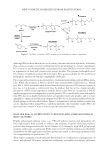
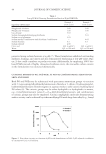
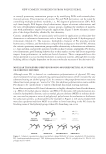
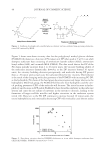
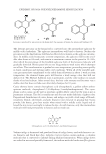
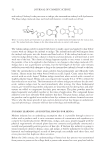
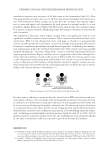
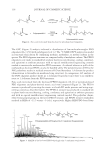
JOURNAL OF COSMETIC SCIENCE 50 western consumers accustomed to easy-to-apply, easy-to-rinse dye. Henna, cassia, and indigo milling and sifting must be improved to 150-micron particle size there must be no sand, adulterants, additives, or plant debris in the leaf powder. Double wall packaging is necessary for the powders to remain quality over several years. Indigo must be kept from freezing, or the dye will be spoiled. Henna must be kept under 90°F to maintain dye quality. EXPANDING AND IMPROVING THE RESOURCE BASE Most of the henna currently in the marketplace at present is grown in the Sojat region of India about half of the annual crop is exported. India has improved henna milling facili- ties in Jodhpur and Faridabad. Henna sifted to western expectations of quality is avail- able, but the quality of the crop varies from year to year the highest lawsone content crops seem to coincide with El Nino events. To obtain consistent lawsone content for the market, more than one source will have to be developed to compensate for variation in annual crops. Sudan produces excellent henna, but more coarsely sifted than is acceptable. Yemen produces some of the highest dye content henna in the world, and the milling is good, but at present, the infrastructure in the country has been broken by civil war, and supplies are unreliable. Henna is available from Iran but trade restrictions have limited the supply to the United States for many years. All of the countries in the Sahel could be excellent henna producers, but the infrastructure of henna production to western market standard is not yet in place. Morocco and other North African countries have produced henna in the past, but have turned to more lucrative and modern agricultural products to serve the European market. The development of multiple henna-growing areas will pro- vide a more stable resource base. An expanded and improved market for henna, indigo, and cassia with investment in plant breeding and milling infrastructure could improve economic and political ties to these areas. If the global henna supply must be increased to meet rising demand or if other strains of henna are desired for varied characteristics, other growing areas should be developed. A henna tree must grow for 1 year before leaf harvesting can begin a henna tree can remain productive in the ground for up to 50 years. An initial investment in planting a henna crop can produce income for two generations. Indigo is grown and har- vested annually. Cassia obovata is a perennial in frost-free zones. Henna leaves contain 0.3–3% lawsone, 2-hydroxy-1,4-naphthoquinone. Since the law- sone content varies, high-performance liquid chromatography (HPLC) batch testing is crucial to predict the color outcome. The longer henna paste is kept moist in the hair, the more intermediate lawsone molecules will have the opportunity to migrate into the kera- tin 6 h generally is enough for maximum absorption of henna. Warmth facilitates a faster uptake. As more lawsone molecules migrate into the cuticle and bind with the keratin, the more saturated the color result will be. An HPLC test of powdered henna leaves generally shows 0.5–3% lawsone, a red-orange naphthoquinone molecule (11) which readily, harmlessly, binds with and stains keratin. The staining action is facilitated when henna leaf powder is mixed with a mildly acidic medium a pH 5.5 paste mix is ideal (12) to transform the precursor to the intermediate. The intermediate will bind to keratin via a Michael Addition creating a nonfading stable bond of the lawsone molecule with keratin. This red-orange stain can gradually oxidize to a brownish color by oxidation or contact with minerals commonly dissolved in tap water.
Purchased for the exclusive use of nofirst nolast (unknown)
From: SCC Media Library & Resource Center (library.scconline.org)