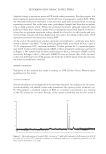
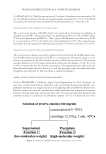
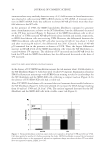
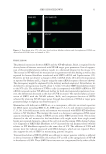
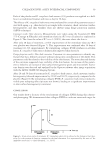
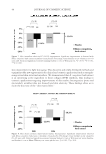
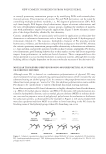
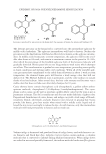
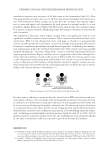
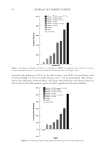
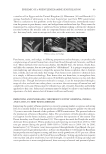
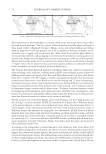
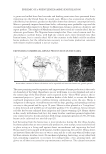
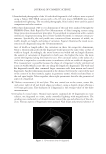
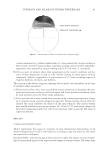
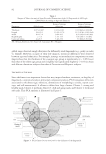
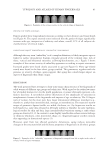
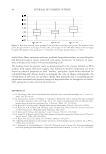
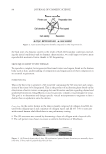
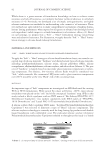
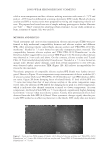
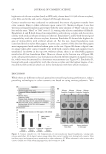
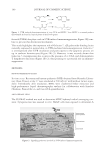
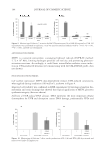
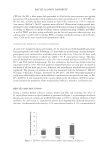
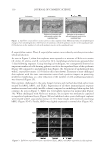
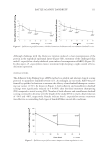
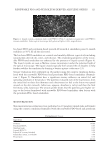
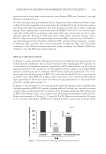
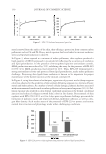
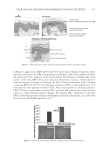
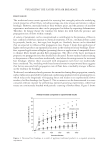
EPIDEMIC OF p-PHENYLENEDIAMINE SENSITIZATION 71 is grown and milled from Iran but trade and banking restrictions have prevented direct importing into the United States for several years. Morocco has a reputation of perfectly sifted henna, but domestic production has fallen lower than domestic consumption levels Morocco presently imports henna from India, cultivating more profi table crops and the seasonal farm labor migrates to Europe. In Mauritania, henna is grown as a domestic and export product. The samples of Mauritania henna I have tested are coarsely sifted, but are otherwise good henna. The Nigerian henna samples that I have tested contain sand. Su- dan produces excellent henna, with high dye content and a more brownish tone than Iranian henna, but is coarsely sifted. All of the countries in the Sahel could be excellent henna producers, but the infrastructure necessary to raise henna production consistent with western market standard is not yet in place. EXPANDING COMMERCIAL HENNA PRODUCTION IN THE SAHEL The most promising area for expansion and improvement of henna production is the south- ern boundary of the Sahel. Rajasthan’s success with henna to secure farmland and soil at the eastern edge of the Thar Desert can be repeated in the “Green Wall” project, the in- ternational project to “green” the southern border of the Sahel, to reverse the Sahara’s southward progression and to stabilize farming communities across the area. Henna is indigenous to the region. A small henna tree with its deep, gnarling, and spreading root base can stay in the ground and for up to 50 years. Henna is often planted as a “living fence” to keep livestock and wildlife out of vegetable gardens (19). In addition, henna tolerates soil that has become salinized from irrigation and climate warming (20). Henna thrives in fi ne, sandy, well-drained soil hot, dry, sunny weather conditions promote higher law- sone content in leaves. In semi-arid areas with average annual precipitation of 250–450 mm, henna can be cultivated as a rain-fed crop (21). Leaf harvesting from the henna trees is most productive during the fi rst three decades, but henna plants that are not economically productive, even stumps, tenaciously hold soil in place acting as a living wall against desert encroachment and improving the land. Henna may be intercropped with legumes, further improving the soil (22). Henna leaves are harvested from the trees once or twice a year, and are a cash crop when all other crops fail from extreme weather events. No mechanical planting, harvesting, or any other fossil fuel–consuming equipment is necessary for tending henna a hoe, pruning knife, and gloves are all that is necessary for crop maintenance and harvest. The cultural association Areas where commercial henna cultivation can be expanded and tenacious henna root growth pattern.

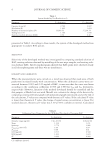
JOURNAL OF COSMETIC SCIENCE 72 of henna with women may be advantageous where populations have suffered genocidal confl ict, women now dominate farming and entrepreneurial activity. As the market demand increases, as henna is bred for specifi c characteristics such as higher lawsone content, and as it is milled to higher quality standards, farmers who are smallholders in marginal areas with deteriorating conditions due to climate change will fi nd they can more easily stay on their land and provide for their families. MERGING HENNA, INDIGO, AND CASSIA INTO THE MODERN HAIR DYE INDUSTRY The users of home hair dye kits are the most vulnerable consumer group purchasers may be unaware that they are sensitized to oxidative hair dye, and the delayed hypersensitivity reaction to PPD may invalidate patch tests. Education of clients about the benefi ts of henna and ease of use is paramount. Henna is easily applied at home. If the safety, health, and naturalness of henna are marketed strongly, if educating clients about henna is made a priority, sensitized customers’ reluctance to change may be overcome. There is no reason for a salon to not use henna on individual clients or for a salon to become “henna only” to serve many sensitized clients by stylists who have become sensitized. PPD sensitization is no less than an epidemic than human immunodefi ciency virus (HIV) is, and they have many parallels. Recognition of the scope of the problem has been slow. A long latency period has exacerbated both, but the health effects are real, quantifi able, and inevitable in both. With HIV, there was great cultural resistance to acknowledging the epidemic, and great resistance to making the changes necessary to mitigate the risk. There is considerable resis- tance to henna in the cosmetology industry because of misinformation and inferior products. These problems can be corrected with education and improved product, and lives saved. If, in the 15 years between now and the time when the estimated crest of sensitized population begins to go gray, and henna, indigo, and cassia are improved through rigor- ous testing, plant breeding, and infrastructure improvement programs, client base loss for the oxidative hair dye industry can be avoided. Henna product lines can be developed which will benefi t not only the cosmetic industry: expanded henna, cassia, and indigo cultivation will stabilize farming in marginal regions and counteract desertifi cation through climate change. If the global henna supply must be increased to meet rising demand, alternate growing areas and improved plant breeding should be developed as quickly as possible. REFERENCES (1) G. T. Demirci, I. K. Altunay, G. Atis, and A. Kucukunal, Allergic contact dermatitis mimicking angio- edema due to paraphenylendiamine hypersensitivity: a case report, Cut. Ocul. Toxicol., 31, 250–252 (2012). (2) A. Broides, S. Sofer, and I. Lazar, Contact dermatitis with severe scalp swelling and upper airway com- promise due to black henna hair dye, Pediatr. Emerg. Care., 27 (8), 745–746 (2011). (3) P. J. Almeida, L. Borrego, E. Pulido-Melián, and O. González-Díaz, Quantifi cation of p-phenylenedi- amine and 2-hydroxy-1,4-naphthoquinone in henna tattoos, Contact Dermat., 66 (1), 33–37 (2012). (4) E. Özkaya, K. D. Yazganoglu, A. Arda, Z. Topkarci, and E. Erçag, The “henna stone” myth, Indian J. Dermatol. Venereol. Leprol., 79, 254–256 (2013). (5) K. A. Abdulla, and N. McD. Davidson, A woman who collapsed after painting her soles, Lancet, 348, 658 (1996).
Purchased for the exclusive use of nofirst nolast (unknown)
From: SCC Media Library & Resource Center (library.scconline.org)