EPIDEMIC OF p-PHENYLENEDIAMINE SENSITIZATION 73 (6) A. M. Kligman, The identifi cation of contact allergens by human assay. 3. The maximization test: A procedure for screening and rating contact sensitizers, J. Invest. Dermatol., 47 (5), 393–409 (1966). (7) C. Brooke, Estate agent mother ‘killed by extreme allergy to L’Oreal hair dye—despite up to 20 visits to GP for rashes, itchy eyes and swelling’, The Daily Mail (February 17, 2015), accessed June 20, 2016, http://www.dailymail.co.uk/news/article-2957303/Estate-agent-mother-killed-extreme-allergy-hair-dye- wasn-t-recorded-medical-notes-despite-20-visits-GP-rashes-itchy-eyes-swelling.html#ixzz4C8RYk7tV (8) A. Amzein, Two women die of henna poisoning in Marj, Libya Herald (October 24, 2015), https://www. libyaherald.com/2015/10/24/two-women-die-of-henna-poisoning-in-marj/ (9) H. McGrath, Wembley barrister ‘lucky to be alive’ after suffering allergic reaction to hair dye, Brent and Kilburn Times (September 1, 2015), http://www.kilburntimes.co.uk/news/wembley_barrister_lucky_ to_be_alive_after_suffering_allergic_reaction_to_hair_dye_1_4216582 (10) G. P. Hooff, N. A. van Huizen, R. J. W. Meesters, E. E. Zijlstra, M. Abdelraheem, W. Abdelraheem, M. Hamdouk, J. Lindemans, T. M. Luider, Analytical investigations of toxic p-phenylenediamine (PPD) levels in clinical urine samples with special focus on MALDI-MS/MS.” PLoS One, 6 (8), e22191 (2011). doi:10.1371/journal.pone.0022191. (11) F. Ilyas, KARACHI: Chemically-laced mehndi in widespread use, Dawn (September 29, 2008), accessed September 2, 2013, http://archives.dawn.com/2008/09/29/local12.htm (12) C. Cartwright-Jones, Ancient Sunrise® Henna for Hair, TapDancing Lizard, 2015, http://www.tapdancinglizard. com/AS_henna_for_hair/index.html (13) Henna comes as a manna for State farmers, The Hindu (July 11, 2005), http://www.thehindu. com/2005/07/11/stories/2005071102890200.htm (14) C. L. Green, “Natural Colourants and Dyestuffs—A Review of Production, Markets and Development Potential,” in Non-Wood Forest Products (FAO, Rome, Italy, 1995), Vol. 4. (15) K. Chand and B. L. Jangid, Economic viability of henna in semi-arid Rajasthan, Agricul. Economics Res. Rev., 20, 137–146 (2007). (16) M. Tewari, Faridabad’s henna industry dying due to stiff competition from other countries and state policy, The Economic Times (March 19, 2012), accessed June 18, 2016, http://articles.economictimes. indiatimes.com/2012-03-19/news/31210756_1_lawsonia-inermis-exporters-dye (17) M. P. Singh and S. Lodha, “Plant Protection for Henna and Henna for Pest and Disease Management” in Henna: Cultivation, Improvement and Trade (Central Arid Zone Research Institute, Jodhpur, India, 2005), pp. 35–38. (18) L. O. Chourasia, P. K. Sardar, M. N. Patil, T. V. Mathew, Study of Quality Characteristics of Henna (Essential Oil Association of India, India, 1989). (19) V. Levasseur, M. Djimdé, and A. Olivier, Live fences in Ségou, Mali: An evaluation by their early users, Agroforest. Syst., 60 (2), 131–136 (2004). (20) Z. D. Kavia and S. K. Verma, “Henna (Lawsonia alba): A profi table enterprise for rainfed agriculture in saline soils,” in Abstracts of Symposium on Impact of Human Activities on Thar Desert Environment (Arid Zone Research Association of India, Jodhpur, India, 2001). (21) S. S. Rao, P. K. Roy, P. L. Regar, and K. Chand, Henna cultivation in arid fringes, Indian Farming, 52 (5), 14–17, 26 (2002). (22) Y. V. Singh, et al., “Henna—Legume Intercropping System for Sustainability in Arid and Semi-Arid Region” in Henna: Cultivation, Improvement and Trade (Central Arid Zone Research Institute, Jodhpur, India, 2005), pp. 31–34.

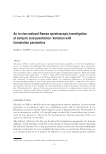
J. Cosmet. Sci., 68, 74–78 ( January/February 2017) 74 Silicone elastomer blends: A novel topical drug delivery platform HYDER A. ALIYAR, ROBERT O. HUBER, GARY L. LOUBERT, GERALD K. SCHALAU, and BARTLEY D. MAXON, Dow Corning Corporation, Midland, MI. INTRODUCTION Silicone elastomers are well known for their use in skin care for their unique, silky, powdery sensory benefi ts, but are also capable of helping the delivery of active ingredi- ents. The specifi c materials included in this study are cross-linked silicone elastomer (Dimethicone Crosspolymer) and cross-linked polyglycol-modifi ed silicone organic elas- tomer (Dimethicone/Bis-isobutyl PPG 20 Crosspolymer) particles swollen in a carrier fl uid. These are clear to slightly translucent with paste-like consistency and provide smooth, silky, powdery, and nongreasy aesthetics recognized in high-end beauty care applications. The capability of effi ciently delivering a broad range of active ingredients in silicone- based topical formulations including ibuprofen and vitamins C and E has been previously demonstrated (1–3). The purpose of this investigation was to assess the capability of ef- fi cient delivery of the following drugs by silicone-based topical semisolid formulations. Clobetasol propionate (CLP) is a very high potency corticosteroid and is used to treat a variety of skin conditions (e.g., eczema, dermatitis, allergies) and reduces the swelling, itching, and redness that occurs in these conditions (4,5). Diclofenac sodium (DCF) is known as a nonsteroidal anti-infl ammatory drug (NSAID) and is used to relieve pain, swelling, and joint stiffness (6). Lidocaine (LDC) is an anesthetic that works to decrease pain by temporarily numbing the area and is used to treat irritation, soreness, and itchiness from certain skin conditions (e.g., scrapes, minor burns, eczema, insect bites) (7). The capability of silicone elastomer blend–based topical pharmaceutical formulations to deliver CLP, DCF, and LDC effi ciently across human cadaver epidermis was investi- gated using in vitro permeability experiments and compared with commercial benchmark products. Address all correspondence to Bartley Maxon at bart.maxon@dowcorning.com.
Purchased for the exclusive use of nofirst nolast (unknown)
From: SCC Media Library & Resource Center (library.scconline.org)