J. Cosmet. Sci., 68, 79–84 ( January/February 2017) 79 Typology and atlases of human fi ngernails across ages and ethnicities KELSEY NORWOOD, THERESA CHEN, PhD, and FREDERIC FLAMENT, PhD, L’Oréal USA Research and Innovation, Clark, NJ (K.N., T.C.) and L’Oréal Research & Innovation, Chevilly-Larue, France (F.F.) INTRODUCTION The intense expansion worldwide in the nail categories (care, maintenance, gel nail systems, and traditional nail polish) implies a need for cosmetic research to better understand the range of variations in the appearance of healthy, natural fi ngernails and to ascertain how age and ethnicity could drive nail dimensions. From a consumer perspective, addressing physiological and morphological changes of fi ngernails through the building of a data base is paramount and might, ultimately, affect consumers’ habits or preferences. The work presented here aims to describe how ethnicity and/or age may affect some geometri- cal, structural, or physical properties of the fi ngernails. SUBJECTS The study comprised 280 women, aged 18–70 years, with a self-declared ethnicity of African–American, Asian/Southeast Asian, Caucasian, and Hispanic. The inclusion process required an equal number of subjects based on four ethnic groups and three age-classes range (18–30, 31–50, and 51–70 years). Hence, groups of 12–30 subjects per ethnicity and age class were formed. The fi ngernails of all subjects were carefully examined during the inclusion phase to make sure that they presented at least eight fi ngernails with a free edge of acceptable length. Brittle, peeling, and fl aking nails were acceptable for the study. Any subjects who had known nail diseases were excluded from the study. MATERIALS AND METHODS The collection of typology data included four types of assessments: A) Imaging. Imaging of the nail was done with two types of processes. Address all correspondence to Kelsey Norwood at KNorwood@rd.us.loreal.com.

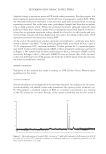
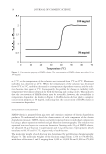
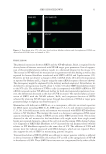
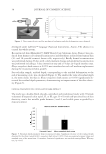
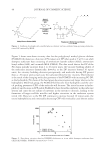
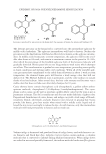
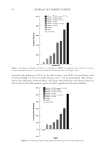
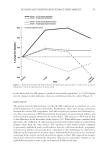
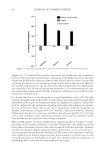
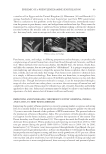
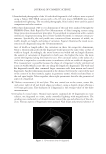
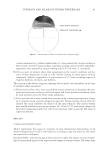
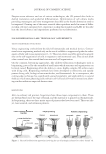
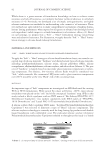
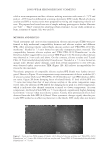
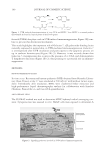
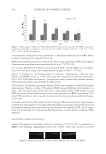
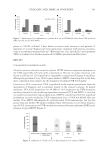
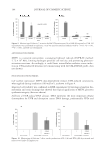
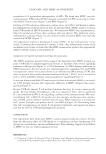
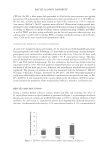
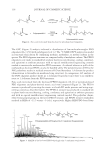
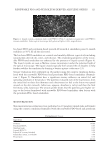
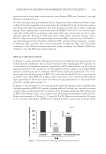
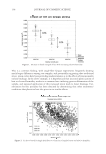
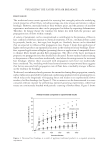
JOURNAL OF COSMETIC SCIENCE 80 1) Standardized photographs of the 10 individual fi ngernails of all subjects were acquired using a Nikon D90 DSLR camera with a 28–105 mm macro NIKKOR lens under standardized lightning. The recorded photographs, blind coded, were used for paired comparison and atlas creation. 2) The three-dimensional (3D) in vivo dimensions of the nail were analyzed through the PRIMOS (Phase Shift Rapid In-Vivo Measurement of Skin) imaging system using fringe projection measurement principles. It was utilized in conjunction with a custom stereotactic fi nger-positioning device from Canfi eld Scientifi c to measure certain pa- rameters. Specifi cally, the nail profi le was constructed from measures of width, arc width, length, arc length, and radius of curvature. Figure1 illustrates the visual recon- struction of a fi ngernail using the 3D measurements. Arcs of width or length refl ect the curvatures in these two respective dimensions, where a theoretically, perfectly fl at fi ngernail would present the same value as that of width or length. Accordingly, the ratios between arc/width and arc/length illustrate the extents of curvatures of fi ngernails in both axes, the higher the ratio, the more curved the fi ngernail along the respective axis. The curvature radius is the radius of a circle that is required to cover the entire circumference of the arc width of a fi ngernail. This measurement is possible because the shape of a fi ngernail is fairly symmetrical across its width (which is not the case along the length of a fi ngernail). The wide and fl at fi ngernails would thus command larger curvature radii than narrow and curved fi ngernails. Another dimension measured is the distance between the center of the nail to the center of its base (namely, sagitta in geometry terms), which is referred here as the nail apex height. Taken together, these eight parameters describe the geometrical aspect of a fi ngernail. B) Thickness measurement of the nail plate. This was carried out at the center, center left, and center right of all nail distal edges per subject, using a digital caliper offering a 0.05-mm precision. The thickness of a fi ngernail is the average value of the three measurements. C) Grading by trained experts. Trained nail experts examined all 10 fi ngernails on every subject, one fi ngernail at a time, under controlled lighting with magnifi cation. The grading was conducted in a blinded manner toward the age and ethnicity of the sub- jects. Various aspects of fi ngernails were assessed. Nail shape and presence/absence of Figure 1. 3D reconstruction of a fi ngernail.
Purchased for the exclusive use of nofirst nolast (unknown)
From: SCC Media Library & Resource Center (library.scconline.org)