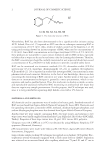
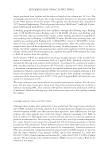
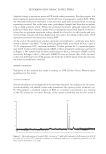
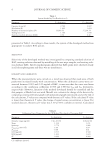
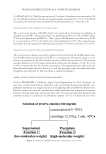
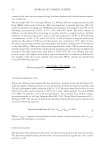
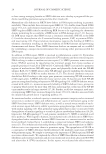
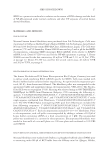
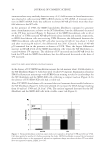
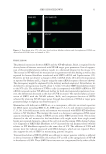
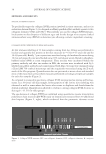
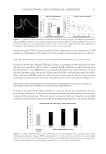
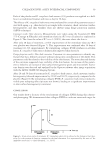
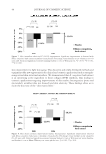
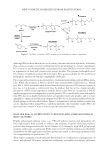
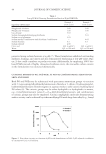
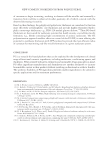
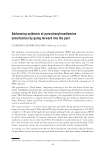
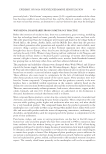
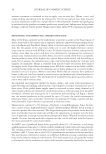
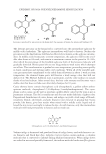
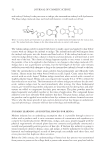
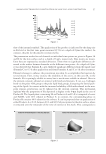
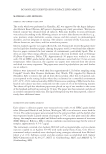
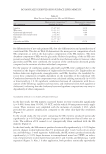
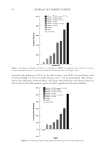
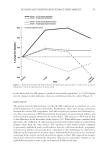
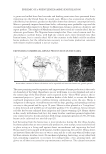
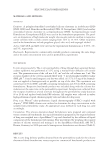
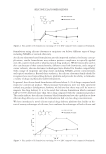
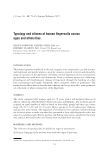
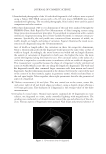
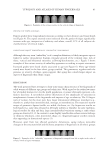
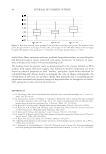
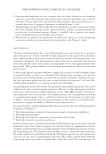
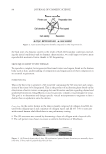
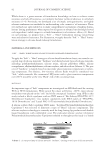
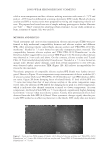
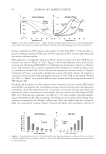
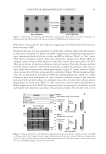
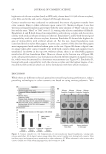
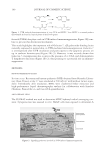
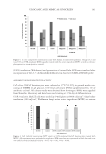
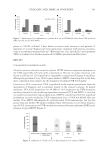
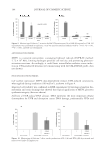
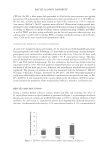
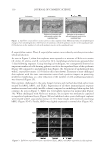
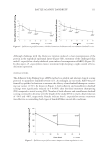
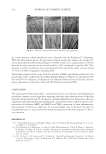
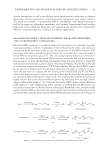
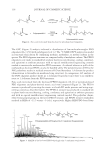
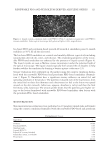
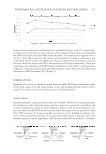
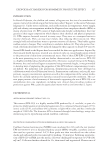
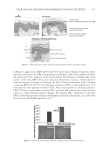
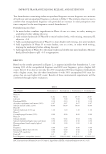
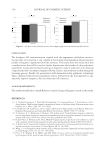
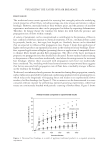
LONG-WEAR SEBUM-RESISTANT COSMETICS 93 solid at room temperature and has a distinct melting transition with onset of ~75°C and peak at ~90°C based on differential scanning calorimetry (DSC) study. Blends of silicone acrylate and SPE at various ratios were prepared by mixing and evaporating volatile sol- vent. We prepared and tested two sets of simple makeup prototypes to further illustrate our “Soft” + “Hard” strategy for achieving sebum resistance. In our study, artifi cial se- bum, a mixture of organic oils, was used (4). METHODS AND RESULTS Visual assessment and cross-section transmission electron microscopy (TEM) were per- formed to help understand compatibility between and silicone acrylate and different SPEs. After removing volatile carrier fl uids, silicone acrylate and “PEG/PPG-19/19 Di- methicone” blended at 7:3 ratio formed an optically transparent plastic material. The compatibility between silicone acrylate and “PEG/ PPG-19/19 Dimethicone” in the blend was further suggested by cross-section TEM (Figure 1A). No distinct phase domain was observed at 5-nm scale and above. On the contrary, silicone acrylate and “Lauryl PEG-10 Tris(trimethylsiloxy)silylethyl Dimethicone” blended at a 7:3 ratio formed an opaque solid. Distinct phase domains, sized from several nanometers to over 100 nm, were observed under cross-section TEM (Figure 1B). All indicate incompatibility be- tween the two materials. Viscoelastic properties of compatible silicone acrylate/SPE blends were further investi- gated. Shown in Figure 2A are temperature sweep measurements of elastic modulus (G’) of silicone acrylate (SiAc) and “PEG/PPG-19/19 Dimethicone” (an SPE) blends at differ- ent ratios. Figure 2B shows damping factor of related blends. G’ level of SiAc/SPE at a 7:3 ratio was lower than that of neat silicone acrylate at the entire temperature range tested. Also, the addition of SPE shifted the damping factor peak to a lower temperature, which is indicative that thermal transition occurred at a lower temperature. At room temperature, the blend of SiAc/SPE at a 7:3 ratio showed a signifi cantly higher dumping factor (more “viscous”) than neat silicone acrylate. Clearly, more pronounced effects were observed from the SiAc/SPE (6:4) blend. These systematic changes signify that this par- ticular SPE worked as an effective plasticizer in the blends. DSC study (data not shown) Figure 1. Cross-section TEM images of blends. (A) A blend of silicone acrylate and “PEG/PPG-19/19 Dimethicone” at 7:3 ratio. (B) A blend of silicone acrylate and “Lauryl PEG-10 Tris(trimethylsiloxy)silylethyl Dimethicone” at 7:3 ratio.

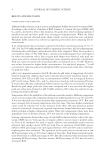
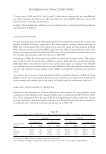
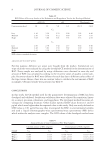
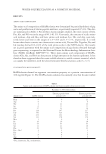
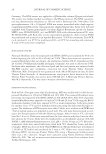
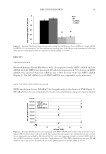
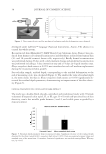
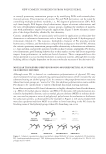
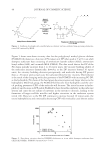
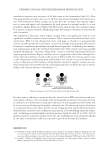
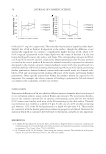
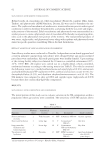
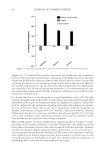
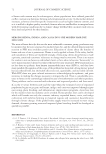
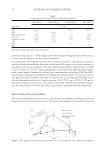
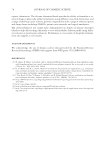
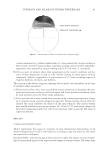
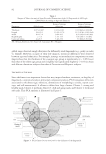
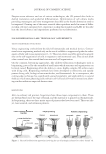
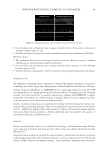
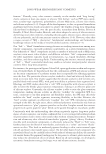
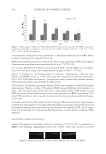
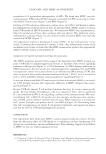
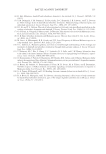
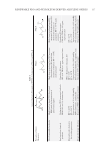
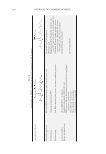
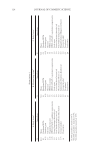
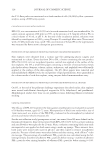
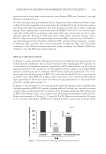
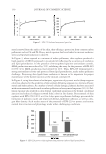
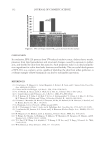
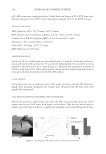
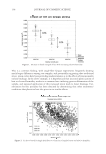
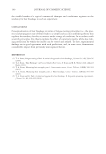
JOURNAL OF COSMETIC SCIENCE 94 further confi rmed the SPE’s plasticization effect. For the SiAc/SPE (7:3) blend, DSC in- dicates a melting transition with onset of 43°C and peak at 68°C, broader and lower than that of neat silicone acrylate. Film properties of compatible blends of “Hard” silicone acrylate and “Soft” SPE may be tuned by the ratio of “Hard” to “Soft.” Figure 3 shows fi lm hardness and tack of silicone acrylate and “Bis-IsobutylPEG/PPG-10/7 Dimethicone Copolymer” blends at different ratios. Film hardness was studied by pendulum fi lm hardness test, where a higher count is correlated to a harder fi lm. Film tackiness was measured by texture analyzer. A higher maximum tack force is generally correlated to a more tacky fi lm. Figure 3A suggests a correlation between softer fi lm and higher fraction of “Soft” SPE in the blends. Within the “Soft” to “Hard” ratio studied, fi lm becomes tackier with increasing the fraction of SPE (Figure 3B). Cracking and fl exibility of color cosmetic fi lms containing silicone acrylate/SPE blends were further investigated. For a formulation using silicone acrylate as the sole polymeric nonvolatile, dried fi lm exhibited visible cracks (data not shown). On the other hand, the formulation with a combination of nonvolatile silicone acrylate and “Bis-Isobutyl PEG/ PPG-10/7/Dimethicone Copolymer” (an SPE) at 7:3 wt ratio yielded a dry fi lm exhibit- ing no observable cracks (data not shown). Stretching test was conducted by drying these prototype formulations on a fl exible rubber band. After the rubber band was elongated, fi lms were assessed for cracking. Figure 4 showed that fi lms with an adequate fraction of Figure 2. Viscoelastic profi le of “Soft” + “Hard” blends. (A) Temperature sweep elastic modulus measurement on several blends of silicone acrylate and SPE with different ratios. (B) Damping factors of related blends. Figure 3. Film hardness and tack. (A) Pendulum fi lm hardness measurement on blends of silicone acrylate (“Hard”) and SPE (“Soft”) at different “Hard” to “Soft” ratios. (B) Related fi lms’ maximum tack force measured by texture analyzer.
Purchased for the exclusive use of nofirst nolast (unknown)
From: SCC Media Library & Resource Center (library.scconline.org)