18 JOURNAL OF COSMETIC SCIENCE representative strains, respectively (1). In this study, we selected raw cosmetic materials with antimicrobial properties to engineer a moisturizing hand cream that can also slow the spread of microorganisms. The antibacterial efficacy of the hand creams was determined by investigating their inhibitory effects against the three aforementioned representative microorganisms, while their skin care performance was evaluated by a group of cosmetology students. Taken together, all experimental data support that this hand cream can slow the spread of microorganisms and care for hands. FORMULA DESIGN AND RAW MATERIAL SELECTION FORMULA DESIGN The first step in the formula design was to clarify the product concept: a hand cream that can effectively prevent the spread of common microorganisms. That is, using the product is like wearing a pair of invisible protective gloves that effectively slow the spread of microorganisms while also caring for your hands. Therefore, the product must have a dual function: to moisturize and to disinfect. The targeted selection of an emulsification system and functional raw materials focused on the desired dual function of the product. Commonly used emulsification systems for skin care products are oil-in-water (O/W) and water-in-oil. Among them, the O/W emulsifica- tion system has the advantages of a less greasy feeling, better skin feel, greater stability, and higher water content therefore, we chose the O/W emulsification system for the matrix type. Next, oils, emulsifiers, moisturizers, auxiliary materials (thickeners, antioxidants, preservatives, flavors, and pigments), and bacteriostatic agents were selected (2–11). Oils: jojoba oil, shea butter, isopropyl palmitate, and dimethicone. Emulsifiers: steareth-2 and steareth-21. Humectants: glycerin and allantoin. Auxiliary materials: xanthan gum (thickener) and tocopheryl acetate (antioxidant). To preserve the bacteriostatic properties, no preservatives or flavors were added. RAW MATERIAL SELECTION The key to hindering the spread of pathogens is to inhibit their reproduction and growth many plant materials exhibit these properties. Huang et al. (12) reported the bacteriostatic effects of extracts of Rhus chinensis, Scutellaria, Glycyrrhiza uralensis, and Dictamnus. Wang et al. (13) verified the bacteriostatic effect of a Coptis extract. Ou et al. verified the bacteriostatic effects of extracts of Eugenia caryophyllata, Houttuynia cordata, Reynoutria japonica, Coptis, rhubarb, licorice, and Scutellaria baicalensis. Among them, the combination of Coptis and Scutellaria yields the best bacteriostatic effect (14). Nan et al. (15) verified the bacteriostatic effects of Schisandra vinegar, pomegranate peel, Ficus hirta, and Senecio alcohol extracts, among which Schisandra vinegar has the most potent bacteriostatic effect. Peng et al. (16) verified the bacteriostatic effects of logwood, Sanguisorba officinalis L., Epimedium brevicornu, Coptis, and Radix Paeoniae Alba extracts. Liu et al. (17) verified the bacteriostatic effect of a Thesium chinense Turcz. extract. Angelica, vine tea, Polygonum chinense L., Dai Bai-Jie, Lindera glauca, red peony, Atractylodes macrocephala, Andrographis paniculata, Curcuma phaeocaulis, Gentiana

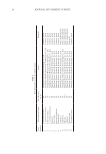
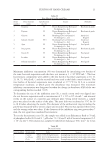
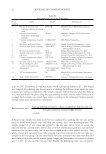
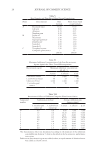
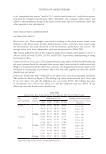
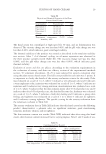
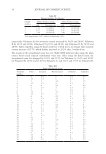
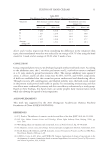
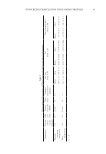
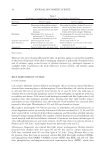
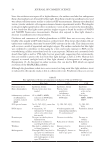
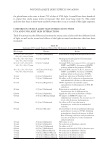
19 TESTING OF HAND CREAMS macrophylla, forsythia, Zhi Mu, honeysuckle, dandelion, and other plant extracts have also been found to possess bacteriostatic properties in recent years (18–23). S baicalensis extract (12,14): S baicalensis Georgi is a perennial medicinal plant. The most valuable part is the root and its primary components are baicalein and wogonin. These also act as the main effective ingredients in the S baicalensis extract. Although their pharmacological effects and molecular structures differ, they all have anti-inflammatory and bacteriostatic properties. Lithospermum erythrorhizon extract (24,25): The effective ingredients with bacteriostatic properties are acetylshikonin and shikonin, which inhibit the growth of both S aureus and E coli. L erythrorhizon extract contains plant pigments and thus appears purple, which makes products more colorful and eye-catching. Sophora flavescens extract (26): The main ingredient is matrine, which has potent anti- inflammatory and bacteriostatic properties. Citrus reticulata peel extract (27–29): The main active ingredients are flavonoids, which not only have strong broad-spectrum bacteriostatic properties but also confer aromaticity. Therefore, they are also used as fragrances and antioxidants. Based on these studies and the color, smell, solubility, and compatibility of the raw materials, S baicalensis extract, L erythrorhizon extract, S flavescens extract, and C reticulata peel extract were selected for incorporation into test hand creams with bacteriostatic properties. METHODS MAIN MATERIALS AND EQUIPMENT The raw materials and experimental equipment used in this study are listed in Tables I to IV. EXPERIMENTAL METHODS Hand cream preparation. According to the hand cream formula in Table V, the Phase A, B, and C raw materials were weighed into separate beakers. Phase A was dissolved at room temperature before the temperature was slowly raised to 80°C. Phase B was heated evenly close to 80°C. The sample was then put into the rotor, and the speed was adjusted to dissolve the ingredients evenly. After mixing Phase A and Phase B, the sample was homogenized at 13,000 r min−1 for 5 min. The system temperature was reduced to 45°C before the Phase C raw material was added. The sample was then homogenized at 7,000 r min−1 for 3 min, cooled to room temperature, and bottled. Bacteriostatic performance test. The tested strains were S aureus ATCC 6538, C albicans ATCC 10231, and E coli ATCC 8099. The compositions of each medium were as follows. Tryptone soy agar medium: tryptone 1.5%, soy peptone 0.5%, sodium chloride 0.5%, agar 1.6% tryptone soy broth medium: tryptone 1.5%, soy peptone 0.5%, sodium chloride 0.5% sandcastle agar medium: glucose 40 g, peptone 10 g, agar 20 g, distilled water 1,000 mL and sandcastle liquid medium: glucose 40 g, peptone 10 g, distilled water 1,000 mL. S aureus and E coli were cultured with tryptone soy agar and tryptone soy broth while C albicans was cultured with sandcastle agar and sandcastle liquid. The neutralizer components were 0.3% lecithin, 2% Tween 80, and 0.3% sodium thiosulfate.
Purchased for the exclusive use of nofirst nolast (unknown)
From: SCC Media Library & Resource Center (library.scconline.org)