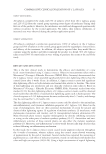
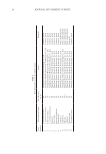
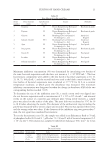
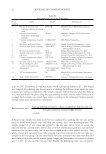
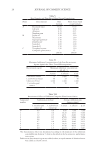
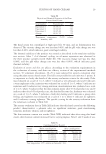
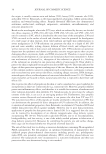
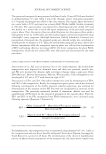
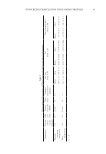
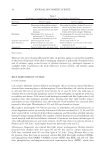
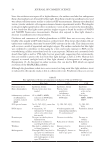
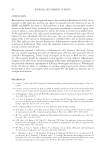
22 JOURNAL OF COSMETIC SCIENCE at 20 to 25°C. Thereafter, 1.0 mL was diluted with a phosphate buffer to 10−2. The liquid was sampled after shaking and then returned to shaking for different times under the same temperature and speed conditions. The sample solutions from before and after the shaking were inoculated onto the plate using the agar pouring method, and the viable bacteria were counted. Each sample was tested three times according to the following formula and the average values were obtained for comparison: Bacteriostatic rate Average difference between colony count = before and after the test Average number of colonies befo the test ×100% A hand cream disinfection field trial (31) was conducted by washing the test area of the subject’s hand with liquid soap and then inoculating three test microorganisms. The sample product (1 g) was taken and applied to the test area. After 3 min of action, the infected area was covered with a metal tube, 1.0 mL of neutralizing agent was aspirated and transferred to the metal tube, which was then scraped with a nylon spatula for 60 s. This whole process was repeated twice. The scraping liquid was aspirated to the test tube as a sample for the test group. On the other hand, the same treatment was done with distilled water instead of product as the control group sample, and the number of recovered colonies was 2 × 10⁶−107 cfu, and the test was valid. Finally, the killing log value was calculated. Table IV Instrumentation Used in the Experiments Serial number Name Model Manufacturer 1 Electric heating vacuum constant temperature drying oven DZF-1B Shanghai Yuejin Medical Instruments Co., Ltd. 2 Laboratory continuous high-shear emulsifying machine SG500 Shanghai Shanggui Fluid Instruments Co., Ltd. 3 Constant temperature magnetic stirrer C-MAG HS 7 IKA Works Guangzhou 4 Electronic analytical balance HZK-FA110 Huazhi Scientific Instrument Co., Ltd. 5 Desktop high-speed centrifuge TG16-WS Hunan Xiangyi Laboratory Instrument Development Co., Ltd. 6 Precision motorized stirrer JJ-1 Jiangsu Kexi Instrument Co., Ltd. 7 Digital rotational viscometer NDJ-5T Shanghai Fangrui Instrument Co., Ltd. 8 pH meter PB-10 Sartorius Scientific Instruments Co., Ltd. 9 Constant temperature culture oscillator ZWY-240 Shanghai Zhicheng Analytical Instrument Manufacturing Co., Ltd. 10 Stainless steel vertical sterilizer YXQ-LS-70A Hebei Huicai Technology Co., Ltd. 11 Alarm intelligent safety ultra-clean workbench ZHJH-C1112C Shanghai Zhicheng Analytical Instrument Manufacturing Co., Ltd. 12 Refrigerator BCD-460WGHF D14NZU1 Haier Group 13 UV spectrophotometer N2 Shanghai Precision Scientific Instrument Co., Ltd. 14 Skin testing instruments MPA580 Courage + Khazaka Electronic, Germany

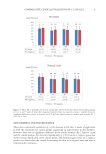
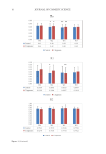
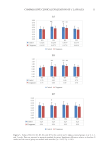
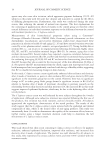
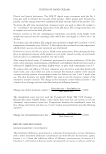
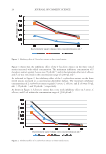
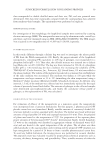
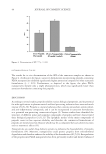
23 TESTING OF HAND CREAMS Physical and chemical performance. The NDJ-5T digital rotary viscometer with the No. 4 rotor was used to measure the viscosity of the product. Three groups were measured in parallel, and the average value was considered the final viscosity value of the product (32). To obtain the pH value measurement, deionized water was used to dilute the sample to 10−1 according to the operating instructions of the pH meter. The average from three sets of samples was used as the final pH value. Emulsion stability test. For the centrifugation experiment, two-thirds of the height of the sample was injected into the centrifuge tube, which was centrifuged at 2,000 r min−1 for 30 min. To test heat and cold stability, The samples were incubated at high (40°C) and low (−10°C) temperatures alternately every 12 h for 7 d. After the product returned to room temperature, whether there was any oil-water separation was determined. Evaluation of sensory and skin care efficacy. Hand cream instructions: After cleaning the skin, place an appropriate amount of the product on your palm, spread it evenly on your hands, and rub until it is completely absorbed. Use twice daily. After using the hand cream, 30 volunteers participated in sensory evaluations (33) for five items: odor, irritation, moisturization, refreshment, and tightness. Each item was scored as either good, slightly better, medium, slightly worse, or poor, with a maximum score of 5. To evaluate skin care efficacy (34), four volunteers were selected to wash their hands with warm water, and a skin tester was used to measure the moisture content of the stratum corneum and the amount of transdermal water loss before use and 1 and 2 weeks after use. The skin moisture test probe CM825 was used to test the moisture content of the volunteers’ stratum corneum. The change in skin moisture content before and after 1 and 2 weeks of use (change rate) was calculated using the following formula: Change rate of skin moisture content Data after use data be = - efore use Date before use ×100% The transdermal water loss test used the Tewameter® Triple TM 330T (Courage + Khazaka Electronic GmbH, Köln), a three-probe skin water loss test system, to test the volunteers’ transcutaneous water loss. Comparisons between the transdermal water loss (loss change rate) before and after use (1 and 2 weeks) were performed using the following equation: Change rate of transdermal water loss Data after use data = - b before use Date before use ×100% RESULTS AND DISCUSSION MINIMUM INHIBITORY CONCENTRATION The minimum inhibitory concentration is a measure of bacteriostatic activity. Substances with a lower minimum inhibitory concentration are more effective bacteriostatic agents. Figures 1 to 4 show the inhibitory effects of different concentrations of extracts of S baicalensis, L erythrorhizon, S flavescens, and C reticulata peel on S aureus, C albicans, and E coli.
Purchased for the exclusive use of nofirst nolast (unknown)
From: SCC Media Library & Resource Center (library.scconline.org)