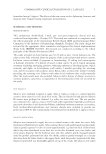
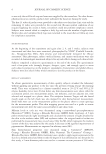
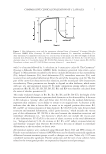
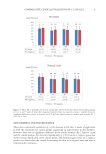
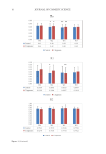
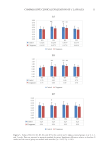
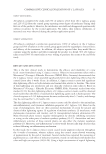
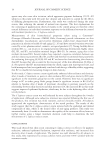
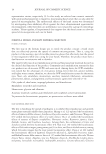
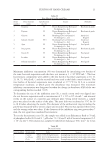
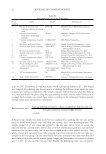
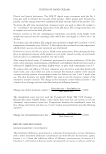
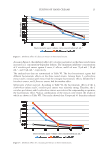
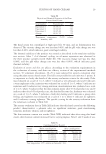
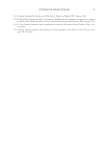
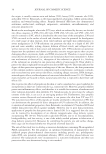
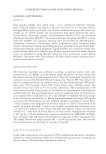
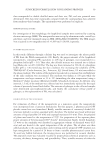
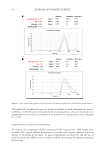
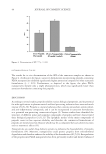
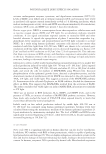
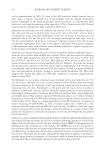
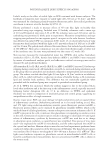
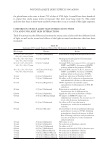
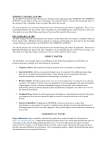
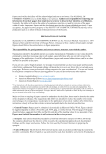
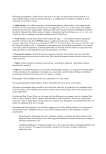
24 JOURNAL OF COSMETIC SCIENCE Figure 1 shows that the inhibitory effect of the S baicalensis extract on the three tested strains increased with added concentration. The minimum inhibitory concentration of S baicalensis extract against S aureus was 75 μL mL−1, and its bacteriostatic effect on C albicans and E coli was very weak in the concentration range of ≤100 μL mL−1. As indicated in Figure 2, the inhibitory effect of the L erythrorhizon extract on the three tested strains increased in a concentration-dependent fashion. The minimum inhibitory concentrations of L erythrorhizon extract against S aureus, C albicans, and E coli were 50 μL mL−1, 25 μL mL−1, and 50 μL mL−1, respectively. As shown in Figure 3, S flavescens extract has a very weak inhibitory effect on S aureus, C albicans, and E coli within the concentration range of ≤100 μL mL−1. Bacteriostatic agent volume ratio concentration/μL mL-1 Figure 1. Inhibitory effect of S baicalensis extract on three tested strains. Bacteriostatic agent volume ratio concentration/μL mLv1 Figure 2. Inhibitory effect of L erythrorhizon extract on three tested strains. OD change value OD change value

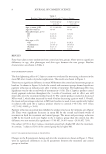
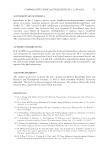
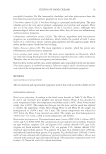
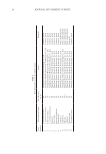
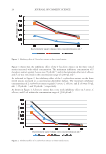
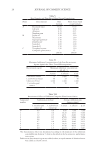
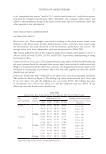
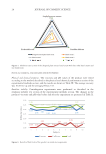
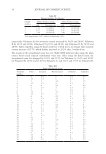
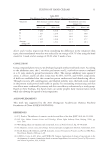
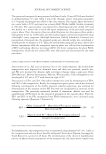
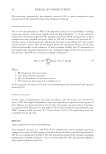
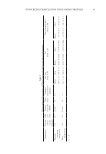
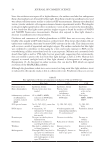
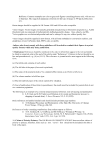
25 TESTING OF HAND CREAMS As seen in Figure 4, the inhibitory effect of C reticulata peel extract on the three tested strains increased in a concentration-dependent fashion. The minimum inhibitory concentrations of C reticulata peel extract against S aureus, C albicans, and E coli were 75 μL mL−1, 50 μL mL−1, and 15 μL mL−1, respectively. The analyzed test data are summarized in Table VI. The four bacteriostatic agents had different bacteriostatic effects on the three tested strains. Among them, L erythrorhizon extract and C reticulata peel extract had the strongest bacteriostatic effects, followed by S baicalensis extract, and S flavescens extract had the weakest effect. Optimization of plant materials. According to Table VI, the bacteriostatic effects of the L erythrorhizon extract and C reticulata peel extract were relatively strong. Therefore, the C reticulata peel extract and L erythrorhizon extract were selected for compounding to optimize the bacteriostatic effect. Various combinations of the extracts were tested, the results of which are shown in Table VII. The results showed that Compound #3 (hereafter referred Bacteriostatic agent volume ratio concentration/μL mL-1 Figure 3. Inhibitory effect of S flavescens extract on three tested strains. Bacteriostatic agent volume ratio concentration/μL mL -1 Figure 4. Inhibitory effect of C reticulata peel extract on three tested strains. OD change value OD change value
Purchased for the exclusive use of nofirst nolast (unknown)
From: SCC Media Library & Resource Center (library.scconline.org)