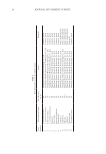
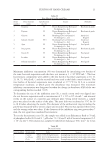
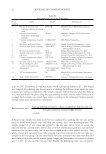
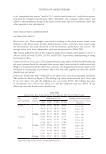
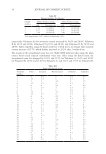
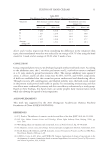
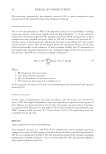
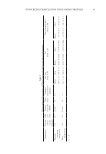
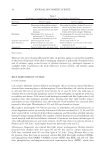
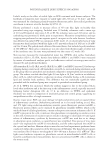
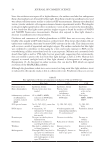
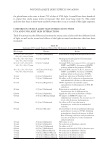
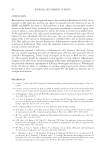
56 JOURNAL OF COSMETIC SCIENCE CONCLUSION Blue light has been shown to negatively impact the viability of fibroblasts (10,11,18). Acute exposure to blue light does not have any impact on elastin levels (19). However, by way of MMP1 and MMP9, this leads to the breakdown of both collagen and normally oriented elastin in the dermal layer, resulting in long-term contribution to extrinsic aging, with a loss in ability to resist deformation as well as the ability to recover from applied stress. At the epidermal layer, blue light caused melanogenesis in Fitzpatrick skin types III and higher (13). For individuals with this skin type, this can mirror age-spotting extrinsic aging events if the increase in melanogenesis is combined with a loss in dermal integrity (8,9). Blue light can also increase keratinocyte differentiation activity, which leads to a reduction in proliferation. This causes the epidermal turnover rate to decrease, and the stratum corneum will thicken. Kleinpenning reported a reduction in inflammatory cells however, this study did not give any specifics regarding the types of inflammatory cells that were examined (19). To contradict Kleinpenning, Liebel’s study did report an increase in ROS and IL-1 a levels (2). This research should be expanded to find specifics on how different inflammatory markers can be affected by certain wavelengths of blue light. Table III shows a summary of the previously examined experiments at differing wavelengths and fluences. Wavelengths below 420 nm are likely to contribute to extrinsic aging based on the elicited cellular mechanisms at these wavelengths, while wavelengths 453 and higher are relatively safe at sunlight-level fluences. REFERENCES (1) J. Moan, 7 visible light and UV radiation. Radiation at home, outdoors and in the workplace, Mater. Sci., (2004). (2) F. Liebel, S. Kaur, E. Ruvolo, N. Kollias, and M. D. Southall, Irradiation of skin with nonultraviolet light induces reactive oxygen species and matrix degrading enzymes, J. Am. Acad. Dermatol., 62(3) (2010). (3) Y. Nakashima, S. Ohta, and A. M. Wolf, Blue light-induced oxidative stress in live skin, Free Radic. Biol. Med., 108, 300–310 (2017). (4) T. C. Lei, S. Pendyala, L. Scherrer, B. Li, G. F. Glazner, and Z. Huang, Optical profiles of cathode ray tube and liquid crystal display monitors: implication in cutaneous phototoxicity in photodynamic therapy, Appl. Opt., 52(12), 2711–2717 (2013). (5) N. A. Monteiro-Riviere, Toxicology of the skin. Hoboken: Taylor & Francis (2013). (6) T. H. Quan, T. Y. He, J. J. Voorhees, and G. J. Fisher, Ultraviolet irradiation induces Smad7 via induction of transcription factor AP-1 in human skin fibroblasts, J. Biol. Chem., 280(9), 8079–8085 (2005). (7) M. Yaar, and B. A. Gilchrest, Ageing and photoageing of keratinocytes and melanocytes, Clin. Exp. Dermatol., 26(7), 583–591 (2001). (8) J. W. Choi, S. H. Kwon, C. H. Huh, K. C. Park, and S. W. Youn, The influences of skin visco-elasticity, hydration level and aging on the formation of wrinkles: a comprehensive and objective approach, Skin Res. Technol., 19(1), e349–e355 (2013). (9) W. Choi, L. Yin, C. Smuda, J. Batzer, V. J. Hearing, and L. Kolbe, Molecular and histological characterization of age spots, Exp. Dermatol., 26(3), 242–248 (2017). (10) C. Opländer, A. Deck, C. M. Volkmar, M. Kirsch, J. Liebmann, M. Born, F. A. van Abeelen, E. E. van Faassen, K. D. Kröncke, J. Windolf, and C. V. Suschek, Mechanism and biological relevance of blue-light (420–453 nm)-induced nonenzymatic nitric oxide generation from photolabile nitric oxide derivates in human skin in vitro and in vivo, Free Radic. Biol. Med., 65, 1363–1377 (2013).

57 POTENTIAL BLUE LIGHT EFFECTS ON AGING (11) C. Opländer, S. Hidding, F. B. Werners, M. Born, N. Pallua, and C. V. Suschek, Effects of blue light irradiation on human dermal fibroblasts, J. Photochem. Photobiol. B, 103(2), 118–125 (2011). (12) J. Liebmann, M. Born, and V. Kolb-Bachofen, Blue-light irradiation regulates proliferation and differentiation in human skin cells, J. Invest. Dermatol., 130(1), 259–269 (2010). (13) C. Regazzetti, L. Sormani, D. Debayle, F. Bernerd, G. De Donatis, B. Chignon-Sicard, S. Rocchi, and T. Passeron, 621 Melanocytes sense blue-light and regulate the pigmentation through the opsin 3, J. Invest. Dermatol., 137(10), (2017). (14) A. D. Patel, S. Rotenberg, R. L. W. Messer, J. C. Wataha, K. U. E. Ogbureke, V. V. Mccloud, P. Lockwood, S. Hsu, and J. B. Lewis, Blue light activates phase 2 response proteins and slows growth of A431 epidermoid carcinoma xenografts, Anticancer Res., 34(11), 6305–6313 (2014). (15) S. Pillai, C. Oresajo, and J. Hayward, Ultraviolet radiation and skin aging: roles of reactive oxygen species, inflammation and protease activation, and strategies for prevention of inflammation-induced matrix degradation – a review, Int. J. Cosmet. Sci., 27(1), 17–34 (2005). (16) D. Falcone, N. E. Uzunbajakava, F. van Abeelen, G. Oversluizen, M. Peppelman, P. E. J. van Erp, and P. C. M. van de Kerkhof, Effects of blue light on inflammation and skin barrier recovery following acute perturbation. Pilot study results in healthy human subjects, Photodermatol. Photoimmunol. Photomed., 34(3), 184–193 (2018). (17) L. Chen, J. Y. Hu, and S. Q. Wang, The role of antioxidants in photoprotection: a critical review, J. Am. Acad. Dermatol., 67(5), 1013–1024 (2012). (18) D. S. Masson-Meyers, V. V. Bumah, and C. S. Enwemeka, A comparison of four methods for determining viability in human dermal fibroblasts irradiated with blue light, J. Pharmacol. Toxicol., 79, 15–22 (2016). (19) M. M. Kleinpenning, T. Smits, M. H. Frunt, P. E. van Erp, P. C. van de Kerkhof, and R. M. Gerritsen, Clinical and histological effects of blue light on normal skin, Photodermatol. Photoimmunol. Photomed., 26(1), 16–21 (2010).
Purchased for the exclusive use of nofirst nolast (unknown)
From: SCC Media Library & Resource Center (library.scconline.org)