203 Polyphenol-metal Complex With Dopamine
HAIR DYEING PRE-TREATMENT
Before hair coloring, commercial human white hair and human natural white hair samples
were soaked in commercial shampoo (Ruwei Cosmetics Co., RNW, Product Standard No.
GB/T 29679) and repeatedly rubbed for 5 minutes. After washing, the hair was rinsed with
water and left to dry naturally in the air.
POLYPHENOL SCREENING
0.035 g GA, TA, PA, PG, CH, RE, CA, and SA were dissolved in 30 mm and 5 mL Tris
solution to prepare polyphenol solution 0.035 g DA was dissolved in 30 mm, 5 mL Tris-
HCl solution to prepare DA solution 0.035 g DA was dissolved in 30 mm and 5 mL Tris
solution to prepare PDA solution. The above solution was mixed with 10 parts of ferrous
chloride tetrahydrate dissolved in 3 mL of water according to the ratio of polyphenols to
Fe(II) at a ratio of 1:5, and mixed with vortex vibration for 10 seconds, and then centrifuged
(2,000 g, 5 min) to remove the precipitate to prepare the polyphenol-Fe (II) solution. We
took 10 parts of 0.2 g commercial white hair and immersed it in polyphenol-Fe(II) solution
for 30 minutes. We then removed it and washed the residual solution with clean water and
dried it with absorbent paper. Next the samples were allowed to dry naturally. Finally, we
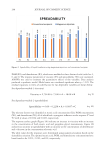
measured the color difference after natural drying, and screened the polyphenols with the
best dyeing effect.
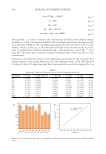
In addition, we assisted in the screening of the best polyphenol materials by determining
the chelation rate of polyphenols and Fe(II). The first is to establish a standard curve. We
added 1 mL and 1 mg/mL of ferrous chloride tetrahydrate solutions, 0.1 mL hydroxylamine
hydrochloride (10%), 0.2 mL o-diazepine (0.15%), and 0.5 mL sodium acetate (1 mol/mL).
Water was added to 10 mL, and 0.1 mg/mL Fe(II) solution was prepared. The above 0.1 mg/
mL Fe(II) solution was prepared into Fe(II) standard solutions of 0.025 mg/mL, 0.05 mg/
mL, 0.07 mg/mL, 0.085 mg/mL, and 0.095 mg/mL, respectively. The absorbance of each
group of solutions was measured at a wavelength of 510 nm, and the concentration C (mg/
mL) of Fe(II) standard solution was used as the abscissa, and absorbance A (nm) was used
as the ordinate to establish a standard curve. We took 1 mL of the above polyphenol-Fe(II)
solution, added absolute ethanol to 10 mL, sonicated for 15 minutes, centrifuged (2,000 g,
5 min), and took two parts of 1 mL supernatant, numbers 1 and 2, respectively. Tube
1 added 0.1 mL of hydroxylamine hydrochloride, 0.2 mL of phenanthrene hydrochloride,
0.5 mL of sodium acetate, and added water to set the volume to 10 mL Tube 2 added
0.1 mL of hydroxylamine hydrochloride, 0.5 mL of sodium acetate, and added water to set
the volume to 10 mL. The absorbance at 510 nm wavelength was determined separately,
and the chelation rate of polyphenol-Fe(II) was calculated.
ETHANOLAMINE CONDITIONS WERE SCREENED WITH GA-FE(II) CONDITIONS
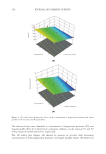
A single-factor test was employed to investigate the pH value, concentration, and
ethanolamine immersion time of natural gray hair after various ethanolamine soaking
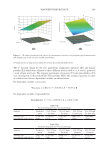
durations. Subsequently, the hair was stained in a GA-Fe(II) solution with a molar ratio
of GA to Fe(II) of 1:5 and a pH range of 4–5 for 2 hours. After post-processing, the color
difference value was measured under different ethanolamine conditions to identify the
optimal conditions for staining natural gray hair with ethanol.
HAIR DYEING PRE-TREATMENT
Before hair coloring, commercial human white hair and human natural white hair samples
were soaked in commercial shampoo (Ruwei Cosmetics Co., RNW, Product Standard No.
GB/T 29679) and repeatedly rubbed for 5 minutes. After washing, the hair was rinsed with
water and left to dry naturally in the air.
POLYPHENOL SCREENING
0.035 g GA, TA, PA, PG, CH, RE, CA, and SA were dissolved in 30 mm and 5 mL Tris
solution to prepare polyphenol solution 0.035 g DA was dissolved in 30 mm, 5 mL Tris-
HCl solution to prepare DA solution 0.035 g DA was dissolved in 30 mm and 5 mL Tris
solution to prepare PDA solution. The above solution was mixed with 10 parts of ferrous
chloride tetrahydrate dissolved in 3 mL of water according to the ratio of polyphenols to
Fe(II) at a ratio of 1:5, and mixed with vortex vibration for 10 seconds, and then centrifuged
(2,000 g, 5 min) to remove the precipitate to prepare the polyphenol-Fe (II) solution. We
took 10 parts of 0.2 g commercial white hair and immersed it in polyphenol-Fe(II) solution
for 30 minutes. We then removed it and washed the residual solution with clean water and
dried it with absorbent paper. Next the samples were allowed to dry naturally. Finally, we
measured the color difference after natural drying, and screened the polyphenols with the
best dyeing effect.
In addition, we assisted in the screening of the best polyphenol materials by determining
the chelation rate of polyphenols and Fe(II). The first is to establish a standard curve. We
added 1 mL and 1 mg/mL of ferrous chloride tetrahydrate solutions, 0.1 mL hydroxylamine
hydrochloride (10%), 0.2 mL o-diazepine (0.15%), and 0.5 mL sodium acetate (1 mol/mL).
Water was added to 10 mL, and 0.1 mg/mL Fe(II) solution was prepared. The above 0.1 mg/
mL Fe(II) solution was prepared into Fe(II) standard solutions of 0.025 mg/mL, 0.05 mg/
mL, 0.07 mg/mL, 0.085 mg/mL, and 0.095 mg/mL, respectively. The absorbance of each
group of solutions was measured at a wavelength of 510 nm, and the concentration C (mg/
mL) of Fe(II) standard solution was used as the abscissa, and absorbance A (nm) was used
as the ordinate to establish a standard curve. We took 1 mL of the above polyphenol-Fe(II)
solution, added absolute ethanol to 10 mL, sonicated for 15 minutes, centrifuged (2,000 g,
5 min), and took two parts of 1 mL supernatant, numbers 1 and 2, respectively. Tube
1 added 0.1 mL of hydroxylamine hydrochloride, 0.2 mL of phenanthrene hydrochloride,
0.5 mL of sodium acetate, and added water to set the volume to 10 mL Tube 2 added
0.1 mL of hydroxylamine hydrochloride, 0.5 mL of sodium acetate, and added water to set
the volume to 10 mL. The absorbance at 510 nm wavelength was determined separately,
and the chelation rate of polyphenol-Fe(II) was calculated.
ETHANOLAMINE CONDITIONS WERE SCREENED WITH GA-FE(II) CONDITIONS
A single-factor test was employed to investigate the pH value, concentration, and
ethanolamine immersion time of natural gray hair after various ethanolamine soaking
durations. Subsequently, the hair was stained in a GA-Fe(II) solution with a molar ratio
of GA to Fe(II) of 1:5 and a pH range of 4–5 for 2 hours. After post-processing, the color
difference value was measured under different ethanolamine conditions to identify the
optimal conditions for staining natural gray hair with ethanol.