244 JOURNAL OF COSMETIC SCIENCE
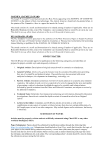
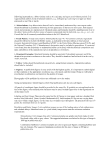
spreadability (Y2). The obtained data from Table I was used to predict desirability values,
and a response surface analysis was performed.
OPTIMIZATION OF LIQUID FOUNDATION USING MAGNESIUM MYRISTATE
A 32 factorial design was applied (total nine experimental runs) using Design-Expert®
software (13.0.11.0 version, Stat-Ease, Inc., Minnesota, USA). The independent variables
investigated were magnesium myristate (X1) and liquid paraffin (X2), and the dependent
variables were viscosity (Y1) and spreadability (Y2). The obtained data from Table II was
used to predict desirability values, and a response surface analysis was performed.
QUANTITATIVE ASSESSMENT OF RESPONSES FOR VARIABLES.
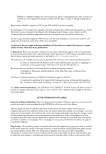
Viscosity. Viscosity of the formulated product was determined using a Brookfield viscometer
(AMETEK Brookfield, Massachusetts, USA) with spindle number 1 at room temperature
set at 100 rpm. A dial reading in cps was noted for triplicate samples.14
Spreadability. The glass slide method was used to assess the spreadability of the liquid
foundation (in triplicates). A 1 cm diameter circle was drawn in the center of the glass slide
into which 0.5 g of sample was placed. A sandwich configuration was formed by placing
another glass slide over the liquid foundation. The upper plate was loaded with a 25 g
weight for 10 seconds and the increase in diameter was measured. The noted values were
substituted in eq. 7 to calculate spreadability.15
S =Mass Length
Time
× (eq. 7)
PREPARATION OF OPTIMIZED BATCH
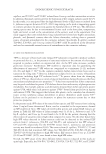
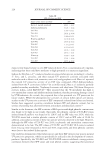
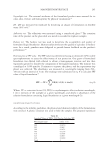
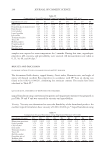
Values for calculating sun protection factor (SPF) are shown in Table III. Using optimized
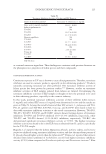
concentration as tabulated in Table IV and Table V, final products F1& F7 were prepared
and evaluated.
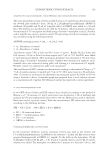
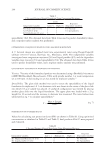
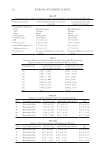
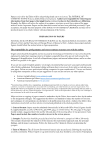
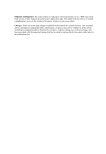
Table I
23 Factorial Design of Liquid Foundation Using Conventional Excipients
Independent variables
Levels
Responses
(Dependent variables) Low (−) High (+)
X1: Stearic acid (%w/w) 2 3 Y1: Viscosity
X2: PGM (%w/w) 1 2 Y2: Spreadability
X3: Dimethicone (%w/w) 5 7
Table II
32 Factorial Designs of Liquid Foundation Using Magnesium Myristate
Independent variables
Levels
Responses
(Dependent variables) Low (−) Medium (0) High (+)
X1: Magnesium Myristate (%w/w) 1 2 3 Y1: Viscosity
X2: Liquid paraffin (%w/w) 5 6 7 Y2: Spreadability
spreadability (Y2). The obtained data from Table I was used to predict desirability values,
and a response surface analysis was performed.
OPTIMIZATION OF LIQUID FOUNDATION USING MAGNESIUM MYRISTATE
A 32 factorial design was applied (total nine experimental runs) using Design-Expert®
software (13.0.11.0 version, Stat-Ease, Inc., Minnesota, USA). The independent variables
investigated were magnesium myristate (X1) and liquid paraffin (X2), and the dependent
variables were viscosity (Y1) and spreadability (Y2). The obtained data from Table II was
used to predict desirability values, and a response surface analysis was performed.
QUANTITATIVE ASSESSMENT OF RESPONSES FOR VARIABLES.
Viscosity. Viscosity of the formulated product was determined using a Brookfield viscometer
(AMETEK Brookfield, Massachusetts, USA) with spindle number 1 at room temperature
set at 100 rpm. A dial reading in cps was noted for triplicate samples.14
Spreadability. The glass slide method was used to assess the spreadability of the liquid
foundation (in triplicates). A 1 cm diameter circle was drawn in the center of the glass slide
into which 0.5 g of sample was placed. A sandwich configuration was formed by placing
another glass slide over the liquid foundation. The upper plate was loaded with a 25 g
weight for 10 seconds and the increase in diameter was measured. The noted values were
substituted in eq. 7 to calculate spreadability.15
S =Mass Length
Time
× (eq. 7)
PREPARATION OF OPTIMIZED BATCH
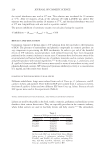
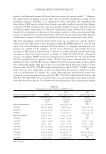
Values for calculating sun protection factor (SPF) are shown in Table III. Using optimized
concentration as tabulated in Table IV and Table V, final products F1& F7 were prepared
and evaluated.
Table I
23 Factorial Design of Liquid Foundation Using Conventional Excipients
Independent variables
Levels
Responses
(Dependent variables) Low (−) High (+)
X1: Stearic acid (%w/w) 2 3 Y1: Viscosity
X2: PGM (%w/w) 1 2 Y2: Spreadability
X3: Dimethicone (%w/w) 5 7
Table II
32 Factorial Designs of Liquid Foundation Using Magnesium Myristate
Independent variables
Levels
Responses
(Dependent variables) Low (−) Medium (0) High (+)
X1: Magnesium Myristate (%w/w) 1 2 3 Y1: Viscosity
X2: Liquid paraffin (%w/w) 5 6 7 Y2: Spreadability