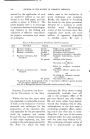
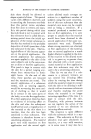
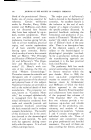
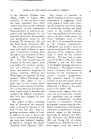
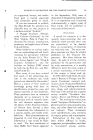
278 JOURNAL OF THE SOCIETY OF COSMETIC CHEMISTS ß of paper. For this reason, it was imperative that we use an extremely thin end window G. M. tube. This window, undoubtedly, would absorb some of the radiation, but the more energetic particles would go through and be recorded on our amplifying system. At the conclusion of the experim•ent where we had sections of skin tissue to measure for radiation, we used the Q-gas counter. This type of in- strument is especially adapted to measuring Carbon 14 radiation. The sample is placed directly in the tube, so as to eliminate any ab- sorbing material. If any radiation was emitted from the skin surface, it most certainly would be detected by the Q-gas counter. C•,H3•Br + Mg --• C•H3•MgBr * * C•H•MgBr q- CO2 -• C•Ha•COOMgBr , C•C•MgBr + HCI • , C•,Ho•C•H + MgCIBr , C•C•Ag + C•CH•I • , C•,Ho•C•C•Hao + Agl Cetyl Palmkate The radioactive carbon dioxide is generated from the barium car- bonate purchased from the Atomic Energy Commission, by the addi- tion of sulfuric acid. The complete synthesis was made in a closed system under nitrogen gas atomizer making use also of liquid nitrogen to freeze the Grignard reagent and the carbon dioxide gas. SYNTHESIS OF CETYL PALMITATE WITH RADIOACTIVE CARBON 14 We purchase all our isotopes from the Atomic Energy Commis- sion, Oak Ridge, Tenn. Isotopic Carbon 14 comes in the form of barium carbonate. The bottleneck in conducting an investigation with isotopic tinctures is found in the synthesizing of the tagged com- pound. In making these compounds, we are working with small quan- tities of material and special precautions should be taken. Our radiochemists wear surgical type gloves and a special respirator when working with radioactive car- bon dioxide gas. The following is a general outline on the syn- thesis of the labeled compound used: PREPARATION or THE CREAM We labeled modified USP cold cream with synthetic cetyl palmi- rate, containing Carbon 14. The composition of the modified USP cold cream was as follows, as based on 1000 grams: Spermaceti wax, gm ................. 125 Beeswax, gm ....................... 125 Sodium borate, gm .................. 5 Rose water, gm ..................... 245 Distilled water, gm ................. 250 Mineral oil (replacing Almond oil), gm. 250 APPLICATION OF THE CREAM AND COUNTS in Fivo The tests to determine the degree of penetration of the labeled sper- maceti were made on animals. There was an important discussion * Denotes the radioactive Carbon 14, which was incorporated in the compound.

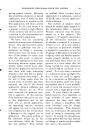
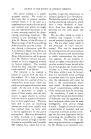
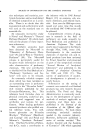
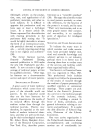
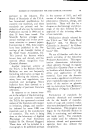
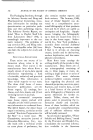
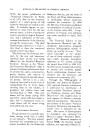
ß TESTING COSMETICS CONTAINING RADIOISOTOPES 279 as to the nature of the animals to be used. Finally, it was decided to select an animal which is widely used for' the testing of cosmetics and other' substances for the pres- ence of primary irritants. This animal is the American chinchilla rabbit, which is a recognized breed produced by various breeders of laboratory animals in the country. The American chinchilla rabbit is the best test animal for testing the presence of primary irritants in all types of materials by intradermal injection. Its skin is very com- parable to human skin for reaction to cosmetics and penetration by osmosis. Contrarily to the angora or to the albino rabbit, it is not hypersensitive to any cosmetics or chemicals, and, therefore, the re- sults obtained on one animal are always reproducible on others. Prior to the test all animals were freshly shaven and the cream con- taining the labeled spermaceti was applied on the skin of the animals by gentle massage, thus reproduc- ing normal conditions of use of the cosmetics on the face. The dura- tion of the massage was 1, 2, 5, 10, 20, and 30 minutes. Other applications of the cream were made by massaging the skin for half an hour and leaving the cream on the skin for another 1/2 hour, 1 hour, 21/=hours, 41/= hours, and 61/2hours. Consequently, pene- tration through the skin was studied after periods of time which varied fi'om 1 minute to 7 hours. During the long applications, the animals were held in a special device where they could eat and drink leisurely, but could not remove the cream by friction or otherwise on any part of the holder. Counts were made at the end of each period of application. First, immediately after the excess of cream had been thoroughly removed with sterile paper tissues and also after the skin had been thoroughly cleaned with a standard mild soap solution. All counts were made by means of an extremely thin end window G. M. counter. One of the most important in- struments in work dealing with radioisotopes is the Geiger counter tube. In its simplest form, it consists of a tube, very similar to a radio tube, into which have been sealed two metallic terminals. One terminal runs along the side of the tube and the other through the center. The center wire is charged positively in respect to the side terminal, which is charged negatively. These terminals are attached to a high voltage source and filled with a suitable gas. When the Geiger counter is not in operation, i.e., no radioactivity is exposed to the tube, no electric current will flow across the ter- minals. But when a high energy particle enters the tube, such as an alpha or beta particle, ionization of the gas occurs and a pulse of current flows. This current is then amplified and can operate a mechan- ical counting device. Using this. principle, this simple instrument is able to detect the presence of individual atomic particles.
Purchased for the exclusive use of nofirst nolast (unknown)
From: SCC Media Library & Resource Center (library.scconline.org)