:280 JOURNAL OF THE SOCIETY OF COSMETIC CHEMISTS ß At one end of the Geiger tube there is constructed a window, usu- ally made of mica, through which the radioactive particles can enter and be recorded. The thickness of this end window is expressed in milli- grams per square centimeter of material. When counting weak beta radiation, such as we find emanating from the sample of Carbon 14, it is necessary to con- struct a mica window of extreme thinness, so that a good portion of the beta particles will enter. The thickness of this end window should, preferably, be less than 1 milligram per square centimeter. The thicker the window, the greater the stopping power toward the weak beta particles and the lower is the counting efficiency of the tube for this particular Carbon 14 radiation. RESULTS OF THE COUNTS High counts were obtained on the cream before application to the animal and on the skin of the animal itself. However, counts made immediately after the excess of cream had been removed with paper tissues were negative. No counts were obtained after any of the applications. No radiation was, of course, observed after the test skin surface had been cleaned with a standard mild soap solution. STUDY OF BIoPSIES Skin sections, measuring one inch in diameter, were cut from one of the animals. The sections were mounted in white paraffin and quick frozen at a temperature of -195 ø C. in liquid nitrogen. The specimens were then mounted in a microtome and several longitudinal sections of 10 micron thicknesses were cut. The sections were then placed separately in a Q-gas cham- ber, and examined for the extent of radioactivity. There was no significant radiation emitted from the test surface. The counts were made of a portion of the skin tissue, and again no evidence of penetration of the tagged part of the cream into the skin was found. CONCLUSION This series of experiments in- dicate only one thing: that sper- maceti as part of a cold cream does not penetrate the skin under normal conditions of use and also after periods of massage and application as long as 7 hours. For this reason these tests should be con- sidered only as an introduction to the use of radioisotopes in cos- metic chemistry, and as an in- dication of the results that might be obtained by following the same technique on other types of cos- metics. This paper should be re- garded as a preliminary investiga- tion whose results will probably encourage further studies which will be of interest to cosmetic chemists and dermatologists. It should be borne in mind, however, that the use of radioisotopes is expensive, deli- cate, and that the interpretation of the results can be done only by technicians whose experience is based on the study of radioisotopes.

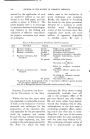
DEGERMING EFFICIENCY OF HEXACHLOROPHENE SOAPS 281 The applications of radioisotopes isotopes in their field. We realize are all new and there is no exaggera- that the results described will not tion in saying that new methods give you enough information on have to be devised every day, so this important subject. We had that practically each type of corn- planned to bring more data, pound is tagged with its own but were unable to do so because choice isotope and has a method of other experiments we are now its own which gives better results running on other types of cosmetics than any other one. The purpose have not been completed yet. Very of this short presentation was to soon we will be in a position to give cosmetic chemists the basic make more valuable data avail- fundamentals on the use of radio- able. A METHOD FOR TESTING THE DEGERMING EFFICIENCY OF HEXACHLOROPHENE SOAPS* By ARTHUR R. CADS, PH.D. Research Laboratories, Sindar Corp., Delawanna, N. •. THE PURPOSE of thispaperis reduction in the numbers of vi- the presentation of a simplified able bacteria present is a desired in vivo method for determining end. Chart 1 shows the struc- the efficacy and relative efficiency tural formula for hexachlorophene. of hexachlorophene in soap as a Although hexachlorophene finds skin-degerming agent. The name many practical applications due hexachlorophene is the generic term to its effective antiseptic and germi- accepted by the Council on Phar- cidal qualities, details as to these macy and Chemistry of the Ameri- uses will be left for other publi- can Medical Association for the cations. We are concerned in this chemical "bis (3, 5, 6-trichloro-2- paper only with the one property, hydroxyphenyl) methane," which namely, the degerming of the skin substance has been shown during and how to determine it. This the past few years to be an excellent process includes three or more germicide and a powerful bacteri- allied or associated processes ostatic agent, thus applicable for namely, those of killing the bacteria extended use in both medical and (germicidal action), preventing their public health fields for condi- growth (antisepsis or bacteriostasis), tions where the removal of or the and the mechanical removal of the bacteria by washing. * Presented at the December 5, 1950, Meeting, New York City. The procedure to be presented
Purchased for the exclusive use of nofirst nolast (unknown)
From: SCC Media Library & Resource Center (library.scconline.org)