294 JOURNAL OF THE SOCIETY OF COSMETIC CHEMISTS intervals to prevent anomolous re- suits arising from electrical or mechanical transient phenomena. Available double-beam instru- ments are: Visible range--400-700 m/z--the General Electric Recording Spectrophotometer (range can be extended somewhat above 700 m/z if so ordered). Visible and ultra-violet range-- the Cary Recording Spectro- photometer. Infrared range--the Perkin- Elmer (Model 21) and the Baird Associates Recording In- frared Spectrophotometer. Although the cost of any of these instruments is much higher than that of the single-beam instruments available, the rapidity with which precise spectra are automatically plotted makes the recording in- struments more economical in the long run. APPLICATION OF SPECTROPHOTOM- ETRY TO PROBLEMS IN COSMETICS There are few articles in the literature of spectrophotometry in which the word "cosmetic" appears. A great many articles have contained information about compounds used in cosmetics. The third annual "Review of Analyt- ical Chemistry," published as a part of the January, 1951, issue of Analytical Chemistry, contains 217 references to the literature of spectrophotometry in the visual range, 43 to the ultraviolet, and 354 to the infrared. Marton and Chambers (5) (Anal Chem., 23, 571 (1951)) have given a good brief review of the use of infrared spectrophotometry in the printing ink field. Several of the applications mentioned are directly applicable to problems in the cos- metic industry, particularly the studies of waxes and fatty acids. Other recent publications include papers presented at the Second Pittsburgh Conference on Analytical and Applied Spectroscopy. H. Hausdorf of the Perkin-Elmer Cor- poration reported on "Analysis of Polymers by Infra-red Spectros- copy." This should be of partic- ular interest to users of plastics or synthetic resins, such as manu- facturers of nail lacquers. Another paper at this conference was "Infrared Spectrophotometric Indentification of Emulsifying Agents" by Allen S. Powell of the Case Institute of Technology. This field is of great interest in regulatory analysis of cosmetics, and appears to have possibilities in production con- trol of many cosmetic products. The following is a typical example of the applications we have found in our laboratories: A sample of a cosmetic was found to contain a non-ionic surface- active agent. The procedure de- scribed by Newburger (2) showed that it was a polyoxyethylene de- rivative. The ultraviolet spec- trum of the material showed ab- sorption in the region character- istic ofmonocydic aromatic phenols. The infrared spectrum indicated no absorption due to carbonyl groups.

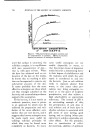
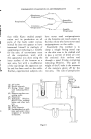
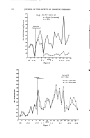
MECHANISMS AND EVALUATION OF ANTISEPTIC ACTIONS 295 From this information, it was clear that the compound was a poly- oxyethylene derivative of a phenol, and that no ester-type linkages were present. In the same sample, a positive test for quaternary bases was obtained. Extraction of this material was done in the usual way, and the ultraviolet spectrum obtained. Data in our files showed that the same spectrum was given by a quaternary de- rivative of isoquinoline. SUMMA RY Analytical absorption spectro- photometry is probably the most rapidly developing field in analyti- cal chemistry. Even though the literature contains hundreds of ref- erences to methods developed, it can be said that the development of applied s•pectrophotometry has only begun. The spectrophotom- eters appear certain to become almost as important in analytical chemistry as the analytical balance itself. REFERENCES (1) Jones, J. H., Clark, G. R., and Harrow, L. S., y. •lssoc. Off. •lgr. Chem., 34, 135 (1951). (2) Newburger, S. H., Ibid., 34, 109 (1951). (3) "Analytical Absorption Spectrophotom- etry," edited by M. G. Mellon, New York, John Wiley & Son, Inc. (1950). (4) Williams, Van Zandt, Rev. Sci. Instru- ments, 19, 135 (1948). (5) Matron, T. U., and Chambers, T. S., •lnal. Chem., 23, 571 (1951). A STUDY OF THE MECHANISMS AND EVALUATION OF ANTISEPTIC ACTIONS* By H•P,B•P,T L. DAviS, P•.D. Ethicon Suture Laboratories, Inc., New Brunswick, N.y. IN VIEW OF the increasing numbers of chemicals offered as antiseptics and of the positive, even extravagant, claims made for their efficacy, it seems appropriate to review the adequacy of the criteria applied to antiseptics, and to seek to discover just how and how well these chemicals exert their effects on micro-organisms. A study of the procedures in which antiseptics are employed in- dicates that colloidal adsorption * Presented at the May 18, 1951, Meeting, New York City. of the antiseptic on (and probably in) the bacteria is the prime pre- requisite (1). What happens after that is a function of the chemical and colloidal properties of the organism, its structures, and of the chemical applied. Figure 1 will remind you that in any given set of adsorbents and adsorbates one .may pass from poorly adsorbed to well adsorbed, and may generally find systems in which strong adsorption is demonstrable. It is emphasized in this last case that the solid has adsorbed all of the dye, and that,
Purchased for the exclusive use of nofirst nolast (unknown)
From: SCC Media Library & Resource Center (library.scconline.org)