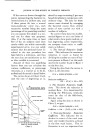
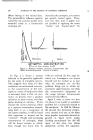
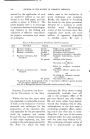
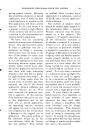
MECHANISMS AND EVALUATION OF ANTISEPTIC ACTIONS 295 From this information, it was clear that the compound was a poly- oxyethylene derivative of a phenol, and that no ester-type linkages were present. In the same sample, a positive test for quaternary bases was obtained. Extraction of this material was done in the usual way, and the ultraviolet spectrum obtained. Data in our files showed that the same spectrum was given by a quaternary de- rivative of isoquinoline. SUMMA RY Analytical absorption spectro- photometry is probably the most rapidly developing field in analyti- cal chemistry. Even though the literature contains hundreds of ref- erences to methods developed, it can be said that the development of applied s•pectrophotometry has only begun. The spectrophotom- eters appear certain to become almost as important in analytical chemistry as the analytical balance itself. REFERENCES (1) Jones, J. H., Clark, G. R., and Harrow, L. S., y. •lssoc. Off. •lgr. Chem., 34, 135 (1951). (2) Newburger, S. H., Ibid., 34, 109 (1951). (3) "Analytical Absorption Spectrophotom- etry," edited by M. G. Mellon, New York, John Wiley & Son, Inc. (1950). (4) Williams, Van Zandt, Rev. Sci. Instru- ments, 19, 135 (1948). (5) Matron, T. U., and Chambers, T. S., •lnal. Chem., 23, 571 (1951). A STUDY OF THE MECHANISMS AND EVALUATION OF ANTISEPTIC ACTIONS* By H•P,B•P,T L. DAviS, P•.D. Ethicon Suture Laboratories, Inc., New Brunswick, N.y. IN VIEW OF the increasing numbers of chemicals offered as antiseptics and of the positive, even extravagant, claims made for their efficacy, it seems appropriate to review the adequacy of the criteria applied to antiseptics, and to seek to discover just how and how well these chemicals exert their effects on micro-organisms. A study of the procedures in which antiseptics are employed in- dicates that colloidal adsorption * Presented at the May 18, 1951, Meeting, New York City. of the antiseptic on (and probably in) the bacteria is the prime pre- requisite (1). What happens after that is a function of the chemical and colloidal properties of the organism, its structures, and of the chemical applied. Figure 1 will remind you that in any given set of adsorbents and adsorbates one .may pass from poorly adsorbed to well adsorbed, and may generally find systems in which strong adsorption is demonstrable. It is emphasized in this last case that the solid has adsorbed all of the dye, and that,

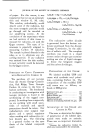
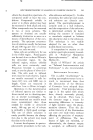
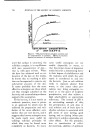
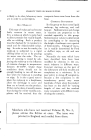
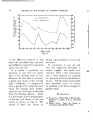
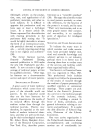
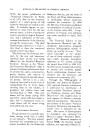
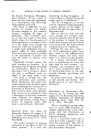
296 JOURNAL OF THE SOCIETY OF COSMETIC CHEMISTS EqUILIBRIUI'I CONCENTRATI 014 oF .ANT I S [ PT I C Figure 1.--Relation between antiseptic sorption and its concentration in solution. Effects on bacteria depend on amounts of antiseptic absorbed. until the surface is saturated, the solid-dye complex is in equilibrium with zero concentration of dye-- that is, with pure solvent. When the dyer has achieved such an ex- haustion of the dye on the textile, he knows that no washing or dilu- tion can be expected to remove any substantial amounts of the dye. It seems probable that the more effective antiseptics are those w. hich are thus strongly adsorbed on the bacteria, and accumulating evidence supports this assumption. If this be true, it is not merely an academic question, since it points to an approach by which may be achieved the preparation and vali- dation of far more effective anti- septics than are now known, and it suggests that known antiseptics may be made much more useful by utilizing colloidal principles by which they may be forced more completely on bacteria. In many cases useful antiseptics are not readily dispersible in water, so that the proper choice of dispersion media becomes a determining factor in their degree of solubilization and the readiness with which the anti- septic is transferred to and into the bacteria. Just as salt addition tends to separate phenol from water, so also many other pro- cedures may bring antiseptics to- ward or to the point of incipient precipitation, and thus achieve a high adsorbability on appropriate substrates. The control of pH is an outstanding example of this the precipitation of acid dyes in acid solution and of basic dyes in alkaline solutions is associated with pH zones of poor dyeing, good dyeing, and no dyeing (where pre- cipitation in solution supersedes any other effect). For the precipita- tion or sensitization of colloi- dal materials, addition of optimum
Purchased for the exclusive use of nofirst nolast (unknown)
From: SCC Media Library & Resource Center (library.scconline.org)