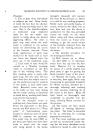
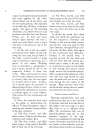
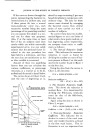
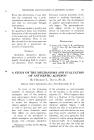
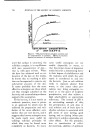
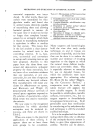
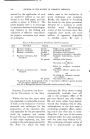
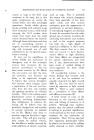
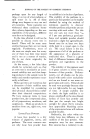
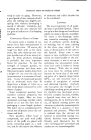
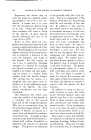
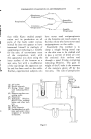
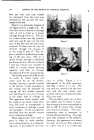
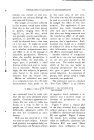
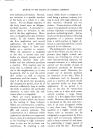
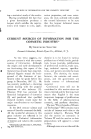
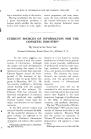
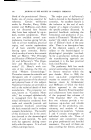
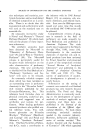
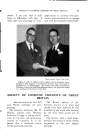
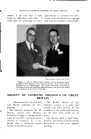
310 JOURNAL OF THE SOCIETY OF COSMETIC CHEMISTS flow per unit area may readily be calculated from the total area enclosed by the cup and the time- length of the run. Figure 1 is a schematic diagram of the apparatus for a single arm. Air from the room is drawn in through tube ,4 and is dried as it passes through drying tower C. The dry air is than drawn into the stainless steel arm cup K and over the test area of the skin and into the 3-way stopcock H where the air may be directed through the by-pass G or the tared U-tube F. The by- pass is useful for preliminary sweep- ing of the test area. The air is drawn further through a calibrated gas flowmeter E at the rate of about 1 liter per minute into cylinder D which is a water column pressure regulator anti then on through the stopcock B to the vacuum pump. The double stopcock (.d-B) should be noted by which intake and outlet may be cut off simulta- neously, leaving a partial wtcuum in the system. Leaks anywhere in the system may be detected by cutting off this double stopcock and watching for any rise of water in the safety tube of cylinder D. The apparatus works equally well by using an airstream under pres- sure, but such an arrangement is more conducive to leakage around the cup edges. In the arrangement described here the partial vacuum acts to minimize leakage. These apparatuses were used in pairs in order to make simulta- neous measurements on correspond- ing areas of the subject's two fi)re- i.. -7--"'..:' .5 ..... ß . : • • •..:7.. ....... .,i ß •, ..• :-• .i •... Figure 2 Figure 3 arms or axillae. Figure 2 is a photograph of the dual apparatus and Fig. 3 shows it in use. The cup ends are curved to fit the fi•re- arm and the cups shown here covered a skin area of approximately 42 sq. cm. each. The procedure used was to have the subject stay fi•r thirty to forty- five minutes in a roonq maintained at 105 to 110 ø F. and at 30 to 35 per cent relative humidity. This accli- matization time is necessary to initiate thermal sweating. The cups were then clamped on the subject's forearms, the apparatus was tested for leaks and the air flow, adjusted to a flow rate of 1 to 2 liters per

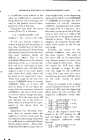
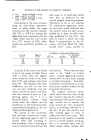
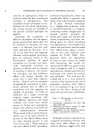
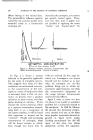
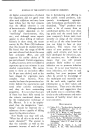
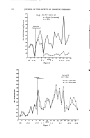
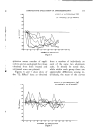
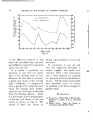
COMPARATIVE EVALUATION OF ANTIPERSPIRANTS 311 minute, was turned on and con- tinued for ten minutes through the arm cups and U-tubes. The weight of moisture collected in this manner varied quite widely from day to day and from person to person, ranging from 10-12 mg./42 sq. cm./10 min., which was probably mostly insensible per- spiration, to 250-300 rag. which could be obtained from a thin man on a hot day. It might be noted here that there is some question as to whether antiperspirants have any effect at all on the passage cf insensible perspiration. However, when the sensible perspiration is flowing freely, the insensible, or vapor part, is probably a small fraction of the total and no correc- tion is necessary. Rather surpris- ingly, the thin subjects, in general, were found to be more copious sweaters than the stouter ones. Before an individual was used in a comparison test, 4 to 10 daily measurements were made on his to the same area of one arm. The other arm was left untreated to be used as a control by which could be judged the effect of the test material. The application of test material was made immediately after each day's measurement so that what was being measured was the cumulative effect of all appli- cations up to and including the previous day's application. Each material was tested on a number of subjects for three to four weeks, thus information was obtained on the effects of prolonged daily use. Another method of comparison would be to use one test material on one arm and another on the other arm. The results would tell which of the two was better in reducing perspiration but would not give a good evaluation of actual reduction. A comparison of groups, each group using a single material, was preferred. The expression used to calculate "Per Cent Effect" is as follows: %Effect= 100X (mg'treatedarm-mg 'untreatedarm) mg. untreated two untreated arms to make sure that the two arms perspired about equally. Consistent agreement be- tween the two arms or axilla was found, as a rule, in five or six people out of every seven tested. Arbitrarily, agreement within 10 per cent was considered as satis- factory. Only one test material at a time was used on each subject. A meas- ured quantity was applied daily, ex- cept Saturdays and Sundays, always A negative result indicates a re- duction and a positive result an increase of perspiration on the treated area. Figure 4 shows a typical plot of the data obtained from a single subject during a test period when an effective aluminum salt (Solution D) was applied. Figure $ shows the results from another subject when an ineffective aluminum salt (Solution B-2) was used. These graphs show milligrams of per-
Purchased for the exclusive use of nofirst nolast (unknown)
From: SCC Media Library & Resource Center (library.scconline.org)