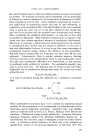
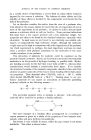
FATTY ACID ALKYLOLAMIDES the extent to which water or other inert diluents such as inorganic electrolytes are present. The products are mainly used as detergents, and are principally of interest to cosmetic chemists for the formulation of shampoos or bubble bath preparations and the like. Some sulphated compounds do, however, find applications as emulsifying agents and may be used effectively, in conjunction with unsulphated fatty acid alkylolamides of the water-insoluble class, in much the same way as, in the past, sulphated 'cetyl alcohol has been used in conjunction with the insoluble waxy unsulphated cetyl alcohol. When considering the sulphated alkylolamides, we come face to face with the problem of impurities. Most commercial preparations are impure to the extent that they contain significant amounts of unsulphated alkylolamide. Whereas in, for example, a sulphated lauryl alcohol preparation the presence of unsulphated fatty alcohol may not always be desirable, in the case of fatty acid alkylolamides, however, it is true to say that some percentages of unsulphated material usually improve the efficiency of the preparation. Materials offered commercially are frequently not more than 85 per cent sulphated. Unfortunately, there is another potential impurity deriving from the reactivity of the alkylolamines which is quite undesirable, and in the early days considerable difficulties were experienced, on this account, in producing really satisfactory products. The undesirable impurity may arise in one of two ways. The impurity may be present in the wax before sulphation, due to condensation having taken place the wrong way round, giving the ester: R.CO.O.CH•.CH•.NH2 or it may be produced during the sulphation by a cyclisation mechanism thus: O--CH• /- R. CO.NH.CH•.CH•.OSO•Na --• R.C. q- H.SO•Na % N--CH• H•O ----• R.CO.O.CH2.CH•.NHo. These undesirable by-products have to be avoided by employing special methods for the preparation of the fundamental acyl-alkylolamides and by developing special sulphation techniques. Sulphated fatty acid alkylola- mides are manufactured in the U.S.A., France, Holland, Great Britain and elsewhere. Well-known foreign brands include the: Eriopons, Enerpons, Sodapons, Somepons, Amitex T B, Alframine, Sulframine, Emcol, etc. In Great Britain the CO•I)A•OL range of detergents is based on similar deriva- tives. A voluminous patent literature, of which only a few examples are quoted here, attests to the growing importance of this class (U.S. Pat. 171

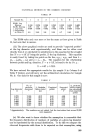
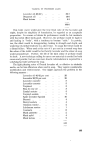
JOURNAL OF THE SOCIETY OF COSMETIC CHEMISTS 1,981,792, U.S. Pat. 1,932,180 (I.G.), U.S. Pat. 2,355,503, Can. Pat. 472,726' Brit. Pat. 523,466, U.S. Pat. 2,353,081, French Pat. 669,517 (I.G.) 693,630 751,382 751,641 780,208, etc.). These detergents are said to be extremely mild on the skin and scalp. They possess also the property of showing a compatibility with soap in a very wide range of proportions. This fact, coupled with the fact that they possess an extremely high ability to disperse lime-soaps, makes them of great interest to the cosmetic chemist for the formulation of combined soap-detergent shampoos. There has long been a belief, not without some foundation, that shampoos based purely upon sulphated detergents are more degreasing than is desirable. Attempts have been made to remedy this defect by incorporating neutral oils and fats such as lanolin. This procedure, however, has not proved entirely satisfactory in that these additives tend to reduce the lathering power of the preparation, causing the customer to use more of it, and thereby offsetting any intrinsic reduction in the degreasing power of the preparation which may have been effected. It has therefore long been felt that a formulation based on soap, but containing an adequate amount of detergent to keep lime-soaps in suspension, might prove the ideal product. The sulphated fatty acid alkylo- lamides lend themselves well to this type of formulation. All sulphated detergents possess some lime-soap dispersive power, but the efficiency of the sulphated alkylolamides is particularly high as the following figures will indicate. These tests follow substantially the I.G. Farben method and involve, in principle, the preparation of a series of mixtures containing a detergent preparation (reduced to 20 per cent active material) and a soap (90 per cent active material) in graded proportions varying from 100 per cent soap to 100 per cent detergent preparation. The mixtures are then diluted in hard water and, after standing overnight, the solutions examined for turbidity and flocculation. W ----- water clear 0 ----- opalescent C ----- cloudy F -- flocculent Parts by weight of 20 per cent active product 90 per cent active soap Active detergent consists of: (i) commercial sulphated coconut oil fatty acid monoethanolamide (CO•DANO•. "C") FC 0 1 2 3 4 5 6 7 8 9 I0 10 9 8 7 6 5 4 3 2 1 0 c c c o o o o w w 172
Purchased for the exclusive use of nofirst nolast (unknown)
From: SCC Media Library & Resource Center (library.scconline.org)